

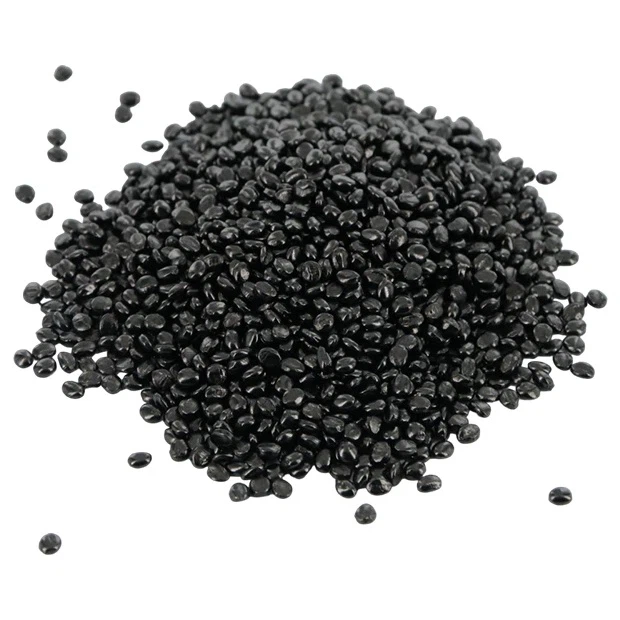
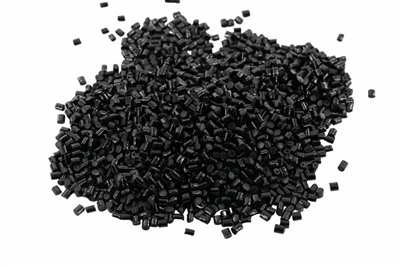

Hey there! I'm a supplier of black masterbatch for film blown, and today I wanna chat about whether it's suitable for thin - walled blown films.
First off, let's get a basic understanding of black masterbatch for film blown. It's a concentrated mixture of carbon black pigment and a carrier resin. This masterbatch is designed to be added to the base resin during the film - blowing process to give the film its black color. Now, when it comes to thin - walled blown films, there are a few key factors we need to consider.
Compatibility with Resins
Most of the thin - walled blown films are made from polyolefins like polyethylene (PE) or polypropylene (PP). Our black masterbatch is formulated to be highly compatible with these resins. The carrier resin in our masterbatch is carefully selected to ensure seamless blending with the base resin. When the masterbatch and the base resin mix well, it results in a uniform distribution of the carbon black pigment throughout the thin - walled film. This uniformity is crucial because it affects the film's appearance and performance. A non - uniform distribution can lead to color streaks or spots on the film, which is a big no - no in the industry.
Dispersion Quality
The dispersion quality of the carbon black in the masterbatch is another vital aspect, especially for thin - walled blown films. Since these films are so thin, any agglomeration of carbon black particles can cause problems. Our black masterbatch undergoes a rigorous dispersion process during manufacturing. We use advanced equipment and techniques to break down the carbon black into fine particles and disperse them evenly in the carrier resin. This fine dispersion ensures that the carbon black particles are small enough to pass through the narrow die gaps during the film - blowing process without causing blockages or defects in the thin - walled film.
Impact on Mechanical Properties
Thin - walled blown films need to have good mechanical properties such as tensile strength, tear resistance, and puncture resistance. One might worry that adding black masterbatch could negatively affect these properties. However, our black masterbatch is formulated in a way that it has minimal impact on the mechanical properties of the thin - walled films. In fact, in some cases, the carbon black can even enhance certain properties. For example, carbon black can act as a reinforcing filler, improving the film's stiffness and dimensional stability. But we always conduct thorough testing to make sure that the addition of our masterbatch doesn't compromise the film's overall mechanical performance.
UV Resistance
Thin - walled blown films are often used in applications where they are exposed to sunlight, such as agricultural films or packaging films for outdoor use. UV radiation can cause the film to degrade over time, leading to brittleness and loss of strength. Our black masterbatch contains carbon black, which is a natural UV absorber. By adding our masterbatch to the thin - walled blown film, we can significantly improve its UV resistance. This means that the film will last longer and maintain its performance even when exposed to harsh sunlight.
Cost - Effectiveness
When it comes to manufacturing thin - walled blown films, cost is always a consideration. Our black masterbatch offers excellent cost - effectiveness. Since it is highly concentrated, only a small amount needs to be added to the base resin to achieve the desired black color. This reduces the overall cost of coloration compared to using other coloring methods. Additionally, because of its good dispersion and compatibility, there is less waste during the manufacturing process, which further contributes to cost savings.
Comparison with Other Applications
It's interesting to compare the suitability of our black masterbatch for thin - walled blown films with other applications. For example, Black Masterbatch For Granulation is mainly used in the granulation process, where the requirements for dispersion and color uniformity might be different. The granulation process usually involves larger particles and a different mixing environment compared to thin - walled film blowing.
Similarly, Black Masterbatch for Injection is used in injection molding applications. In injection molding, the flow properties of the masterbatch are more critical as it needs to fill complex molds. While our black masterbatch can also be used in injection molding, the focus for thin - walled blown films is more on achieving a uniform color in a very thin layer.
And Black Masterbatch for Sheet is used for making plastic sheets. Sheets are generally thicker than thin - walled blown films, so the requirements for dispersion and mechanical property impact are also different. However, our masterbatch is versatile enough to be used in all these applications, but it's specifically optimized for thin - walled blown films.
Real - World Applications
In the real world, our black masterbatch has been widely used in various thin - walled blown film applications. For example, in the food packaging industry, thin - walled blown films are used to wrap snacks, fruits, and other food products. Our masterbatch provides a deep, rich black color that not only looks good but also helps to protect the food from light - induced spoilage.
In the agricultural sector, thin - walled blown films are used as mulch films. These films need to have good UV resistance and mechanical properties to withstand outdoor conditions. Our black masterbatch meets these requirements, ensuring that the mulch films last for the entire growing season.


Conclusion
In conclusion, our black masterbatch for film blown is definitely suitable for thin - walled blown films. It offers excellent compatibility with polyolefin resins, high - quality dispersion, minimal impact on mechanical properties, good UV resistance, and cost - effectiveness. Whether you're in the food packaging industry, agricultural sector, or any other industry that uses thin - walled blown films, our masterbatch can meet your needs.
If you're interested in learning more about our black masterbatch for thin - walled blown films or want to start a procurement discussion, don't hesitate to reach out. We're always here to help you find the best solution for your specific requirements.
References
- "Plastics Additives Handbook" by Hans Zweifel
- "Polymer Processing: Principles and Design" by James F. Carley