

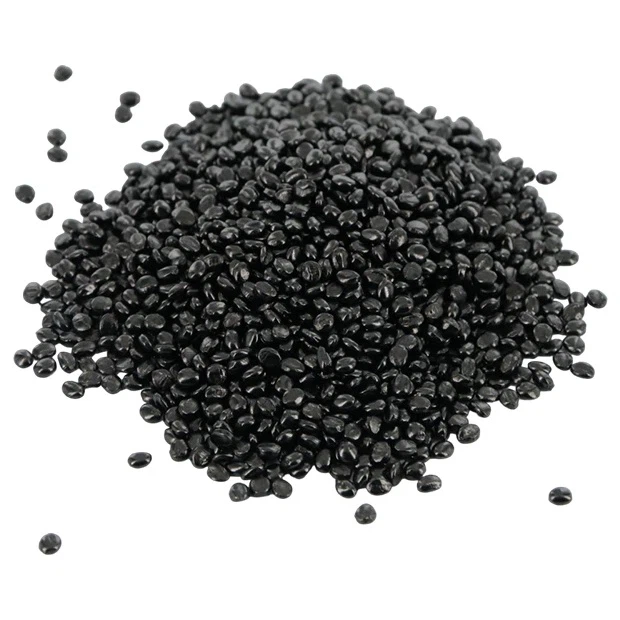
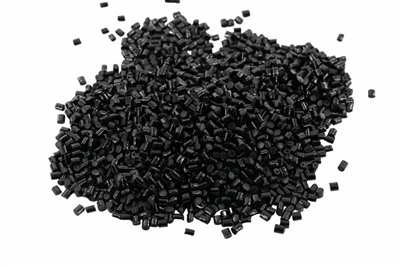

Food contact black masterbatch is a crucial component in the plastics industry, especially when it comes to products intended for direct or indirect contact with food. As a supplier of food contact black masterbatch, I've encountered numerous inquiries regarding its impact on the mechanical properties of plastics. This blog aims to delve into this topic, exploring the science behind it and offering insights based on my experience in the field.
Understanding Food Contact Black Masterbatch
Food contact black masterbatch is a concentrated form of carbon black dispersed in a polymer carrier. It is designed to impart a black color to plastics while meeting the strict regulatory requirements for food contact applications. These masterbatches are formulated using high - quality carbon black and food - grade polymers to ensure safety and compliance.
The Role of Carbon Black in Masterbatch
Carbon black is the key ingredient in black masterbatch. It not only provides the desired black color but also offers several functional benefits. Carbon black has excellent UV - blocking properties, which can enhance the weatherability of plastics. Additionally, it can improve the electrical conductivity of polymers in some applications.
Impact on Mechanical Properties
Tensile Strength
The addition of food contact black masterbatch can have both positive and negative effects on the tensile strength of plastics. In some cases, a small amount of well - dispersed carbon black can act as a reinforcing agent. The carbon black particles can interact with the polymer matrix, increasing the resistance to deformation under tension. However, if the carbon black is not properly dispersed, it can act as a stress concentrator. Agglomerates of carbon black can create weak points in the polymer structure, leading to a decrease in tensile strength.
Studies have shown that for polypropylene (PP) plastics, when the loading of food contact black masterbatch is within a certain range (usually up to 2 - 3% by weight), the tensile strength may increase slightly. But beyond this range, the tensile strength may start to decline due to poor dispersion.
Elongation at Break
Elongation at break is a measure of a material's ability to stretch before it breaks. Similar to tensile strength, the effect of food contact black masterbatch on elongation at break depends on the dispersion of carbon black. Well - dispersed carbon black can restrict the movement of polymer chains to some extent. At low loadings, this may lead to a slight decrease in elongation at break as the polymer becomes more rigid. However, at high loadings or with poor dispersion, the presence of agglomerates can cause premature failure, resulting in a significant reduction in elongation at break.
For example, in polyethylene (PE) plastics, a small addition of food contact black masterbatch (less than 1%) may cause a marginal decrease in elongation at break. But if the masterbatch is not well - dispersed or the loading is too high, the elongation at break can drop by more than 50%.
Impact Resistance
Impact resistance is another important mechanical property. Carbon black can influence impact resistance in different ways. On one hand, well - dispersed carbon black can absorb and dissipate energy during an impact event, enhancing the impact resistance of the plastic. On the other hand, if the carbon black is agglomerated, it can act as a crack initiator, reducing the impact resistance.
In acrylonitrile - butadiene - styrene (ABS) plastics, a properly formulated food contact black masterbatch can improve the impact resistance by up to 10 - 15%. However, improper dispersion or excessive loading can lead to a decrease in impact resistance.
Factors Affecting the Impact on Mechanical Properties
Dispersion Quality
The quality of carbon black dispersion is perhaps the most critical factor. Good dispersion ensures that the carbon black particles are uniformly distributed throughout the polymer matrix, allowing them to interact effectively with the polymer chains. Poor dispersion, on the other hand, can lead to the formation of agglomerates, which are detrimental to the mechanical properties.
Carbon Black Type
Different types of carbon black have different surface areas, particle sizes, and structures. These characteristics can affect how the carbon black interacts with the polymer matrix. For example, carbon black with a high surface area may have a stronger interaction with the polymer, potentially leading to better reinforcement.


Masterbatch Loading
The amount of food contact black masterbatch added to the plastic also plays a significant role. As mentioned earlier, there is an optimal loading range for each type of plastic. Beyond this range, the negative effects on mechanical properties may become more pronounced.
Applications and Recommendations
Foaming Applications
In foaming applications, Black Masterbatch for Foaming is often used. The mechanical properties of the foamed plastic are crucial for its performance. It is recommended to use a well - dispersed food contact black masterbatch with a relatively low loading (less than 2%) to avoid any significant reduction in the cell structure and mechanical strength of the foam.
Injection Molding
For injection molding applications, Black Masterbatch For Injection is commonly employed. A moderate loading (1 - 3%) of high - quality food contact black masterbatch can be used to achieve the desired color while maintaining good mechanical properties. Proper mixing and processing conditions are essential to ensure uniform dispersion.
Extrusion Applications
In extrusion applications, Black Masterbatch for Extrusion is used. The extruded products often require good tensile strength and flexibility. A food contact black masterbatch with a carefully selected carbon black type and proper dispersion can be added at a loading of 1 - 2% to balance color and mechanical properties.
Conclusion
Food contact black masterbatch can have a significant impact on the mechanical properties of plastics. The key lies in proper formulation, dispersion, and control of the loading. As a supplier, we are committed to providing high - quality food contact black masterbatch that not only meets the regulatory requirements but also minimizes any negative impact on the mechanical properties of plastics.
If you are interested in our food contact black masterbatch products or have any questions regarding their application in your specific plastic products, please feel free to contact us for procurement and further discussion. We have a team of experts ready to assist you in finding the best solution for your needs.
References
- ASTM International. (2023). Standard test methods for tensile properties of plastics. ASTM D638.
- Plastics Europe. (2022). Technical report on the properties of plastics and additives.
- Journal of Applied Polymer Science. Various issues related to the effects of carbon black on polymer mechanical properties.