

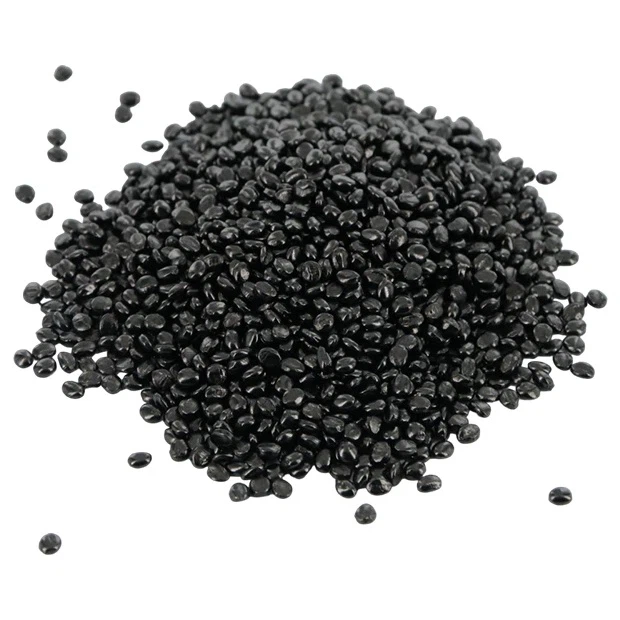
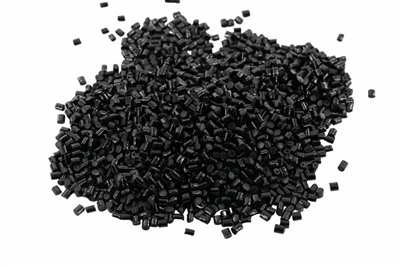

As a supplier of PA black masterbatch, I've encountered numerous inquiries from customers regarding the necessity of pre - treating PA black masterbatch before use. This topic is not only crucial for the proper application of our products but also significantly impacts the final quality of the end - products. In this blog, I'll delve into the details of whether PA black masterbatch requires pre - treatment and the factors influencing this decision.
Understanding PA Black Masterbatch
PA, or polyamide, is a widely used engineering plastic known for its excellent mechanical properties, such as high strength, good toughness, and abrasion resistance. PA black masterbatch is a concentrated mixture of carbon black pigment and a PA carrier resin, used to impart black color to PA - based products. It offers several advantages, including ease of handling, consistent color dispersion, and cost - effectiveness compared to using pure carbon black.


Reasons for Pre - treatment
Moisture Absorption
One of the primary reasons for considering pre - treatment is moisture absorption. PA is a hygroscopic polymer, which means it can absorb moisture from the surrounding environment. If the PA black masterbatch has absorbed moisture, it can lead to various problems during the processing. For example, when the masterbatch is melted in an extruder or injection molding machine, the moisture can turn into steam. This steam can cause bubbles or voids in the final product, resulting in poor surface finish, reduced mechanical properties, and even structural failures. To prevent these issues, pre - drying the PA black masterbatch is often recommended. The recommended drying conditions usually involve heating the masterbatch at a specific temperature (around 80 - 120°C) for a certain period (2 - 4 hours) in a dehumidifying dryer.
Dispersion Improvement
Another aspect is the dispersion of carbon black in the PA matrix. Although PA black masterbatch is designed to provide good color dispersion, in some cases, pre - treatment can further enhance this. For instance, if the end - product requires extremely high - quality color uniformity, such as in high - end automotive parts or precision electronic components, pre - mixing the masterbatch with a small amount of the base PA resin in a high - speed mixer can help break down any agglomerates of carbon black particles. This pre - mixing process ensures that the carbon black is more evenly distributed in the final PA product, resulting in a more consistent color appearance.
Situations Where Pre - treatment May Not Be Necessary
Well - Controlled Storage Conditions
If the PA black masterbatch has been stored in a well - controlled environment, with low humidity and proper packaging, the risk of moisture absorption is significantly reduced. In such cases, pre - drying may not be strictly necessary. For example, if the masterbatch is stored in sealed containers in a climate - controlled warehouse, and the time between storage and processing is short, the moisture content may remain within an acceptable range.
Standard - Quality Applications
For some standard - quality applications where the appearance and mechanical properties are not extremely critical, pre - treatment may be skipped. For instance, in the production of some common industrial parts where a small number of bubbles or minor color variations are acceptable, the cost and time associated with pre - treatment may not be justified.
Comparison with Other Black Masterbatches
It's interesting to compare PA black masterbatch with other types of black masterbatches, such as ABS Black Masterbatch and PP Black Masterbatch. ABS is an amorphous polymer, and it also has a certain degree of moisture absorption, but generally less than PA. So, the pre - drying requirements for ABS black masterbatch may be less stringent. On the other hand, PP is a non - hygroscopic polymer, which means that PP Black Masterbatch usually does not require pre - drying due to moisture concerns. No Carrier Black Masterbatch is another type that may have different pre - treatment needs. Since it doesn't have a carrier resin, its dispersion and handling characteristics can be quite different from PA black masterbatch.
Impact on Processing Equipment
Pre - treatment of PA black masterbatch can also have an impact on the processing equipment. When pre - drying is carried out, it helps to reduce the wear and tear on the extruder or injection molding machine. Moisture in the masterbatch can cause corrosion and erosion of the screw and barrel components over time. By removing the moisture through pre - treatment, the lifespan of the processing equipment can be extended, and the maintenance costs can be reduced.
Cost - Benefit Analysis
When deciding whether to pre - treat PA black masterbatch, a cost - benefit analysis is essential. Pre - treatment involves additional costs, including the energy cost for drying, the cost of the drying equipment, and the labor cost for handling the pre - treatment process. On the other hand, the benefits include improved product quality, reduced scrap rate, and longer equipment lifespan. For high - value products where quality is of utmost importance, the benefits usually outweigh the costs. However, for low - cost, high - volume products, the cost - benefit balance needs to be carefully evaluated.
Conclusion
In conclusion, whether PA black masterbatch needs to be pre - treated before use depends on several factors, including storage conditions, the requirements of the end - product, and the processing equipment. In most cases, especially for high - quality applications, pre - treatment, particularly pre - drying to remove moisture, is highly recommended. However, for some specific situations, pre - treatment may not be necessary.
If you're in the market for high - quality PA black masterbatch or have any questions regarding its pre - treatment or application, I encourage you to get in touch. We are committed to providing you with the best products and technical support to meet your specific needs.
References
- "Plastics Technology Handbook" by Charles A. Harper
- "Polymer Processing: Principles and Practice" by James F. Carley