

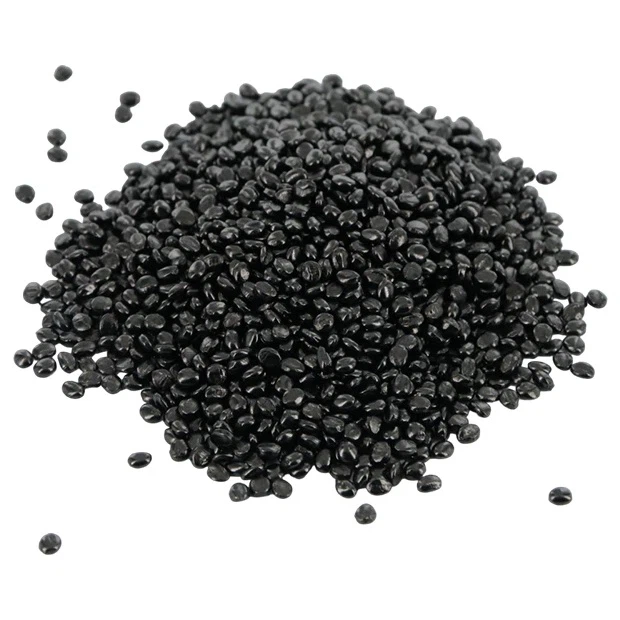
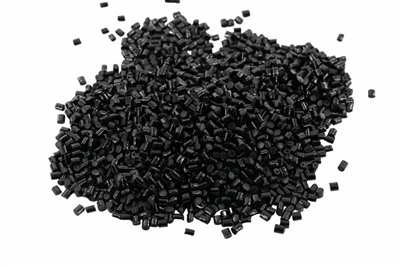

As a trusted supplier of ABS black masterbatch, I've witnessed firsthand the profound impact our product has on the manufacturing of ABS products. One of the critical aspects that manufacturers often inquire about is how ABS black masterbatch affects the shrinkage rate of ABS products. In this blog, I'll delve into the science behind this phenomenon, exploring the factors at play and offering insights based on my experience in the industry.
Understanding ABS and Shrinkage
ABS, or Acrylonitrile Butadiene Styrene, is a popular thermoplastic polymer known for its excellent mechanical properties, including high impact resistance, toughness, and rigidity. It's widely used in various industries, such as automotive, electronics, and consumer goods. However, like all thermoplastics, ABS undergoes shrinkage during the cooling process after molding. Shrinkage occurs because the polymer chains in the molten state are more randomly arranged and have more space between them. As the material cools and solidifies, the polymer chains pack more closely together, resulting in a reduction in volume.
The shrinkage rate of ABS products is a crucial factor that manufacturers must consider, as it can affect the dimensional accuracy, appearance, and functionality of the final product. If the shrinkage rate is too high, the product may not fit properly into its intended assembly, or it may develop surface defects such as warping, sink marks, or voids. On the other hand, if the shrinkage rate is too low, the product may not release easily from the mold, leading to production inefficiencies and potential damage to the mold.
The Role of ABS Black Masterbatch in Shrinkage
ABS black masterbatch is a concentrated mixture of carbon black pigment and a carrier resin, typically ABS or a compatible polymer. It's used to impart a black color to ABS products while also providing other benefits, such as UV resistance, improved dispersion, and enhanced mechanical properties. But how does it affect the shrinkage rate of ABS products?
One of the primary ways that ABS black masterbatch can influence shrinkage is through its effect on the thermal properties of the ABS resin. Carbon black, the main pigment in black masterbatch, has a high thermal conductivity compared to the ABS resin. When the black masterbatch is added to the ABS resin, it can act as a heat sink, promoting more efficient heat transfer during the cooling process. This can result in a faster cooling rate and a more uniform temperature distribution within the molded part, which in turn can reduce the shrinkage rate.


In addition to its thermal conductivity, the carbon black in ABS black masterbatch can also affect the crystallization behavior of the ABS resin. ABS is an amorphous polymer, which means it doesn't have a well-defined crystalline structure. However, under certain conditions, such as high cooling rates or the presence of nucleating agents, some degree of crystallization can occur. The carbon black particles in the black masterbatch can act as nucleating agents, promoting the formation of small crystallites within the ABS matrix. These crystallites can restrict the movement of the polymer chains during cooling, reducing the shrinkage rate.
Another factor that can influence the shrinkage rate of ABS products containing black masterbatch is the dispersion of the carbon black pigment. If the carbon black is not properly dispersed in the ABS resin, it can form agglomerates or clusters, which can act as stress concentrators within the molded part. These stress concentrators can lead to non-uniform shrinkage and the development of surface defects. Therefore, it's essential to use a high-quality black masterbatch that has been formulated to ensure excellent dispersion in the ABS resin.
Factors Affecting the Impact of ABS Black Masterbatch on Shrinkage
While ABS black masterbatch can generally help reduce the shrinkage rate of ABS products, the actual impact can vary depending on several factors. These factors include:
- Concentration of Black Masterbatch: The amount of black masterbatch added to the ABS resin can have a significant impact on the shrinkage rate. In general, increasing the concentration of black masterbatch can lead to a greater reduction in shrinkage. However, there is a limit to the amount of black masterbatch that can be added, as too high a concentration can lead to other issues, such as poor flowability, increased viscosity, and reduced mechanical properties.
- Type of Carbon Black: Different types of carbon black have different properties, such as particle size, surface area, and structure. These properties can affect the thermal conductivity, nucleating ability, and dispersion of the carbon black in the ABS resin, which in turn can influence the shrinkage rate. For example, carbon black with a smaller particle size and a higher surface area generally has better dispersion and nucleating properties, which can result in a greater reduction in shrinkage.
- Processing Conditions: The processing conditions used during the molding of ABS products can also affect the shrinkage rate. Factors such as melt temperature, injection pressure, cooling rate, and mold design can all have an impact on the crystallization behavior, temperature distribution, and stress distribution within the molded part. Therefore, it's important to optimize the processing conditions to ensure that the ABS black masterbatch can发挥 its full potential in reducing shrinkage.
Case Studies
To illustrate the impact of ABS black masterbatch on the shrinkage rate of ABS products, let's look at a few case studies.
- Automotive Interior Parts: A manufacturer of automotive interior parts was experiencing issues with high shrinkage rates in their ABS products, which were causing problems with fit and finish. After consulting with our technical team, they decided to switch to our Black Masterbatch for Automotive. By using our black masterbatch, they were able to reduce the shrinkage rate of their products by up to 20%, resulting in improved dimensional accuracy and a better overall appearance.
- Electronics Housings: Another customer, a manufacturer of electronics housings, was using a low-quality black masterbatch that was causing inconsistent shrinkage and surface defects in their ABS products. After switching to our No Carrier Black Masterbatch, which is specifically designed for applications requiring high dispersion and low shrinkage, they were able to achieve a more uniform shrinkage rate and eliminate the surface defects. This led to a significant improvement in the quality and performance of their products.
Conclusion
In conclusion, ABS black masterbatch can have a significant impact on the shrinkage rate of ABS products. By acting as a heat sink, promoting crystallization, and improving dispersion, it can help reduce the shrinkage rate and improve the dimensional accuracy and appearance of the molded parts. However, the actual impact can vary depending on several factors, such as the concentration of black masterbatch, the type of carbon black, and the processing conditions. Therefore, it's important to work with a trusted supplier who can provide high-quality black masterbatch and technical support to help optimize the formulation and processing of your ABS products.
If you're interested in learning more about how our ABS black masterbatch can help you reduce the shrinkage rate of your ABS products, please don't hesitate to contact us. Our team of experts is ready to assist you with your specific requirements and provide you with the best solutions for your application.
References
- "Plastics Materials" by Bryan M. Walker
- "Handbook of Polymer Science and Technology" edited by Donald Klempner and K. C. Frisch
- "Polymer Processing: Principles and Design" by Christopher Rauwendaal