

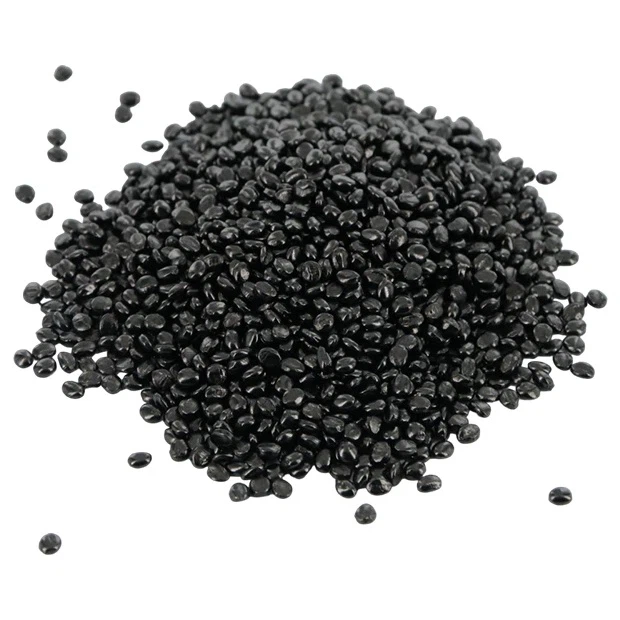
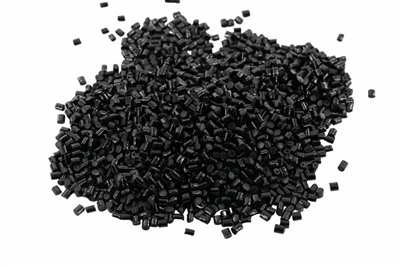

Hey there! As a supplier of black masterbatch for sheets, I often get asked about how our product affects the transparency of the sheets. In this blog, I'll break down the details in a way that's easy to understand, so you can make informed decisions for your projects.
What is Black Masterbatch for Sheets?
First off, let's talk about what black masterbatch for sheets actually is. It's a concentrated mixture of carbon black pigment and a carrier resin. We use this masterbatch to color plastic sheets black. The carrier resin is chosen to be compatible with the base resin of the sheet, which ensures good dispersion of the carbon black throughout the sheet during the manufacturing process.
How Does It Affect Transparency?
Now, let's get to the main question: how does black masterbatch for sheets affect transparency? Well, it all boils down to the properties of carbon black and how it interacts with light.
Carbon black is an opaque material. When it's added to a plastic sheet, it absorbs light rather than allowing it to pass through. This means that as the concentration of black masterbatch in the sheet increases, the transparency of the sheet decreases. In other words, the more black masterbatch you use, the less see - through the sheet will be.
There are a few factors that influence this relationship between black masterbatch and transparency:
1. Concentration of Black Masterbatch
The most obvious factor is the amount of black masterbatch added to the sheet. If you use a very low concentration, say just a small amount to give the sheet a hint of black color, the sheet may still retain some level of transparency. However, as you increase the concentration, the carbon black particles start to block more and more light, and the sheet becomes increasingly opaque.
For example, if you're making a sheet for a product where you only need a light black tint and still want some transparency, you might use a concentration of around 1 - 2%. But if you're aiming for a completely opaque black sheet, like for a black plastic sign, you'll likely need a much higher concentration, perhaps 5 - 10% or even more.
2. Particle Size of Carbon Black
The particle size of the carbon black in the masterbatch also plays a role. Smaller particle sizes tend to disperse more evenly in the plastic matrix. This can result in a more uniform absorption of light and a smoother appearance. Larger particles, on the other hand, may cause more scattering of light, which can make the sheet look less clear even at lower concentrations.
Our black masterbatch is carefully formulated to have an optimal particle size. This ensures that it provides consistent color and the expected level of transparency (or opacity) based on the concentration used.


3. Base Resin of the Sheet
The type of base resin used in the sheet is another important factor. Some resins are naturally more transparent than others. For instance, polycarbonate is known for its high transparency, while polypropylene has a lower level of transparency. When you add black masterbatch to a more transparent base resin, you may be able to achieve a certain level of color while still retaining some of the original transparency. But with a less transparent base resin, the effect of the black masterbatch on reducing transparency may be more pronounced.
Applications and Transparency Requirements
Different applications have different requirements when it comes to the transparency of black sheets. Let's take a look at some common examples:
1. Packaging
In the packaging industry, sometimes you want a black sheet that has a bit of transparency. This could be for products where you want to show off the contents slightly while still having a sleek black appearance. For such applications, a low - concentration black masterbatch can be used. You can check out our Black Masterbatch for Shopping Bag which is suitable for creating black shopping bags with a bit of see - through quality if needed.
2. Agricultural Films
Agricultural films often need to block light to some extent to control the growth of weeds and protect crops. However, in some cases, a small amount of light transmission may be desirable. Our Black Masterbatch for Agriculture Film can be formulated to meet different transparency requirements for these films.
3. Extrusion Applications
For extrusion processes, such as making black pipes or profiles, the transparency requirements can vary. Sometimes, you may want a completely opaque black product. Our Black Masterbatch for Extrusion can be adjusted in terms of concentration to achieve the desired level of transparency or opacity.
Controlling Transparency with Black Masterbatch
If you're looking to control the transparency of your black sheets, here are some tips:
- Test Different Concentrations: Start with small samples and experiment with different concentrations of black masterbatch. This will help you find the right balance between color intensity and transparency for your specific application.
- Choose the Right Base Resin: Select a base resin that has the level of transparency you need. Then, work with our team to determine the best black masterbatch formulation for that resin.
- Consider the End - Use: Think about how the final product will be used. If it needs to be highly visible from the outside, you may need to keep the transparency as high as possible while still achieving the desired black color.
Why Choose Our Black Masterbatch?
As a supplier, we take pride in offering high - quality black masterbatch for sheets. Our products are:
- Consistent: We ensure that each batch of masterbatch has the same properties, so you can expect consistent results every time.
- Customizable: We can adjust the formulation of our masterbatch to meet your specific transparency and color requirements.
- Cost - Effective: We offer competitive prices without compromising on quality.
If you're in the market for black masterbatch for sheets and have questions about how it will affect the transparency of your products, don't hesitate to reach out. We're here to help you make the best choice for your projects. Whether you need a slightly transparent black sheet or a completely opaque one, we have the solutions for you. Let's start a conversation and see how we can work together to meet your needs.
References
- "Plastics Additives Handbook" by Hans Zweifel.
- Journal articles on polymer science and pigment dispersion in plastics.