

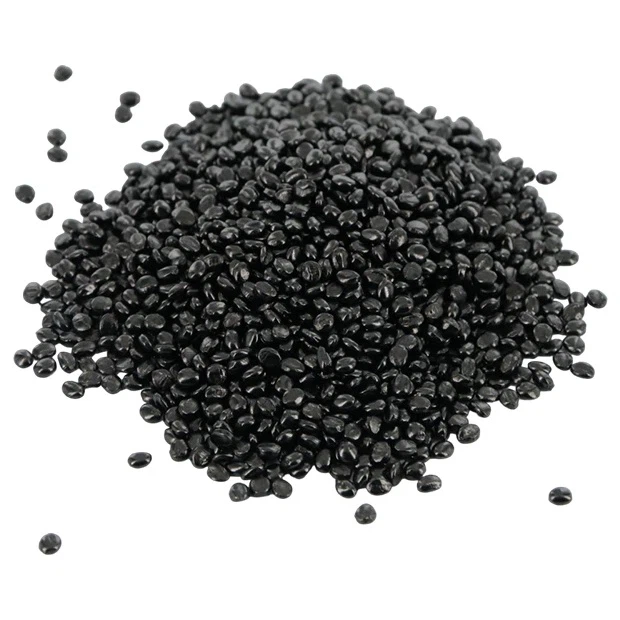
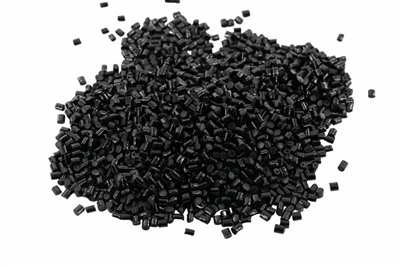

Hey there! I'm a supplier of PA black masterbatch, and today I wanna chat about how PA black masterbatch affects the hardness of PA products. It's a topic that's super important in our industry, and I've got some cool insights to share.
First off, let's quickly go over what PA black masterbatch is. PA stands for polyamide, which is a type of engineering plastic known for its high strength, good chemical resistance, and excellent wear resistance. PA black masterbatch is basically a concentrated mixture of carbon black pigment and a carrier resin, which is used to color PA products black. It's a cost - effective and convenient way to achieve a consistent black color in PA parts.


Now, onto the big question: how does it affect the hardness of PA products? Well, there are a few key factors at play.
1. Carbon Black Loading
The amount of carbon black in the PA black masterbatch is a major factor. Carbon black is a very hard and rigid material. When you add more carbon black to the PA resin through the masterbatch, it can increase the overall hardness of the final product. Think of it like adding bricks to a soft clay. The more bricks (carbon black) you add, the stiffer and harder the clay (PA resin) becomes.
However, there's a limit to this. If you load too much carbon black, it can lead to some negative effects. For example, the PA product might become brittle. The excessive carbon black particles can act as stress concentrators, which means that when the product is under stress, cracks are more likely to form around these particles. So, it's a bit of a balancing act. As a supplier, we work closely with our customers to find the right carbon black loading for their specific applications.
2. Dispersion of Carbon Black
How well the carbon black is dispersed in the PA resin also matters a lot. If the carbon black particles are well - dispersed in the masterbatch and then in the final PA product, they can uniformly enhance the hardness. But if the dispersion is poor, you'll end up with clumps of carbon black in the resin. These clumps can cause uneven hardness across the product. Some areas might be too hard, while others remain relatively soft.
To ensure good dispersion, we use advanced mixing and processing techniques in our production of PA black masterbatch. We also provide technical support to our customers on how to properly incorporate the masterbatch into their PA resin during the manufacturing process.
3. Carrier Resin in the Masterbatch
The type of carrier resin used in the PA black masterbatch can influence the hardness of the final PA product. The carrier resin needs to be compatible with the PA resin. If the carrier resin has a high hardness itself, it can contribute to increasing the overall hardness of the PA product.
For example, some of our masterbatches use a high - performance carrier resin that has excellent mechanical properties. When this masterbatch is added to the PA resin, it not only provides the black color but also boosts the hardness of the final part. On the other hand, if a soft carrier resin is used, it might have a minimal impact on the hardness or could even slightly reduce it.
Real - World Applications
Let's take a look at some real - world applications where the hardness of PA products is crucial.
Automotive Industry
In the automotive industry, PA parts are widely used. Black Masterbatch For Automotive is in high demand. For example, PA components like gears, bushings, and engine covers need to have a certain level of hardness to withstand the high - stress and high - temperature environments in a vehicle. By using our PA black masterbatch, manufacturers can precisely control the hardness of these parts to meet the strict automotive standards.
Electrical and Electronics
In the electrical and electronics sector, PA is used for making connectors, housings, and switches. These parts need to be hard enough to resist mechanical damage and maintain their shape over time. Our PA black masterbatch can help achieve the desired hardness while also providing the necessary black color for aesthetic and sometimes functional reasons (such as light - blocking).
Industrial Machinery
Industrial machinery often uses PA parts that require high hardness. Parts like bearings, rollers, and conveyor components need to be able to handle heavy loads and constant friction. With the right PA black masterbatch, we can help manufacturers produce parts with the optimal hardness for these industrial applications.
Comparing with Other Masterbatches
It's also interesting to compare PA black masterbatch with other types of masterbatches. For example, PP Black Masterbatch is used for polypropylene (PP) products. PP has different properties compared to PA. PA is generally stronger and has better heat resistance, so the way the black masterbatch affects the hardness of PP products is different from PA products.
PP is a more flexible polymer, and the addition of black masterbatch might not increase its hardness as significantly as it does for PA. Also, the dispersion requirements and the compatibility of the carrier resin with PP are different.
Another type is No Carrier Black Masterbatch. This type of masterbatch doesn't have a carrier resin. It can be more challenging to disperse in the resin, but it can be a good option for some applications where the presence of a carrier resin might cause issues. When it comes to hardness, the lack of a carrier resin means that the effect on hardness is more directly related to the carbon black loading.
Conclusion
In conclusion, PA black masterbatch has a significant impact on the hardness of PA products. The carbon black loading, dispersion, and the type of carrier resin all play important roles in determining the final hardness. By carefully controlling these factors, we can help our customers produce PA products with the exact hardness they need for their specific applications.
If you're in the market for high - quality PA black masterbatch and want to discuss how it can meet your hardness requirements, don't hesitate to reach out. We're here to provide you with the best solutions and technical support.
References
- "Plastics Engineering Handbook"
- "Polymer Science and Technology"
- Industry reports on masterbatch applications in PA products