

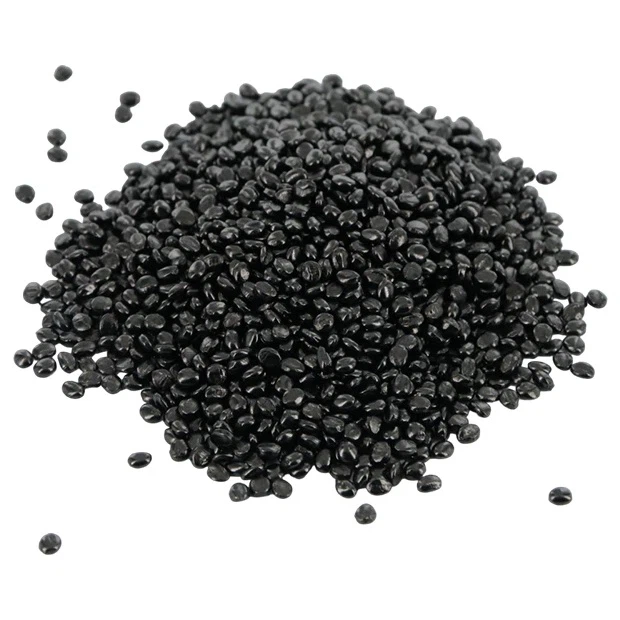
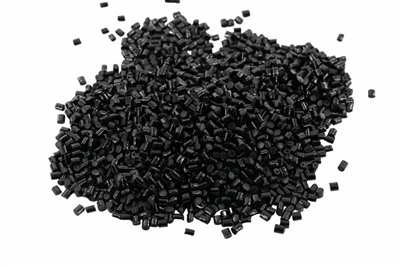

The density of foamed materials is a crucial property that influences their performance and applications in various industries. As a supplier of black masterbatch for foaming, I've witnessed firsthand how this specialized additive can significantly impact the density of foamed products. In this blog, we'll delve into the science behind the interaction between black masterbatch for foaming and the density of foamed materials, exploring the mechanisms, benefits, and practical considerations.
Understanding Foaming and Density
Before we discuss the impact of black masterbatch for foaming on density, it's essential to understand the basic principles of foaming and the concept of density in foamed materials. Foaming is a process in which gas bubbles are introduced into a polymer matrix, creating a cellular structure. The density of a foamed material is determined by the amount of gas trapped within the polymer matrix and the volume occupied by the bubbles. A lower density indicates a higher proportion of gas and a more porous structure, while a higher density means less gas and a more compact material.
Mechanisms of Impact
Black masterbatch for foaming contains several components that can influence the foaming process and, consequently, the density of the foamed material. One of the primary mechanisms is the nucleation effect. The black pigment particles in the masterbatch act as nucleation sites, where gas bubbles can form and grow during the foaming process. By providing more nucleation sites, the black masterbatch promotes the formation of a larger number of smaller bubbles, resulting in a finer cell structure and a lower density.
Another factor is the rheological properties of the masterbatch. The addition of black masterbatch can modify the viscosity and flow behavior of the polymer melt, affecting the way gas bubbles are formed and stabilized. A well - formulated black masterbatch can improve the melt strength of the polymer, preventing the coalescence of bubbles and maintaining a uniform cell structure. This leads to a more consistent density throughout the foamed material.
Benefits of Controlling Density with Black Masterbatch
Controlling the density of foamed materials using black masterbatch offers several benefits. Firstly, it allows for the production of lightweight products. Lightweight foamed materials are highly desirable in industries such as automotive, packaging, and construction, as they can reduce the overall weight of the final product, leading to energy savings and cost reduction. For example, in the automotive industry, lightweight foamed parts can improve fuel efficiency and reduce emissions.
Secondly, controlling density can enhance the mechanical properties of the foamed material. A lower density foamed material with a fine cell structure often exhibits better insulation properties, both thermally and acoustically. This makes it suitable for applications where insulation is required, such as in building insulation panels or noise - reducing components in machinery.
In addition, the use of black masterbatch for foaming can also improve the aesthetic appearance of the foamed product. The black color provides a uniform and attractive finish, which is particularly important in consumer products.


Practical Considerations
When using black masterbatch for foaming to control density, several practical considerations need to be taken into account. The concentration of the masterbatch in the polymer matrix is a critical factor. Too low a concentration may not provide sufficient nucleation sites or rheological modification, while too high a concentration can lead to agglomeration of the pigment particles, affecting the foaming process and the quality of the final product.
The processing conditions, such as temperature, pressure, and foaming agent concentration, also play a significant role. Different polymers and applications require specific processing parameters to achieve the desired density and cell structure. It's essential to optimize these parameters in combination with the use of the black masterbatch to ensure consistent and high - quality results.
Applications and Related Products
Black masterbatch for foaming has a wide range of applications across different industries. In the packaging industry, it can be used to produce lightweight and durable foamed containers. For example, Black Masterbatch for Drain Pipe can be used in the production of foamed drain pipes, which offer better insulation and corrosion resistance.
In the consumer goods sector, Black Masterbatch for Blown Bottle can be applied in the manufacturing of foamed blown bottles, providing a unique look and reducing the weight of the bottles.
In the food packaging industry, Black Masterbatch for PP Tableware is used to create foamed PP tableware that is not only lightweight but also has good heat resistance.
Conclusion
In conclusion, black masterbatch for foaming has a significant impact on the density of foamed materials through nucleation effects, rheological modification, and other mechanisms. By carefully controlling the use of black masterbatch and optimizing the processing conditions, manufacturers can produce foamed products with the desired density, cell structure, and performance.
If you are interested in exploring the benefits of our black masterbatch for foaming in your production process, we encourage you to contact us for a detailed discussion. Our team of experts is ready to provide you with customized solutions based on your specific requirements. We look forward to the opportunity to work with you and help you achieve the best results in your foamed product manufacturing.
References
- Bicerano, J. (2002). Prediction of polymer properties. Marcel Dekker.
- Throne, J. L. (1996). Thermoplastic foam processing. Carl Hanser Verlag.
- Osswald, T. A., & Menges, G. (2003). Materials science of polymers for engineers. Hanser Gardner Publications.