

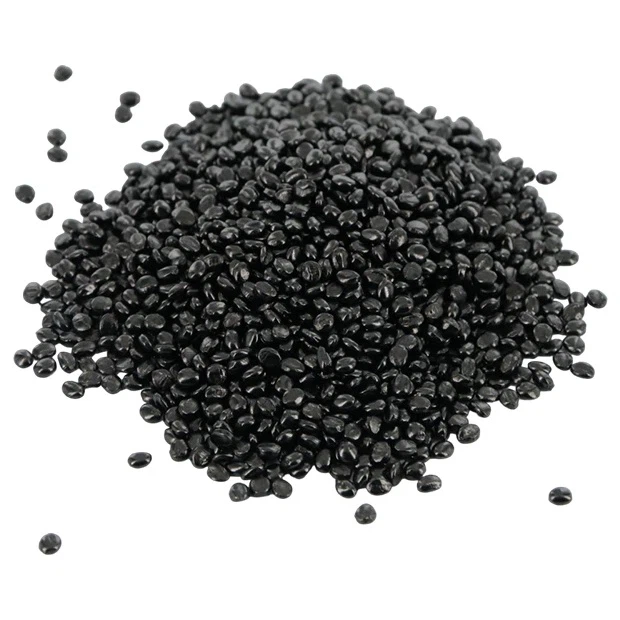
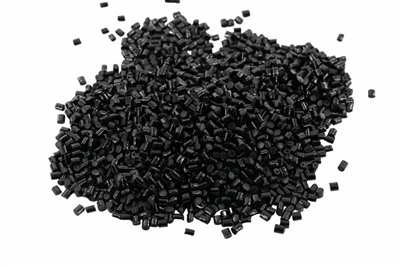

Yo, what's up everyone! I'm a supplier of pp black masterbatch, and today I wanna chat about how pp black masterbatch affects the gloss of PP products. It's a topic that's super relevant for those in the plastics industry, whether you're a manufacturer, a designer, or just someone curious about how things work.
First off, let's quickly understand what pp black masterbatch is. PP black masterbatch is a concentrated mixture of carbon black pigment and a carrier resin, which in this case is polypropylene (PP). It's used to color PP products black in an efficient and cost - effective way. You can check out more about it on this link: PP Black Masterbatch.
Now, onto the main question: how does it affect the gloss of PP products?
1. Pigment Concentration
The amount of carbon black in the pp black masterbatch has a huge impact on the gloss. When the concentration of carbon black is low, the PP product tends to have a higher gloss. This is because there are fewer pigment particles to scatter and absorb light. The light can reflect off the surface of the PP more smoothly, giving it that shiny look.
On the other hand, when the carbon black concentration is high, the pigment particles are more densely packed. They scatter the light in multiple directions, reducing the amount of light that can be reflected in a specular manner. As a result, the gloss of the PP product decreases. For example, if you're making a high - gloss PP container, you might want to use a pp black masterbatch with a relatively low carbon black content. But if you're aiming for a more matte finish, a higher concentration would be the way to go.
2. Dispersion Quality
The dispersion of carbon black in the PP matrix is crucial for the gloss of the final product. If the carbon black is well - dispersed in the masterbatch and then in the PP resin during processing, the surface of the PP product will be more uniform. A uniform surface allows light to reflect evenly, leading to a higher gloss.
However, if the dispersion is poor, there will be agglomerates of carbon black particles on the surface of the PP product. These agglomerates create unevenness, which scatters light and reduces the gloss. To ensure good dispersion, we need to use proper mixing and processing techniques. At our company, we've developed advanced dispersion technologies to make sure that our PP Black Masterbatch provides excellent dispersion in PP products.
3. Carrier Resin Properties
The carrier resin in the pp black masterbatch also plays a role in the gloss of PP products. The compatibility between the carrier resin and the base PP resin is important. If they are highly compatible, the masterbatch will blend well with the PP resin, resulting in a smooth surface and higher gloss.
The melt flow index (MFI) of the carrier resin is another factor. A carrier resin with an appropriate MFI can flow easily during processing, filling the mold cavities evenly and creating a smooth surface finish. If the MFI is too high or too low, it can lead to surface defects such as flow lines or unevenness, which will reduce the gloss.
4. Processing Conditions
The processing conditions during the production of PP products can significantly affect the gloss. Temperature is a key factor. If the processing temperature is too low, the PP resin may not melt completely, and the carbon black may not disperse well. This can result in a rough surface and lower gloss.
On the other hand, if the temperature is too high, the PP resin may degrade, and the carbon black may oxidize. Oxidized carbon black can change its surface properties and reduce the gloss. The injection speed, pressure, and cooling rate also matter. A fast injection speed and proper pressure can help to fill the mold evenly and create a smooth surface. A controlled cooling rate can prevent the formation of internal stresses that could lead to surface irregularities.
Comparison with Other Masterbatches
It's interesting to compare pp black masterbatch with other types of masterbatches, like PA Black Masterbatch. PA (polyamide) has different properties compared to PP. PA has a higher melting point and better mechanical properties in some aspects. When using PA black masterbatch to color PA products, the factors affecting gloss are similar but not exactly the same.
For example, the dispersion requirements for PA may be different due to its different molecular structure. PA also has a different surface energy compared to PP, which can affect how light reflects off the surface. However, the basic principle of how pigment concentration and dispersion affect gloss still applies.
Another type of masterbatch is the No Carrier Black Masterbatch. Without a carrier resin, the carbon black is in a more concentrated form. This can be both an advantage and a disadvantage when it comes to gloss. On one hand, it can be more cost - effective and may offer more flexibility in terms of carrier resin selection during processing. On the other hand, it requires more careful handling and dispersion to achieve a good gloss in the final PP product.
Practical Applications
In practical applications, the impact of pp black masterbatch on gloss is very important. For automotive interior parts, such as dashboard trims, a high - gloss finish can give a more luxurious and modern look. So, manufacturers will choose a pp black masterbatch with appropriate properties to achieve the desired gloss.
In the consumer goods industry, like making plastic toys or electronic device casings, the gloss can affect the product's aesthetic appeal. A shiny, high - gloss product is often more attractive to consumers. But for some products, like outdoor furniture, a lower - gloss or matte finish may be preferred as it can be more resistant to showing scratches and dirt.
Conclusion
So, as you can see, pp black masterbatch has a complex and significant impact on the gloss of PP products. Pigment concentration, dispersion quality, carrier resin properties, and processing conditions all interact to determine the final gloss. Whether you're looking for a high - gloss or a matte finish, choosing the right pp black masterbatch and optimizing the processing conditions are crucial.
If you're in the market for pp black masterbatch and want to discuss how it can meet your specific gloss requirements, feel free to reach out. We're here to help you get the best results for your PP products.


References
- "Plastics Additives Handbook" by Hans Zweifel
- "Polymer Processing: Principles and Practice" by Christopher Rauwendaal