

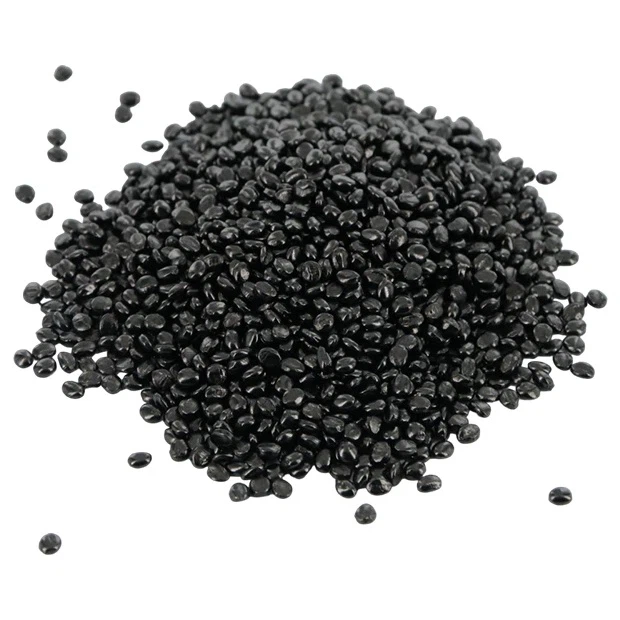
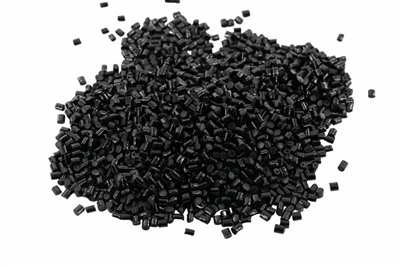

As a supplier of PS black masterbatch, I've received numerous inquiries about how our product impacts the shrinkage rate of PS plastics. This blog post aims to provide a detailed analysis of this crucial aspect, offering insights into the science behind it and its practical implications for various applications.
Understanding PS Plastics and Shrinkage
Polystyrene (PS) is a widely used thermoplastic known for its transparency, rigidity, and ease of processing. It finds applications in packaging, consumer goods, electronics, and more. However, like many plastics, PS experiences shrinkage during the cooling process after molding. Shrinkage occurs because plastics contract as they transition from a molten state to a solid state. This can lead to dimensional inaccuracies in the final product, which is a significant concern for manufacturers.
The shrinkage rate of PS plastics is influenced by several factors, including the type of PS (general-purpose PS or high-impact PS), processing conditions (temperature, pressure, cooling rate), and the presence of additives. This is where our PS Black Masterbatch comes into play.
Role of PS Black Masterbatch in Shrinkage
Filler Effect
Our PS black masterbatch contains carbon black as the main pigment, along with other additives and carriers. Carbon black acts as a filler in the PS matrix. When added to PS plastics, it occupies space between the polymer chains. This reduces the free volume available for the polymer chains to move and contract during cooling. As a result, the overall shrinkage rate of the PS plastic is decreased.
The amount of carbon black in the masterbatch plays a crucial role. A higher loading of carbon black generally leads to a lower shrinkage rate. However, excessive carbon black can also affect other properties of the PS plastic, such as its mechanical strength and processability. Therefore, we carefully formulate our masterbatch to achieve an optimal balance between shrinkage reduction and other performance requirements.
Nucleating Effect
In addition to the filler effect, carbon black in our PS black masterbatch can act as a nucleating agent. Nucleation is the process by which small crystals or nuclei form in the molten polymer during cooling. These nuclei serve as starting points for the growth of larger crystals. By providing more nucleation sites, carbon black promotes the formation of a larger number of smaller crystals in the PS plastic.
Smaller crystals have a more uniform structure and are less likely to cause significant volume changes during cooling. This results in a more controlled shrinkage process and a lower overall shrinkage rate. The nucleating effect of our masterbatch helps to improve the dimensional stability of the PS plastic, making it more suitable for applications where precise dimensions are required.
Thermal Conductivity
Another important factor affecting shrinkage is the thermal conductivity of the PS plastic. Our PS black masterbatch can enhance the thermal conductivity of the PS matrix. Carbon black has relatively high thermal conductivity compared to PS. When added to the plastic, it helps to dissipate heat more efficiently during the cooling process.
A faster and more uniform cooling rate reduces the temperature gradient within the molded part. This minimizes the differential shrinkage that can occur due to uneven cooling, leading to a more consistent shrinkage rate across the entire part. As a result, the final product has better dimensional accuracy and fewer warping issues.
Practical Implications for Manufacturers
Improved Dimensional Accuracy
By using our PS black masterbatch to reduce the shrinkage rate of PS plastics, manufacturers can achieve better dimensional accuracy in their products. This is particularly important for applications such as precision parts in electronics and automotive components, where even small dimensional variations can affect the functionality and performance of the final product.
Reduced Scrap Rates
Lower shrinkage rates also mean fewer defective parts due to dimensional inaccuracies. This leads to a significant reduction in scrap rates, which translates into cost savings for manufacturers. By using our high-quality masterbatch, manufacturers can improve their production efficiency and profitability.


Enhanced Product Quality
In addition to dimensional accuracy, the use of our PS black masterbatch can also enhance the overall quality of the PS plastic products. The more controlled shrinkage process results in a smoother surface finish and fewer internal stresses in the molded parts. This improves the mechanical properties and aesthetic appearance of the products, making them more competitive in the market.
Other Applications of Our Masterbatch
Apart from PS plastics, our expertise extends to other types of plastics as well. We also offer PC Black Masterbatch for polycarbonate (PC) plastics and Black Masterbatch For Automotive for automotive applications. These masterbatches are formulated to meet the specific requirements of each plastic type and application, providing similar benefits in terms of coloration, performance enhancement, and shrinkage control.
Contact Us for Procurement
If you are interested in learning more about our PS black masterbatch and how it can benefit your PS plastic manufacturing process, we encourage you to contact us for procurement discussions. Our team of experts is ready to provide you with detailed technical information, samples, and customized solutions to meet your specific needs.
References
- "Plastics Processing Technology" by John A. Brydson
- "Handbook of Polymer Science and Technology" edited by Herman F. Mark, et al.
- "Introduction to Polymers" by Young and Lovell