

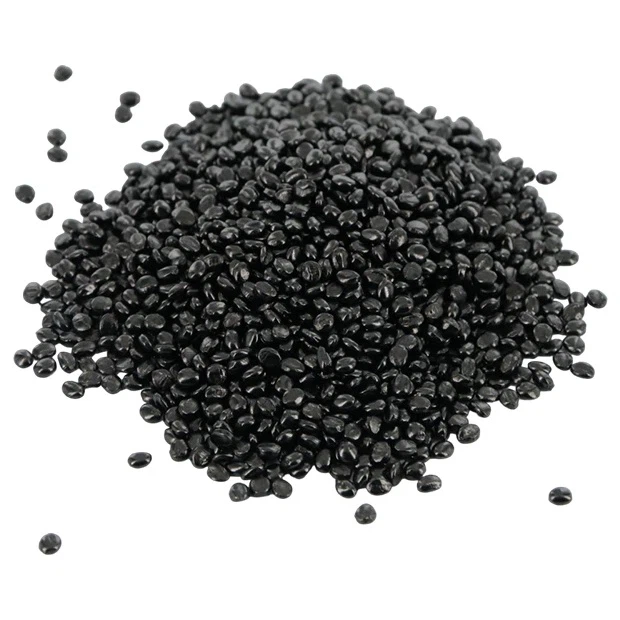
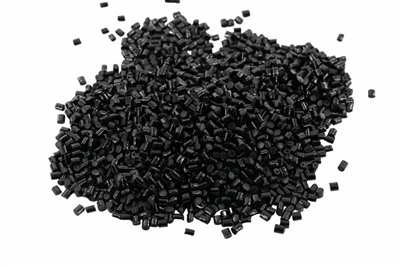

As a supplier of black masterbatch for extrusion, I've seen firsthand how the carrier resin in these masterbatches can have a huge impact on the extrusion process. Let's dig into this topic and see what makes carrier resins so important.
First off, what's a carrier resin? Well, in black masterbatch, the carrier resin is like the vehicle that transports the carbon black (the pigment that gives the masterbatch its black color) and other additives through the extrusion machine. It has to be compatible with the base polymer that you're using in your extrusion process. For example, if you're extruding polypropylene (PP), you'll want a carrier resin that's PP-based. Otherwise, you might run into some serious compatibility issues.
One of the most significant impacts of the carrier resin is on the dispersion of carbon black. Good dispersion is crucial because it ensures that the final product has a consistent color and properties. If the carrier resin isn't up to the task, the carbon black particles might clump together, leading to streaks, uneven color, and even mechanical property issues in the extruded product.
Let's talk about how different types of carrier resins can affect the extrusion process. There are several common types, such as polyethylene (PE), polypropylene (PP), and polystyrene (PS).
PE carrier resins are widely used because they're relatively inexpensive and have good compatibility with many different base polymers. They also have a low melting point, which means they can flow easily through the extrusion machine. This is great for reducing energy consumption and increasing the extrusion speed. However, if you're looking for high-temperature applications, PE might not be the best choice because it has a relatively low heat resistance.
PP carrier resins, on the other hand, are known for their high stiffness and heat resistance. They're a popular choice for applications where the extruded product needs to withstand high temperatures, like in automotive parts or electrical components. But PP carrier resins can be a bit more challenging to process because they have a higher melting point and a narrower processing window compared to PE. You need to make sure your extrusion machine is set up correctly to handle PP carrier resins.


PS carrier resins are often used in applications where transparency or a high-gloss finish is required. They have good flow properties and can provide excellent surface quality in the extruded product. However, PS is brittle, so it might not be suitable for applications that require high impact resistance.
Another factor to consider is the viscosity of the carrier resin. The viscosity affects how easily the masterbatch can flow through the extrusion machine. If the viscosity is too high, the masterbatch might not flow evenly, leading to issues like die build-up and inconsistent product dimensions. On the other hand, if the viscosity is too low, the masterbatch might not hold the carbon black particles in suspension properly, resulting in poor dispersion.
The molecular weight of the carrier resin also plays a role. A higher molecular weight generally means better mechanical properties in the extruded product, but it can also make the masterbatch more difficult to process. You need to find the right balance between molecular weight and processability for your specific application.
Now, let's look at some real-world examples of how the carrier resin can impact the extrusion process. Suppose you're producing Black Masterbatch for Sheet. For a high-quality sheet, you need a carrier resin that can provide excellent dispersion of the carbon black and a smooth surface finish. A PE carrier resin might be a good choice here because it can flow easily through the sheet extrusion die and ensure uniform color distribution.
If you're into Black Masterbatch for Injection, the carrier resin needs to have good flow properties to fill the injection mold completely. PP carrier resins can be a great option for injection molding because they can flow into complex mold cavities and provide good dimensional stability in the final product.
And for Black Masterbatch for Toy, safety is a top concern. You need a carrier resin that's non-toxic and has good compatibility with the toy material. PE carrier resins are often used in toy applications because they're generally considered safe and can be easily processed.
In addition to these technical aspects, the choice of carrier resin can also affect the cost of the extrusion process. Some carrier resins are more expensive than others, so you need to consider the cost-benefit ratio. You don't want to overspend on a high-end carrier resin if a more affordable option can meet your requirements.
To sum it up, the carrier resin in black masterbatch for extrusion has a profound impact on the process. It affects the dispersion of carbon black, the flow properties, the mechanical properties of the final product, and even the cost. As a supplier, I always work closely with my customers to understand their specific needs and recommend the most suitable carrier resin for their extrusion process.
If you're in the market for black masterbatch for extrusion and want to learn more about how the carrier resin can impact your process, I'd love to have a chat with you. We can discuss your application, your requirements, and find the best solution for you. Don't hesitate to reach out and start a conversation about your procurement needs.
References
- "Plastics Extrusion Technology Handbook" by Allan A. Griff
- "Masterbatch Technology: A Guide to Production and Applications" by John Murphy