

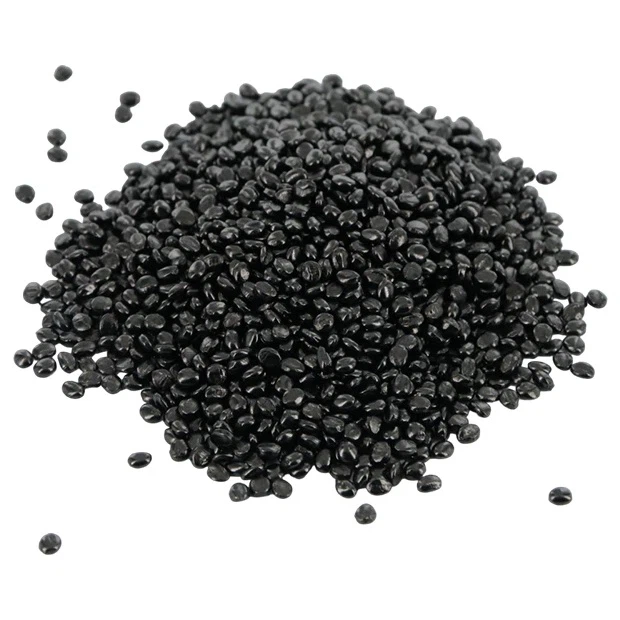
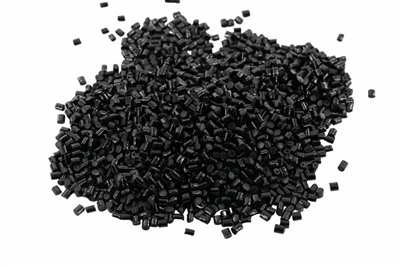

What is the Heat Resistance of Black Masterbatch for Granulation?
As a supplier of black masterbatch for granulation, I often receive inquiries about the heat resistance of our products. Heat resistance is a crucial property, especially in various industrial applications where the masterbatch is exposed to high temperatures during processing or in the end - use environment.
Understanding Heat Resistance in Black Masterbatch
Heat resistance refers to the ability of the black masterbatch to maintain its physical and chemical properties when subjected to elevated temperatures. In the context of granulation, this means that the masterbatch should not degrade, lose its color, or release harmful substances at the temperatures typically encountered during the granulation process.
The heat resistance of black masterbatch is mainly determined by two key factors: the type of carrier resin and the quality of the carbon black used.
Carrier Resin
The carrier resin is the base material that holds the carbon black particles in the masterbatch. Different types of carrier resins have different melting points and thermal stabilities. For example, polyethylene (PE) and polypropylene (PP) are commonly used carrier resins in black masterbatch for granulation.
PE has a relatively low melting point, usually ranging from 105 - 135°C for low - density polyethylene (LDPE) and 120 - 130°C for high - density polyethylene (HDPE). PP has a higher melting point, typically around 160 - 170°C. When choosing a carrier resin, it is essential to consider the processing temperature of the final application. If the granulation process requires high temperatures, a carrier resin with a high melting point and good thermal stability, such as PP, may be more suitable.
Carbon Black
Carbon black is the pigment that gives the masterbatch its black color. The quality and structure of carbon black can significantly affect the heat resistance of the masterbatch. High - quality carbon black with a well - developed structure and high surface area can provide better heat resistance.


Carbon black particles act as heat sinks, absorbing and dissipating heat during the heating process. They also help to prevent the oxidation and degradation of the carrier resin by providing a physical barrier against oxygen. However, if the carbon black is not properly dispersed in the carrier resin, it can lead to local overheating and premature degradation of the masterbatch.
Measuring Heat Resistance
There are several methods to measure the heat resistance of black masterbatch for granulation. One common method is thermogravimetric analysis (TGA). TGA measures the weight loss of a sample as it is heated at a constant rate. By analyzing the weight loss curve, we can determine the temperature at which the masterbatch starts to degrade.
Another method is differential scanning calorimetry (DSC). DSC measures the heat flow associated with physical and chemical changes in a sample as it is heated or cooled. It can provide information about the melting point, crystallization temperature, and thermal stability of the masterbatch.
In addition to these laboratory methods, practical tests can also be conducted during the granulation process. For example, we can monitor the color stability, mechanical properties, and odor of the granules produced at different processing temperatures. If the granules show significant color change, reduced mechanical strength, or a strong odor at a certain temperature, it may indicate that the heat resistance of the masterbatch has been exceeded.
Applications and Heat Resistance Requirements
The heat resistance requirements of black masterbatch vary depending on the application. Here are some common applications and their corresponding heat resistance needs:
Shopping Bags
Black Masterbatch for Shopping Bag are typically made from PE. The granulation process for shopping bag production usually occurs at relatively low temperatures, around 120 - 150°C. Therefore, a black masterbatch with a heat resistance of at least 150°C is sufficient for this application. The masterbatch should also have good dispersion properties to ensure a uniform black color in the final shopping bags.
Toys
Toys are often made from various plastics, including PE, PP, and PVC. The granulation process for toy production may require higher temperatures, especially for engineering plastics. Black Masterbatch for Toy should have a heat resistance of at least 180 - 200°C to withstand the processing conditions. In addition, the masterbatch must comply with strict safety standards, such as the absence of heavy metals and harmful substances.
Garbage Bags
Garbage bags are usually produced from PE. The granulation process for garbage bag manufacturing can be carried out at temperatures similar to those for shopping bags, around 120 - 150°C. Black Masterbatch for Garbage Bag should have good heat resistance and dispersion to ensure the durability and color consistency of the garbage bags.
Improving Heat Resistance
As a supplier, we are constantly working to improve the heat resistance of our black masterbatch for granulation. One way is to select high - quality raw materials, including carrier resins and carbon black. We also use advanced manufacturing processes to ensure the uniform dispersion of carbon black in the carrier resin.
In addition, we can add heat stabilizers to the masterbatch formulation. Heat stabilizers can prevent the oxidation and degradation of the carrier resin at high temperatures. Common heat stabilizers include antioxidants, UV stabilizers, and metal deactivators.
Conclusion
The heat resistance of black masterbatch for granulation is a critical property that depends on the type of carrier resin, the quality of carbon black, and the manufacturing process. By understanding the heat resistance requirements of different applications and using appropriate measurement methods, we can ensure that our products meet the needs of our customers.
If you are in the market for high - quality black masterbatch for granulation, we are here to provide you with the best solutions. Our products are carefully formulated to meet the specific heat resistance requirements of various applications. Whether you need masterbatch for shopping bags, toys, or garbage bags, we have the expertise and experience to assist you. Contact us today to start a procurement negotiation and find the perfect black masterbatch for your business.
References
- "Plastics Additives Handbook" by Hans Zweifel
- "Carbon Black: Science and Technology" by James Economy
- "Thermal Analysis of Polymers: Fundamentals and Applications" by Barbara Wunderlich