


Hey there! As a supplier of black masterbatch for filament, I've often been asked about the influence of our product on the gas permeability of filaments. So, I thought I'd dive deep into this topic and share some insights with you all.
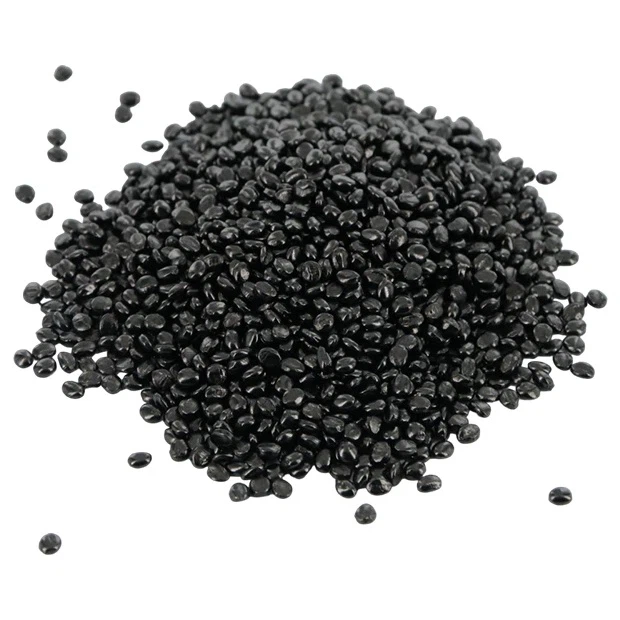
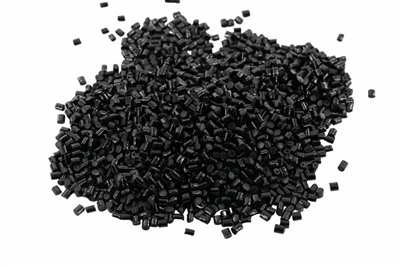
First off, let's quickly understand what black masterbatch for filament is. It's a concentrated mixture of carbon black pigment and a carrier resin. This masterbatch is used to color filaments, giving them that distinct black hue. But its role isn't just about aesthetics. It can also have a significant impact on the physical properties of the filament, including gas permeability.
Gas permeability is a crucial property, especially in applications where the filament is used to make products that come into contact with gases. For example, in the packaging industry, the gas permeability of the filament can determine how well the package protects its contents from oxygen, moisture, and other gases. If the gas permeability is too high, the product inside the package may spoil or degrade more quickly.
Now, let's talk about how black masterbatch affects gas permeability. One of the main factors is the dispersion of carbon black in the carrier resin. When the carbon black is well - dispersed in the masterbatch, it can form a kind of barrier within the filament. This barrier can impede the passage of gas molecules through the filament, thereby reducing its gas permeability.
Think of it like a maze. Gas molecules trying to pass through the filament have to navigate around the well - dispersed carbon black particles. This makes it more difficult for them to move through the material, and as a result, the overall gas permeability is lower. On the other hand, if the carbon black is poorly dispersed, there won't be an effective barrier, and gas molecules can pass through the filament more easily.
The amount of black masterbatch added to the filament also plays a role. Generally, as the concentration of black masterbatch increases, the gas permeability of the filament decreases. This is because there are more carbon black particles to act as barriers. However, there's a limit to this. If you add too much black masterbatch, it can cause other problems such as reduced mechanical properties of the filament, like lower tensile strength and flexibility.
Another aspect to consider is the type of carrier resin used in the black masterbatch. Different carrier resins have different molecular structures and properties, which can affect how the carbon black interacts with the resin and ultimately, the gas permeability of the filament. For example, some carrier resins may have a more compact molecular structure, which can enhance the barrier effect of the carbon black.


Let's take a look at some real - world applications. In the production of Black Masterbatch for Blown Bottle, gas permeability is a critical factor. Bottles made from filaments with low gas permeability can better preserve the contents inside, whether it's a beverage, a chemical, or a food product. Our black masterbatch can be customized to achieve the right balance of color and gas permeability for blown bottles.
Similarly, for Black Masterbatch For Granulation, the gas permeability of the granules can affect their storage and processing. Granules with lower gas permeability are less likely to absorb moisture or react with oxygen during storage, which can improve their quality and performance.
In the case of Black Masterbatch for Garbage Bag, gas permeability can impact the odor containment of the bags. A garbage bag made from a filament with low gas permeability can better trap unpleasant odors inside, providing a more hygienic and pleasant environment.
To ensure the best results in terms of gas permeability, we at our company take several steps. We use high - quality carbon black and carrier resins. Our manufacturing process is designed to achieve optimal dispersion of the carbon black in the carrier resin. We also conduct rigorous quality control tests to make sure that each batch of black masterbatch meets the required standards.
If you're in the market for black masterbatch for filament and are concerned about gas permeability, we're here to help. Our team of experts can work with you to understand your specific requirements and recommend the right type and amount of black masterbatch for your application. Whether you're making blown bottles, granules, or garbage bags, we can provide a solution that meets your needs.
In conclusion, black masterbatch for filament can have a significant influence on the gas permeability of the filament. By controlling factors such as carbon black dispersion, concentration, and carrier resin type, we can adjust the gas permeability to suit different applications. If you're interested in learning more or discussing your procurement needs, don't hesitate to reach out. We're always happy to have a chat and see how we can work together to achieve the best results for your products.
References
- "Plastic Additives Handbook" by Hans Zweifel
- "Polymer Science and Technology" by James E. Mark