

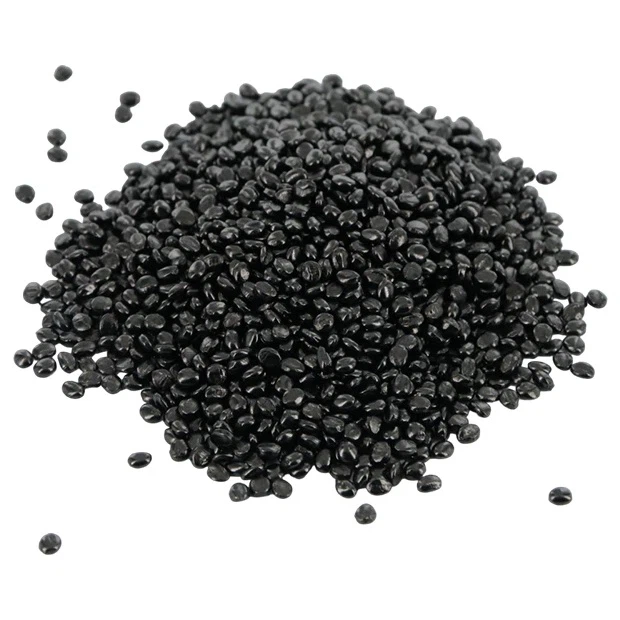
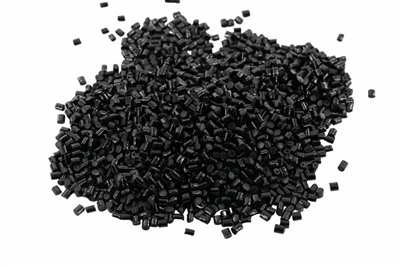

The melting point of black masterbatch for filament is a crucial parameter that significantly influences the manufacturing process of filaments and the quality of the final products. As a supplier of black masterbatch for filament, understanding this characteristic is essential for providing high - quality products to our customers.
The Basics of Black Masterbatch for Filament
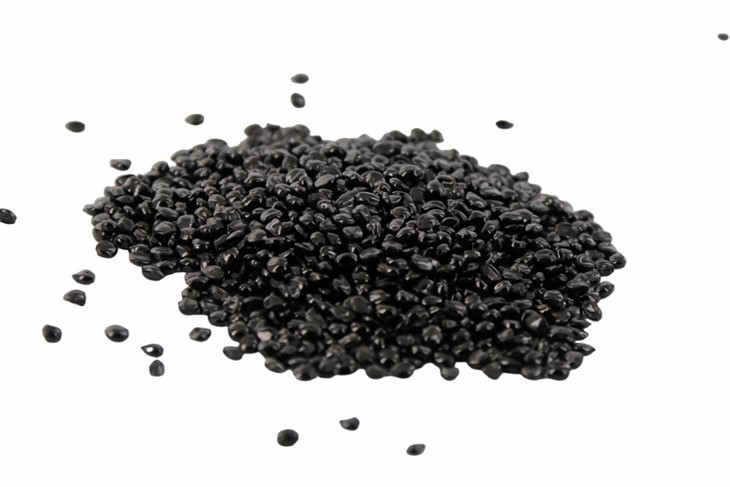
Black masterbatch for filament is a concentrated mixture of carbon black pigment and a carrier resin. Carbon black is the key component that imparts the black color to the filament. The carrier resin, on the other hand, acts as a medium to disperse the carbon black evenly throughout the filament during the manufacturing process.
The choice of carrier resin plays a vital role in determining the melting point of the black masterbatch. Different types of carrier resins have different melting points. For example, polyethylene (PE) has a melting point range of approximately 105 - 135°C, while polypropylene (PP) melts between 160 - 170°C. These carrier resins are commonly used in black masterbatch for filament due to their good compatibility with various polymers and their ability to provide excellent dispersion of the carbon black.
Factors Affecting the Melting Point of Black Masterbatch for Filament
- Carrier Resin Type: As mentioned earlier, the type of carrier resin is the primary factor influencing the melting point. Different polymers have distinct molecular structures and intermolecular forces, which result in different melting behaviors. For instance, a black masterbatch with a polyethylene carrier resin will have a lower melting point compared to one with a polypropylene carrier resin.
- Carbon Black Content: The amount of carbon black in the masterbatch can also affect the melting point. Higher carbon black content can increase the viscosity of the masterbatch, which may lead to a slightly higher melting point. This is because the carbon black particles interact with the carrier resin molecules, restricting their movement and requiring more energy to break the intermolecular forces.
- Additives: Some black masterbatches for filament may contain additives such as antioxidants, lubricants, or dispersants. These additives can modify the melting behavior of the masterbatch. For example, lubricants can reduce the friction between the polymer chains, lowering the melting point slightly.
Importance of Knowing the Melting Point
Understanding the melting point of black masterbatch for filament is of utmost importance in the manufacturing process.
- Processing Temperature: The melting point determines the appropriate processing temperature for the filament extrusion. If the processing temperature is too low, the masterbatch may not melt completely, resulting in uneven color distribution and poor mechanical properties of the filament. On the other hand, if the temperature is too high, it can cause thermal degradation of the polymer, leading to a decrease in the quality of the filament.
- Compatibility with Base Polymers: When using black masterbatch in filament production, it is essential to ensure that the melting point of the masterbatch is compatible with the base polymer. If the melting points are too different, it can lead to problems such as phase separation or poor dispersion of the masterbatch in the base polymer.
Measuring the Melting Point of Black Masterbatch for Filament
There are several methods available for measuring the melting point of black masterbatch. One of the most common methods is differential scanning calorimetry (DSC). In DSC, a small sample of the masterbatch is heated at a controlled rate, and the heat flow into or out of the sample is measured. The melting point is determined as the temperature at which a significant endothermic peak occurs in the DSC curve.

Another method is thermogravimetric analysis (TGA), which measures the weight change of a sample as it is heated. Although TGA is mainly used to study thermal stability and decomposition, it can also provide some information about the melting behavior of the masterbatch.
Our Product Range and Melting Points
As a supplier of black masterbatch for filament, we offer a wide range of products with different melting points to meet the diverse needs of our customers. Our Black Masterbatch for Mulch Film is formulated with a carrier resin that has a melting point suitable for the extrusion process of mulch films. This ensures uniform color distribution and excellent mechanical properties of the final product.
Our Black Masterbatch For Pipe is designed to have a melting point that is compatible with the base polymers used in pipe manufacturing. This allows for smooth extrusion and high - quality pipes with good UV resistance due to the presence of carbon black.
The Black Masterbatch for Injection we provide has a melting point optimized for injection molding processes. It ensures that the masterbatch melts and mixes well with the base polymer during injection, resulting in parts with consistent color and properties.

Conclusion
The melting point of black masterbatch for filament is a complex yet critical property that affects the manufacturing process and the quality of the final products. By carefully selecting the carrier resin, controlling the carbon black content, and using appropriate additives, we can produce black masterbatches with the desired melting points.
If you are in the market for high - quality black masterbatch for filament, we invite you to contact us for procurement and further discussions. Our team of experts is ready to assist you in choosing the right product based on your specific requirements.
References
- "Polymer Science and Engineering" by Donald R. Paul and Charles B. Bucknall
- "Handbook of Plastic Materials and Technology" by Irvin I. Rubin