


Hey there! I'm a supplier of black masterbatch for automotive, and I've been in this game for quite a while. One of the biggest challenges we face in the industry is ensuring the consistent quality of black masterbatch during large - scale production. In this blog, I'll share some tips and tricks that I've learned over the years to tackle this issue.
First off, let's understand why consistent quality is so crucial. In the automotive industry, the black masterbatch is used in a variety of parts, from interior trims to exterior components. Any variation in the quality of the masterbatch can lead to visible differences in color, gloss, and mechanical properties of these parts. This not only affects the aesthetic appeal of the vehicle but also its performance and durability. For example, if the color of the interior trims varies, it can make the car look unprofessional and reduce its market value. So, getting that consistent quality is a must.
Raw Material Selection
The quality of the raw materials is the foundation of producing high - quality black masterbatch. When it comes to large - scale production, it's essential to source raw materials from reliable suppliers. I always make sure to work with suppliers who have a proven track record of providing consistent quality materials.
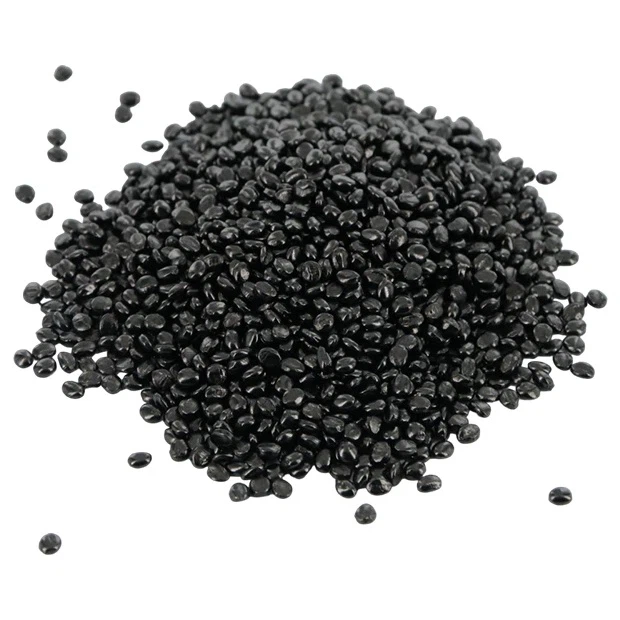
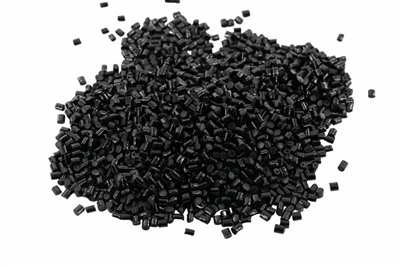
Carbon black is the main pigment used in black masterbatch. The type, particle size, and structure of carbon black can significantly impact the final properties of the masterbatch. For automotive applications, we usually prefer high - quality carbon black with a narrow particle size distribution. This ensures uniform color dispersion and better mechanical properties. You can check out our Black Masterbatch for Automotive product page to see the kind of carbon black we use.
The carrier resin is another important raw material. It should have good compatibility with the base polymer in the automotive parts. For instance, if the automotive part is made of polypropylene (PP), we use PP Black Masterbatch, which has a carrier resin that is specifically designed for PP. This ensures that the masterbatch disperses well in the PP matrix and provides consistent color and properties.

Production Process Control
Once we have the right raw materials, the next step is to control the production process carefully. In large - scale production, even small variations in the process can lead to significant differences in the quality of the masterbatch.
Mixing is a critical step in the production of black masterbatch. We use high - intensity mixers to ensure that the carbon black and other additives are uniformly dispersed in the carrier resin. The mixing time and speed need to be carefully controlled. If the mixing time is too short, the carbon black may not disperse properly, resulting in color streaks in the final product. On the other hand, if the mixing time is too long, it can cause degradation of the carrier resin.
Extrusion is another important process. The temperature, pressure, and screw speed during extrusion need to be optimized. A stable extrusion process ensures that the masterbatch has a consistent melt flow index and other physical properties. We use advanced extrusion equipment with precise temperature and pressure control systems to achieve this.
Quality Testing and Monitoring
Quality testing and monitoring are essential to ensure the consistent quality of black masterbatch during large - scale production. We conduct a series of tests at different stages of the production process.
Before starting the production, we test the raw materials to ensure their quality. This includes testing the particle size, moisture content, and chemical composition of the carbon black and the melt flow index and other properties of the carrier resin.
During the production process, we take samples at regular intervals and test them for color, gloss, and other physical properties. We use colorimeters and gloss meters to measure these properties accurately. If any deviation is detected, we can adjust the production process immediately to correct it.
After the production is complete, we conduct final quality checks on the finished masterbatch. This includes testing for mechanical properties such as tensile strength and elongation at break, as well as environmental resistance properties such as UV resistance and heat aging resistance. Only the masterbatch that meets our strict quality standards is released for shipment.

Inventory Management
Proper inventory management is also crucial for ensuring consistent quality in large - scale production. We need to store the raw materials and finished products in a proper environment to prevent degradation.
Raw materials should be stored in a dry and cool place to prevent moisture absorption and oxidation. The finished masterbatch should also be stored in a similar environment to maintain its quality. We have a well - organized inventory system that tracks the expiration dates of the raw materials and ensures that the oldest materials are used first.
Staff Training and Skill Development
The skills and knowledge of our staff play a vital role in ensuring the consistent quality of black masterbatch. We provide regular training to our production workers, quality control personnel, and other relevant staff.
The production workers are trained on the proper operation of the production equipment, including the mixers, extruders, and other machinery. They are also taught how to identify and troubleshoot common production problems.
The quality control personnel are trained on the use of testing equipment and the interpretation of test results. They are responsible for ensuring that the masterbatch meets the quality standards at every stage of the production process.
Continuous Improvement
The automotive industry is constantly evolving, and the requirements for black masterbatch are also changing. To stay competitive, we need to continuously improve our production processes and product quality.
We regularly collect feedback from our customers and analyze the market trends. Based on this information, we make improvements to our raw material selection, production processes, and quality control methods. For example, if our customers demand better UV resistance in the black masterbatch, we will research and develop new formulations and production processes to meet this requirement.

Conclusion
Ensuring the consistent quality of black masterbatch for automotive in large - scale production is a complex but achievable task. By focusing on raw material selection, production process control, quality testing and monitoring, inventory management, staff training, and continuous improvement, we can produce high - quality black masterbatch that meets the strict requirements of the automotive industry.
If you're in the market for black masterbatch for automotive, I'd love to talk to you. Whether you need PP Black Masterbatch or No Carrier Black Masterbatch, we've got you covered. Feel free to reach out to us for more information and to start a procurement discussion. Let's work together to take your automotive products to the next level!
References
- Smith, J. (2020). "Quality Control in Masterbatch Production". Polymer Science Journal.
- Brown, A. (2019). "Raw Material Selection for High - Performance Masterbatch". Automotive Materials Review.
- Green, C. (2021). "Continuous Improvement in Masterbatch Manufacturing". Manufacturing Excellence Magazine.