


Can black masterbatch for foaming be used in foam insulation materials?
As a supplier of black masterbatch for foaming, I am often asked whether our product can be used in foam insulation materials. This is a question that touches on the intersection of material science, manufacturing processes, and end - use applications. In this blog post, I will explore this topic in detail, providing scientific insights and practical considerations.
Understanding Black Masterbatch for Foaming
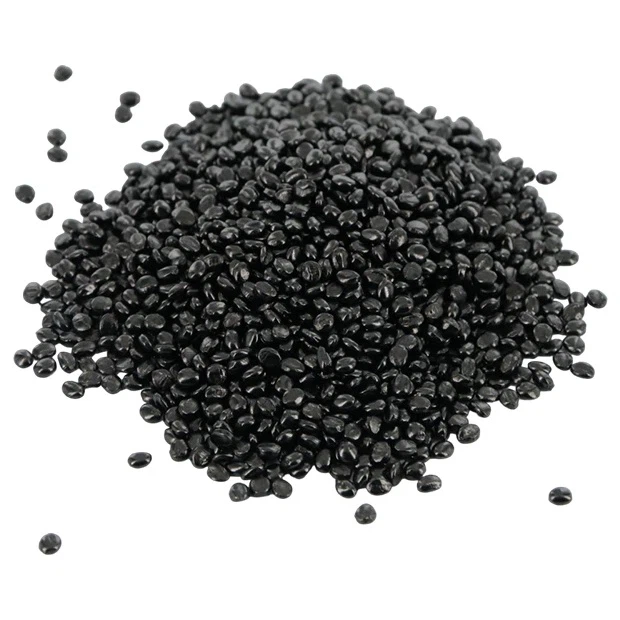
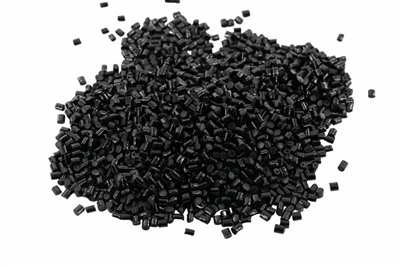
First, let's understand what black masterbatch for foaming is. Black masterbatch is a concentrated mixture of carbon black pigment and a carrier resin. The carrier resin is carefully selected to ensure compatibility with the base polymer in the final application. For foaming applications, the masterbatch is formulated to work in harmony with the foaming agents and the polymer matrix during the foaming process.
The key properties of black masterbatch for foaming include good dispersion, high color strength, and stability under the processing conditions of foaming. Dispersion is crucial because it ensures that the carbon black particles are evenly distributed throughout the polymer, resulting in a uniform black color. High color strength allows for the use of a lower amount of masterbatch to achieve the desired color, which can be cost - effective. Stability under foaming conditions means that the masterbatch does not decompose or react adversely with the foaming agents, ensuring the integrity of the foam structure.
You can find more information about our black masterbatch for foaming on our website: Black Masterbatch for Foaming
Foam Insulation Materials: Requirements and Characteristics
Foam insulation materials are widely used in various industries, such as construction, automotive, and packaging, to reduce heat transfer and save energy. These materials are typically made from polymers like polyurethane, polystyrene, or polyethylene, which are foamed to create a cellular structure.


The performance of foam insulation materials depends on several factors, including the cell size, cell density, and thermal conductivity. A smaller cell size and higher cell density generally result in better insulation properties because they reduce the amount of heat transfer through convection within the foam. Thermal conductivity is a measure of how well a material conducts heat, and lower thermal conductivity values indicate better insulation.
In addition to insulation performance, foam insulation materials also need to meet other requirements, such as mechanical strength, fire resistance, and environmental friendliness. Mechanical strength is important to ensure that the foam can withstand handling, installation, and long - term use. Fire resistance is crucial in applications where there is a risk of fire, such as in building construction. Environmental friendliness is becoming increasingly important, and many industries are looking for foam insulation materials that are recyclable or made from sustainable sources.
Compatibility of Black Masterbatch for Foaming with Foam Insulation Materials
Now, let's discuss whether black masterbatch for foaming can be used in foam insulation materials. The answer is yes, in most cases, but there are some important considerations.
One of the main concerns is the impact of the black masterbatch on the foaming process and the properties of the foam. As mentioned earlier, the black masterbatch needs to be compatible with the foaming agents and the polymer matrix. If the masterbatch contains impurities or reactive substances, it may interfere with the foaming process, leading to uneven cell formation, reduced cell density, or even a failure of the foaming process.
However, our black masterbatch for foaming is specifically formulated to be highly compatible with a wide range of polymers and foaming agents. Through rigorous testing and quality control, we ensure that our masterbatch does not have a negative impact on the foaming process or the properties of the foam. In fact, in some cases, the carbon black in the masterbatch can even enhance the mechanical properties of the foam, such as its tensile strength and tear resistance.
Another consideration is the effect of the black color on the insulation performance. Carbon black is a good absorber of heat, and it may increase the thermal conductivity of the foam to some extent. However, the increase in thermal conductivity is usually negligible if the amount of masterbatch used is within the recommended range. Our technical team can provide guidance on the optimal dosage of black masterbatch for different applications to minimize any potential impact on insulation performance.
Advantages of Using Black Masterbatch for Foaming in Foam Insulation Materials
There are several advantages to using black masterbatch for foaming in foam insulation materials.
Aesthetic Appeal: The black color can give the foam insulation materials a more professional and modern look, which may be desirable in some applications. For example, in automotive interiors or high - end building projects, a black foam insulation material can enhance the overall appearance.
UV Resistance: Carbon black has excellent UV - absorbing properties, which can protect the foam insulation materials from UV degradation. This is particularly important for outdoor applications, where the foam is exposed to sunlight for long periods. By using black masterbatch, the lifespan of the foam insulation materials can be extended.
Cost - Effectiveness: As mentioned earlier, high - color - strength black masterbatch allows for the use of a lower amount to achieve the desired color. This can reduce the cost of raw materials without sacrificing the quality of the foam insulation materials.
Other Applications of Black Masterbatch
In addition to foam insulation materials, our black masterbatch has a wide range of other applications. For example, it can be used in granulation processes. The Black Masterbatch For Granulation is designed to provide a uniform black color to the granules, which can be used in various downstream applications.
Another application is in stretch film production. Our Black Masterbatch for Strech Film is formulated to ensure good dispersion and high color strength in stretch films, which are widely used in packaging to protect and secure products.
Contact Us for Procurement
If you are interested in using our black masterbatch for foaming in your foam insulation materials or other applications, we would be more than happy to discuss your specific requirements. Our experienced sales and technical teams can provide you with detailed product information, samples, and technical support. Whether you need a small - scale trial or a large - scale production order, we are committed to meeting your needs and providing high - quality products at competitive prices.
References
- "Polymer Foams: Structure and Properties" by L. A. Utracki and M. Sepehr
- "Handbook of Thermal Insulation" by A. K. Datta and R. E. Taylor
- "Carbon Black: Properties, Production, and Applications" by J. B. Donnet and R. C. Bansal