

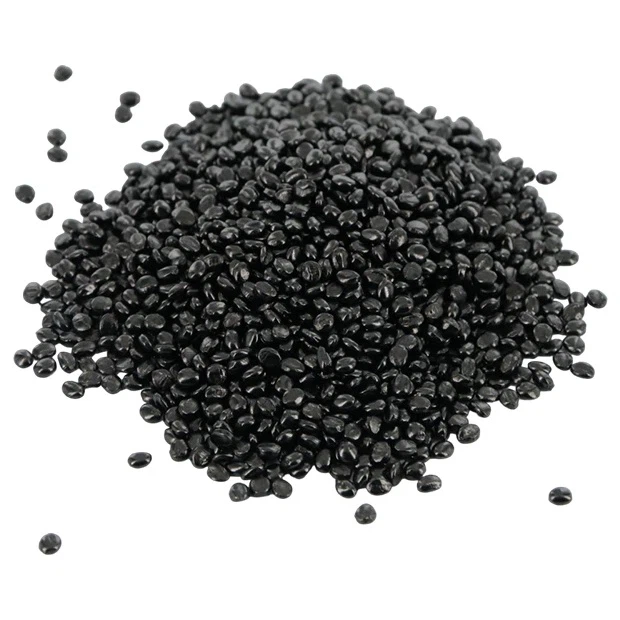
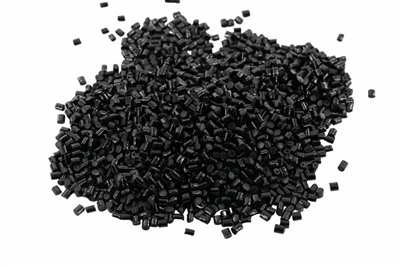

As a supplier of black masterbatch for filament, I've witnessed firsthand the crucial role that this product plays in the filament industry. The addition of black masterbatch to filaments is not just about achieving a desired color; it significantly impacts the mechanical properties of the filament. In this blog, I'll delve into how black masterbatch affects these properties and why it's an essential consideration for manufacturers.
Understanding Black Masterbatch for Filament
Before we explore its impact on mechanical properties, let's understand what black masterbatch for filament is. Black masterbatch is a concentrated mixture of carbon black pigment and a carrier resin. This mixture is then added to the base polymer of the filament during the manufacturing process. The carrier resin is carefully selected to be compatible with the base polymer, ensuring uniform dispersion of the carbon black throughout the filament.
Carbon black is the key ingredient in black masterbatch. It is a fine powder produced by the incomplete combustion of hydrocarbons. Its unique properties, such as high tinting strength, excellent UV resistance, and electrical conductivity, make it an ideal choice for coloring filaments. Additionally, carbon black can enhance the mechanical properties of the filament, depending on its type, particle size, and loading level.
Impact on Tensile Strength
Tensile strength is one of the most important mechanical properties of a filament. It measures the maximum stress that a material can withstand while being stretched or pulled before breaking. The addition of black masterbatch can have a significant impact on the tensile strength of the filament.
In general, a small amount of well - dispersed carbon black can act as a reinforcing filler. The carbon black particles can interact with the polymer chains in the filament, increasing the intermolecular forces and improving the overall strength of the material. This is because the carbon black particles can transfer stress from the polymer matrix to themselves, preventing the formation and propagation of cracks.
However, if the loading level of carbon black is too high, it can have a negative effect on tensile strength. Excessive carbon black can lead to agglomeration, where the particles clump together. These agglomerates act as stress concentrators, weakening the filament and reducing its tensile strength. Therefore, it's crucial to optimize the loading level of black masterbatch to achieve the desired balance between color and mechanical properties.
Influence on Flexural Strength
Flexural strength is another important property, especially for filaments used in applications where the material needs to bend without breaking. Similar to tensile strength, black masterbatch can either enhance or reduce flexural strength depending on the carbon black loading.
When carbon black is evenly dispersed in the filament, it can improve the stiffness and flexural strength of the material. The carbon black particles increase the resistance of the polymer matrix to deformation under bending forces. This is beneficial for applications such as 3D printing, where the printed parts may need to withstand some degree of bending.
On the other hand, if the carbon black particles are not well - dispersed or if the loading is too high, the flexural strength can decrease. Agglomerated carbon black can cause local weaknesses in the filament, making it more prone to cracking and failure under bending.
Effect on Impact Resistance
Impact resistance is the ability of a material to absorb energy when subjected to a sudden impact without fracturing. The addition of black masterbatch can have a complex effect on the impact resistance of the filament.
In some cases, carbon black can improve impact resistance. The carbon black particles can act as energy absorbers, dissipating the impact energy and preventing the formation of cracks. This is particularly true when the carbon black is well - dispersed and the loading level is appropriate.
However, high loading levels of carbon black can reduce impact resistance. Agglomerated carbon black can create brittle regions in the filament, making it more likely to break upon impact. The type of carbon black also plays a role; some types may have a more negative impact on impact resistance than others.
Role of Dispersion
The dispersion of carbon black in the filament is a critical factor in determining the impact of black masterbatch on mechanical properties. A well - dispersed carbon black ensures that the particles are evenly distributed throughout the polymer matrix, allowing them to interact effectively with the polymer chains.
Poor dispersion can lead to agglomeration, which as mentioned earlier, can have a detrimental effect on mechanical properties. To achieve good dispersion, the black masterbatch should be formulated with a suitable carrier resin and processing aids. Additionally, the mixing process during filament manufacturing needs to be optimized to ensure uniform distribution of the masterbatch in the base polymer.


Applications and Considerations
Black masterbatch for filament finds applications in various industries, including 3D printing, packaging, and automotive. In 3D printing, filaments with enhanced mechanical properties can produce stronger and more durable printed parts. For packaging applications, filaments with good mechanical properties can provide better protection for the packaged products.
When choosing a black masterbatch for a specific application, manufacturers need to consider the required mechanical properties, the type of base polymer, and the processing conditions. For example, if high tensile strength is required, a masterbatch with a lower carbon black loading and good dispersion may be preferred. If UV resistance is also a concern, a high - quality carbon black with excellent UV - absorbing properties should be selected.
Our Product Offerings
As a supplier, we offer a range of black masterbatch products for filaments. Our Black Masterbatch for Foaming is specifically designed for applications where foaming is involved. It provides excellent coloration and can also enhance the mechanical properties of the foamed filament.
Our Black Masterbatch for Mulch Film is tailored for the agricultural industry. It not only gives the mulch film a deep black color but also improves its mechanical strength and UV resistance, ensuring a longer service life.
For film blown applications, our Black Masterbatch For Film Blown is an ideal choice. It offers good dispersion and can enhance the mechanical properties of the blown film, such as tear strength and puncture resistance.
Contact for Purchase and Consultation
If you're interested in learning more about our black masterbatch products for filaments or would like to discuss your specific requirements, we invite you to contact us. Our team of experts is ready to provide you with detailed information and help you select the most suitable product for your application. Whether you're a small - scale manufacturer or a large - scale industrial user, we can offer customized solutions to meet your needs.
References
- "Plastics Additives Handbook" by Hans Zweifel
- "Polymer Science and Technology" by Charles A. Harriss
- Research papers on the impact of carbon black on polymer mechanical properties from academic journals such as Polymer Engineering and Science.