

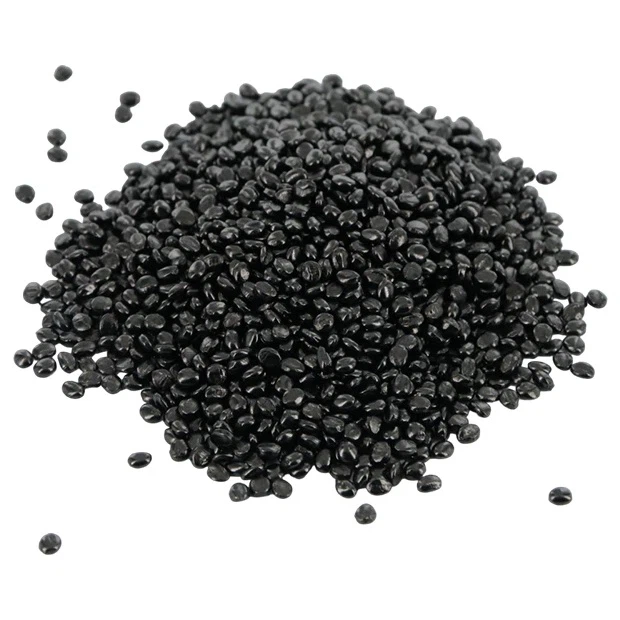
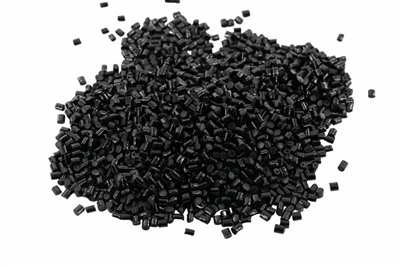

Hey there! As a supplier of black masterbatch for injection, I often get asked about how it affects the tensile strength of the final product. Today, I'm gonna dive deep into this topic and share some insights based on my experience in the industry.
First off, let's talk a bit about what black masterbatch is. It's a concentrated mixture of pigments and additives that are used to color plastics during the injection - molding process. The main role of black masterbatch is to give the plastic product a deep, rich black color. But it also has other properties that can influence the product's overall performance, like tensile strength.
Tensile strength is basically the maximum amount of stress a material can withstand while being stretched or pulled before it breaks. For plastic products made through injection molding, having good tensile strength is crucial. It determines how well the product can hold up under normal use, whether it's a plastic container, a toy, or an automotive part.


Now, when you use black masterbatch in injection molding, there are several factors that can impact the tensile strength of the final product.
1. Quality of the Black Masterbatch
The quality of the black masterbatch you choose matters a lot. High - quality masterbatch is made with well - dispersed pigments and additives. When the pigments are evenly dispersed in the plastic matrix, they don't act as weak points. On the other hand, low - quality masterbatch may have clumps of pigments. These clumps can act as stress concentrators, reducing the overall tensile strength of the product. As a supplier, I always make sure that our black masterbatch is of top - notch quality. We use advanced mixing and dispersion techniques to ensure that the pigments are evenly distributed.
2. Pigment Loading
Pigment loading refers to the amount of pigment in the masterbatch. Generally, as the pigment loading increases, the tensile strength of the product may decrease. This is because a higher amount of pigment can disrupt the molecular structure of the plastic. However, the right balance is key. A small amount of well - dispersed pigment can actually enhance the mechanical properties of the plastic to some extent. For example, in some cases, a small addition of carbon black (a common pigment in black masterbatch) can improve the stiffness and, in turn, the tensile strength of the plastic. But if you go overboard with the pigment loading, you'll start to see a negative impact on the tensile strength.
3. Compatibility with the Base Resin
The black masterbatch needs to be compatible with the base resin used in the injection - molding process. Different plastics have different molecular structures and properties. If the masterbatch isn't compatible with the base resin, it can lead to poor dispersion and phase separation. This can significantly reduce the tensile strength of the final product. For instance, if you're using a polypropylene (PP) base resin, you need to choose a black masterbatch that's specifically formulated for PP. At our company, we offer a range of black masterbatch products that are designed to be compatible with different types of base resins, including those used for Black Masterbatch for Mulch Film, Black Masterbatch for Blown Bottle, and Black Masterbatch for PP Tableware.
4. Processing Conditions
The processing conditions during injection molding also play a role in determining the tensile strength of the product. Factors like temperature, pressure, and injection speed can affect how the black masterbatch and the base resin interact. If the temperature is too high, it can cause the pigment to degrade, which can reduce the tensile strength. Similarly, improper pressure or injection speed can lead to uneven distribution of the masterbatch in the plastic, resulting in a weaker product.
To better understand the impact of black masterbatch on tensile strength, let's look at some real - world examples.
Example 1: Plastic Containers
When making plastic containers, the tensile strength is important to ensure that the container can hold its contents without breaking. If you use a high - quality black masterbatch with the right pigment loading and compatibility with the base resin, you can achieve a container with good tensile strength. This means that the container can withstand normal handling, stacking, and even some external pressure without cracking or splitting.
Example 2: Automotive Parts
Automotive parts need to be strong and durable. Using black masterbatch in the injection molding of automotive parts can add color while also potentially enhancing the mechanical properties. However, since automotive parts are subject to high stress and harsh conditions, it's crucial to choose the right masterbatch and optimize the processing conditions. A well - formulated black masterbatch can help maintain or even improve the tensile strength of these parts, ensuring their reliability on the road.
Now, you might be wondering how you can test the tensile strength of the product after using black masterbatch. There are several standard testing methods available. One common method is the ASTM D638 test. In this test, a sample of the plastic product is placed in a testing machine, and a gradually increasing force is applied until the sample breaks. The maximum force the sample can withstand is recorded, and this value is used to calculate the tensile strength.
As a supplier of black masterbatch for injection, I'm always here to help you choose the right product for your specific needs. Whether you're making mulch films, blown bottles, or PP tableware, we have the expertise and the products to ensure that you get a high - quality final product with good tensile strength.
If you're interested in learning more about our black masterbatch products or have any questions about how they can affect the tensile strength of your products, don't hesitate to reach out. We can have a detailed discussion about your requirements and find the best solution for you. Contact us for a friendly chat and let's start a great business partnership!
References
- ASTM International. "ASTM D638 - Standard Test Method for Tensile Properties of Plastics."
- "Plastic Materials and Processes: A Concise Encyclopedia" by Charles A. Harper.
- Industry research reports on black masterbatch and injection molding.