

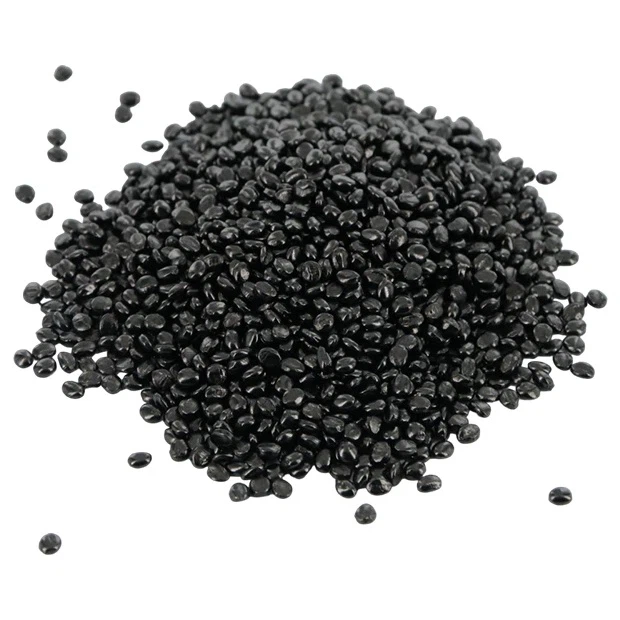
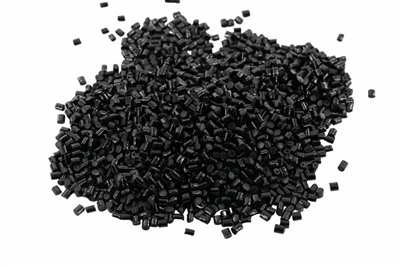

Black masterbatch is a crucial additive in the plastics industry, widely used to impart color, improve UV resistance, and enhance mechanical properties. At the heart of its functionality lies carbon black, a key component whose content significantly influences the masterbatch's properties. As a seasoned black masterbatch supplier, I've witnessed firsthand the impact of carbon black content on the performance of our products. In this blog, I'll delve into the science behind it, exploring how different carbon black concentrations affect various properties of black masterbatch.
Understanding Carbon Black in Black Masterbatch
Carbon black is a fine powder composed of elemental carbon produced by the incomplete combustion or thermal decomposition of hydrocarbons. It is characterized by its high surface area, excellent light absorption properties, and electrical conductivity. In black masterbatch, carbon black serves as the primary colorant, providing intense black coloration to the plastic matrix. Additionally, it offers several other benefits, such as UV protection, anti-static properties, and improved mechanical strength.
Influence on Color and Opacity
One of the most obvious effects of carbon black content on black masterbatch is its impact on color and opacity. As the carbon black concentration increases, the masterbatch becomes darker and more opaque. This is because carbon black particles absorb light across a wide range of wavelengths, preventing it from passing through the plastic. Higher carbon black content results in a more intense black color, making the masterbatch suitable for applications where a deep, rich black appearance is desired, such as automotive parts, electronic housings, and consumer goods.
However, it's important to note that there is a limit to how much carbon black can be added before it starts to affect the processing and mechanical properties of the masterbatch. Excessive carbon black content can lead to poor dispersion, resulting in uneven color distribution and surface defects in the final product. Therefore, finding the optimal carbon black concentration is crucial to achieving the desired color and appearance while maintaining good processability.
UV Protection
Carbon black is well-known for its excellent UV protection properties. When exposed to sunlight, plastics can degrade over time due to the harmful effects of ultraviolet (UV) radiation. This can lead to discoloration, embrittlement, and a loss of mechanical strength. By incorporating carbon black into the masterbatch, the plastic is shielded from UV rays, reducing the rate of degradation and extending its service life.
The effectiveness of carbon black as a UV stabilizer depends on its content and particle size. Generally, higher carbon black concentrations provide better UV protection. However, the particle size also plays a role, as smaller particles have a larger surface area and can absorb more UV radiation. As a black masterbatch supplier, we carefully select the carbon black grade and optimize its content to ensure maximum UV protection for our customers' applications.
Mechanical Properties
The carbon black content in black masterbatch can also have a significant impact on its mechanical properties. In general, adding carbon black to a plastic matrix can improve its stiffness, strength, and abrasion resistance. This is because carbon black particles act as reinforcing fillers, increasing the rigidity of the plastic and preventing it from deforming under stress.
However, the relationship between carbon black content and mechanical properties is not always straightforward. At low carbon black concentrations, the addition of carbon black can enhance the mechanical properties of the masterbatch. But as the carbon black content increases beyond a certain point, the mechanical properties may start to deteriorate. This is because excessive carbon black can cause poor dispersion, leading to agglomeration and weak points in the plastic matrix.
Therefore, it's important to balance the carbon black content to achieve the desired mechanical properties without compromising the processability and other performance characteristics of the masterbatch. Our team of experts at [Company Name] has extensive experience in formulating black masterbatches with the optimal carbon black content to meet the specific mechanical requirements of our customers.
Electrical Conductivity
Another important property influenced by carbon black content is electrical conductivity. Carbon black is a good conductor of electricity, and by incorporating it into the masterbatch, the plastic can be made electrically conductive. This is particularly useful in applications where static electricity needs to be dissipated, such as electronic packaging, automotive fuel systems, and industrial flooring.
The electrical conductivity of the masterbatch increases with increasing carbon black content. However, there is a critical concentration above which the conductivity levels off. This is because at high carbon black concentrations, the particles start to form a continuous network, allowing electrons to flow freely through the plastic. Once this network is established, further increasing the carbon black content does not significantly improve the conductivity.
As a black masterbatch supplier, we offer a range of electrically conductive masterbatches with different carbon black contents to meet the specific conductivity requirements of our customers. Our technical support team can help customers select the appropriate masterbatch grade based on their application needs.
Processability
The carbon black content in black masterbatch can also affect its processability. Higher carbon black concentrations can increase the viscosity of the masterbatch, making it more difficult to process. This can lead to issues such as poor flow, die build-up, and uneven dispersion. To overcome these challenges, it's important to use the right type of carbon black and processing aids to ensure good dispersion and flowability.
At [Company Name], we have developed advanced processing technologies and formulations to optimize the processability of our black masterbatches. Our masterbatches are designed to have low viscosity and excellent dispersion, making them easy to process on a wide range of equipment, including injection molding, extrusion, and blow molding machines.
Finding the Optimal Carbon Black Content
As we've seen, the carbon black content in black masterbatch has a profound impact on its properties. Finding the optimal carbon black content is a critical step in formulating a high-quality masterbatch that meets the specific requirements of the application. This requires a thorough understanding of the relationship between carbon black content and the desired properties, as well as careful consideration of the processing conditions and other factors.
At [Company Name], we have a team of experienced researchers and technicians who use advanced testing and analysis techniques to optimize the carbon black content in our masterbatches. We work closely with our customers to understand their needs and develop customized solutions that deliver the best performance and value.
Conclusion
In conclusion, the carbon black content in black masterbatch plays a crucial role in determining its properties. From color and opacity to UV protection, mechanical properties, electrical conductivity, and processability, every aspect of the masterbatch's performance is influenced by the amount of carbon black it contains. As a black masterbatch supplier, we are committed to providing our customers with high-quality products that are formulated with the optimal carbon black content to meet their specific requirements.
If you're looking for a reliable black masterbatch supplier, we invite you to contact us to discuss your needs. Our team of experts will be happy to provide you with more information about our products and services and help you find the right solution for your application.
References
- A. R. Horrocks and D. Price, “Fire Retardant Materials,” Woodhead Publishing, 2001.
- B. M. Montserrat, “Carbon Black: Science and Technology,” Marcel Dekker, 1993.
- C. A. Wilkie, “Fire Retardancy of Polymeric Materials,” Marcel Dekker, 2001.
- D. R. Paul and C. B. Bucknall, “Polymer Blends,” Wiley-Interscience, 2000.
- E. P. Plueddemann, “Silane Coupling Agents,” Plenum Press, 1982.
- F. Rodriguez, “Principles of Polymer Systems,” McGraw-Hill, 1996.
- G. W. Ehrenstein, “Polymer Compounds,” Hanser Publishers, 1991.
- H. S. Katz and J. V. Milewski, “Handbook of Fillers and Reinforcements for Plastics,” Van Nostrand Reinhold, 1987.
- I. M. Ward and J. Sweeney, “An Introduction to the Mechanical Properties of Solid Polymers,” Wiley, 2004.
- J. A. Brydson, “Plastics Materials,” Butterworth-Heinemann, 1999.