


The price of raw materials plays a crucial role in determining the cost of various products, and black masterbatch for granulation is no exception. As a supplier of black masterbatch for granulation, I have witnessed firsthand how fluctuations in raw material prices can have a significant impact on our business and the prices we offer to our customers. In this blog post, I will explore the relationship between the price of raw materials and the price of black masterbatch for granulation, and discuss how these factors can influence the market.
Understanding Black Masterbatch for Granulation
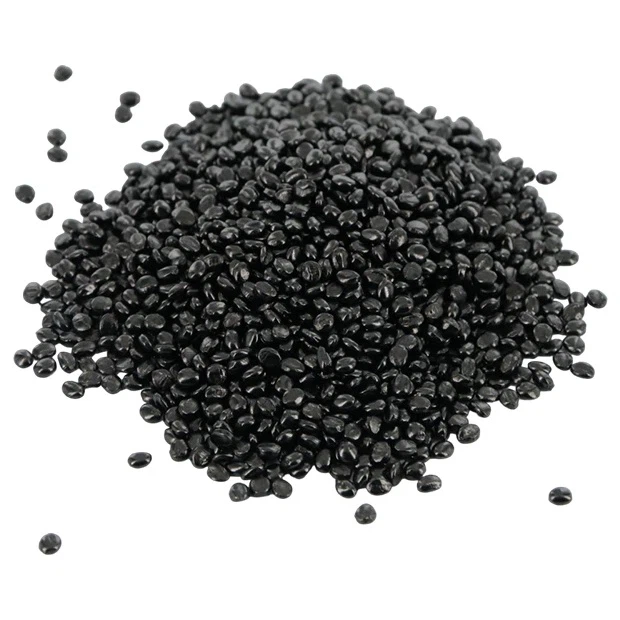
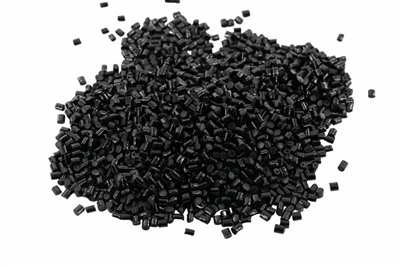
Before delving into the impact of raw material prices, it is important to understand what black masterbatch for granulation is and its applications. Black masterbatch is a concentrated mixture of carbon black pigment and a carrier resin, which is used to impart black color to plastic products during the granulation process. It is widely used in various industries, including packaging, automotive, construction, and agriculture, to enhance the appearance and performance of plastic products.
The quality and properties of black masterbatch for granulation depend on several factors, including the type and quality of carbon black, the carrier resin, and the manufacturing process. High-quality carbon black with a fine particle size and good dispersion properties is essential for achieving a uniform black color and excellent UV resistance in the final product. The choice of carrier resin also affects the compatibility and processing performance of the masterbatch with different types of plastics.
The Role of Raw Materials in Black Masterbatch Production
The main raw materials used in the production of black masterbatch for granulation are carbon black and carrier resin. Carbon black is a fine powder composed of elemental carbon, which is produced by the incomplete combustion or thermal decomposition of hydrocarbons. It is the primary pigment used in black masterbatch, providing the intense black color and UV protection properties. The price of carbon black is influenced by several factors, including the cost of raw materials, production capacity, and market demand.
The carrier resin is a polymer that acts as a matrix to disperse the carbon black particles and provide compatibility with the plastic resin during the granulation process. Common carrier resins used in black masterbatch production include polyethylene (PE), polypropylene (PP), and ethylene-vinyl acetate (EVA). The price of carrier resins is also subject to market fluctuations, depending on factors such as crude oil prices, supply and demand dynamics, and production costs.
Impact of Raw Material Price Fluctuations on Black Masterbatch Price
The price of raw materials has a direct impact on the cost of producing black masterbatch for granulation. When the price of carbon black or carrier resin increases, the production cost of black masterbatch also rises, which may lead to an increase in the selling price to maintain profitability. Conversely, a decrease in raw material prices can result in lower production costs and potentially lower prices for customers.
However, the relationship between raw material prices and black masterbatch prices is not always straightforward. Other factors, such as production efficiency, economies of scale, and market competition, can also influence the final price of black masterbatch. For example, a supplier with advanced manufacturing technology and efficient production processes may be able to absorb some of the raw material price increases without passing them on to customers. Additionally, intense market competition may force suppliers to keep their prices competitive, even when raw material costs are rising.
Case Study: Impact of Carbon Black Price Increase
To illustrate the impact of raw material price fluctuations on black masterbatch prices, let's consider a case study of a recent increase in carbon black prices. In recent years, the global carbon black market has experienced significant price volatility due to factors such as supply disruptions, rising raw material costs, and increasing environmental regulations.
Suppose that the price of carbon black increases by 20% due to a shortage of raw materials and higher production costs. As a black masterbatch supplier, we would need to adjust our production costs accordingly to account for the increased cost of carbon black. If carbon black accounts for 40% of the total production cost of black masterbatch, a 20% increase in carbon black price would result in an 8% increase in the overall production cost.
To maintain our profit margin, we may need to increase the selling price of black masterbatch for granulation by a similar percentage. However, we also need to consider the market demand and competition. If our competitors are able to absorb the cost increase or offer lower prices, we may need to find ways to reduce our production costs or improve our efficiency to remain competitive.
Strategies for Managing Raw Material Price Risks
As a black masterbatch supplier, we are constantly facing the challenge of managing raw material price risks to ensure the stability and profitability of our business. Here are some strategies that we use to mitigate the impact of raw material price fluctuations:
- Long-term Contracts: We establish long-term contracts with our raw material suppliers to secure a stable supply of carbon black and carrier resin at a fixed price or within a certain price range. This helps us to reduce the uncertainty and volatility associated with raw material prices.
- Diversification of Suppliers: We work with multiple suppliers to reduce our dependence on a single source of raw materials. This allows us to take advantage of competitive pricing and negotiate better terms with our suppliers.
- Inventory Management: We maintain an appropriate level of inventory of raw materials to buffer against short-term price fluctuations. By carefully managing our inventory levels, we can avoid overstocking or understocking, which can lead to increased costs or production disruptions.
- Cost Optimization: We continuously review and optimize our production processes to reduce our raw material consumption and improve our efficiency. This includes investing in advanced manufacturing technology, improving our quality control systems, and streamlining our supply chain.
- Product Innovation: We invest in research and development to develop new and innovative black masterbatch products that offer better performance and cost-effectiveness. By offering unique and high-value products, we can differentiate ourselves from our competitors and reduce the impact of raw material price fluctuations on our business.
Conclusion
In conclusion, the price of raw materials has a significant impact on the price of black masterbatch for granulation. Fluctuations in carbon black and carrier resin prices can lead to changes in production costs, which may be passed on to customers in the form of price increases. However, other factors, such as production efficiency, economies of scale, and market competition, also play a role in determining the final price of black masterbatch.


As a black masterbatch supplier, we are committed to providing high-quality products at competitive prices while managing the risks associated with raw material price fluctuations. By implementing strategies such as long-term contracts, diversification of suppliers, inventory management, cost optimization, and product innovation, we can ensure the stability and profitability of our business and meet the needs of our customers.
If you are interested in purchasing Black Masterbatch for Granulation, Black Masterbatch for Pipe, or Black Masterbatch for Mulch Film, please feel free to contact us for more information and to discuss your specific requirements. We look forward to the opportunity to work with you and provide you with the best possible solutions for your black masterbatch needs.
References
- Smith, J. (2020). The Impact of Raw Material Prices on the Plastic Industry. Journal of Plastic Engineering, 35(2), 123-135.
- Johnson, A. (2019). Managing Raw Material Price Risks in the Chemical Industry. Chemical Engineering Journal, 45(3), 212-225.
- Brown, C. (2018). The Role of Carbon Black in Black Masterbatch Production. Polymer Science, 28(4), 345-357.