

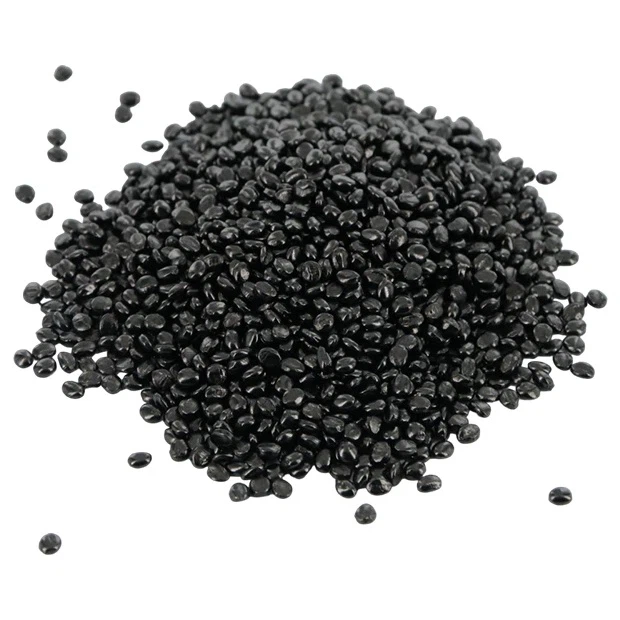
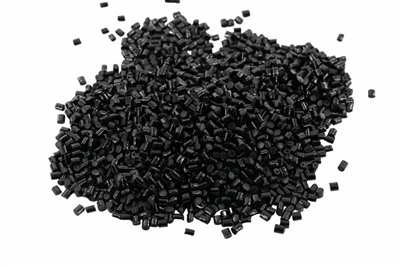

Speciality black masterbatch is a crucial additive in the plastics industry, offering unique properties and benefits for a wide range of applications. As a leading speciality black masterbatch supplier, I am excited to share with you the intricate process of how this remarkable product is produced.
Raw Material Selection
The production of speciality black masterbatch begins with the careful selection of raw materials. The primary components include carbon black, a carrier resin, and various additives. Carbon black is the key ingredient that imparts the black color and provides excellent UV resistance, conductivity, and reinforcement properties. The quality and type of carbon black used significantly influence the performance of the masterbatch. For instance, high - structure carbon blacks offer better dispersion and jetness, while low - structure carbon blacks may be preferred for applications requiring high conductivity.
The carrier resin serves as the matrix that encapsulates the carbon black particles and enables easy incorporation into the final plastic product. The choice of carrier resin depends on the compatibility with the base polymer of the end - use application. Common carrier resins include polyethylene (PE), polypropylene (PP), polystyrene (PS), and others. Each resin has its own set of characteristics such as melting point, viscosity, and chemical resistance.
Additives are also incorporated to enhance specific properties of the masterbatch. These may include dispersants to improve the dispersion of carbon black, antioxidants to prevent degradation during processing and use, and lubricants to reduce friction and improve flowability.
Mixing Process
Once the raw materials are selected, the next step is the mixing process. This is a critical stage as it determines the uniformity and quality of the masterbatch. First, the carbon black, carrier resin, and additives are accurately weighed according to the formulation. The weighed materials are then loaded into a high - intensity mixer, such as a twin - screw extruder or a Banbury mixer.
In the mixer, the materials are subjected to high shear forces and heat. The high shear forces break down the agglomerates of carbon black particles and disperse them evenly throughout the carrier resin. The heat softens the carrier resin, allowing it to flow and encapsulate the carbon black particles. The mixing process is carefully controlled in terms of temperature, speed, and time to ensure optimal dispersion and quality.
Extrusion
After the mixing process, the compounded material is transferred to an extruder. The extruder further melts and homogenizes the mixture while shaping it into a continuous strand. The extruder consists of a barrel with a rotating screw inside. As the screw rotates, it pushes the material forward through the barrel, where it is heated to the appropriate temperature.

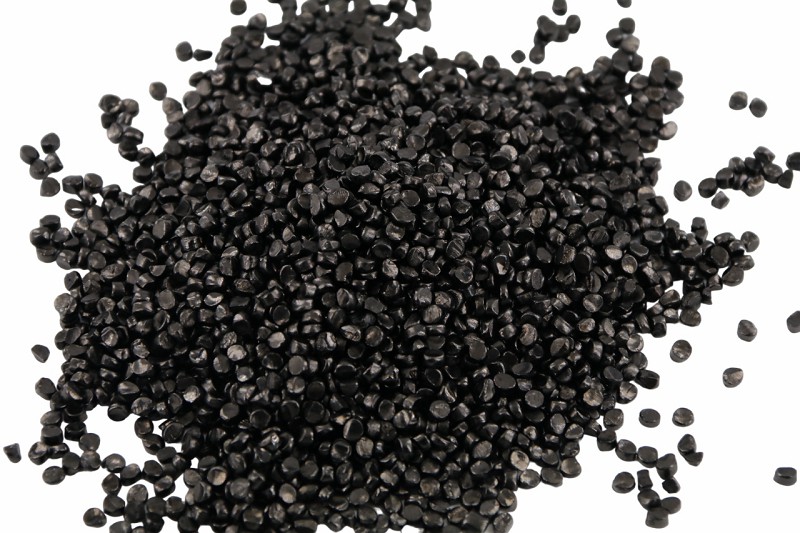
The extruded strand is then passed through a water bath or an air - cooling system to solidify it. Once solidified, the strand is cut into small pellets using a pelletizer. These pellets are the final form of the speciality black masterbatch.
Quality Control
Quality control is an integral part of the production process. At various stages, samples are taken and tested to ensure that the masterbatch meets the required specifications. Physical properties such as color, particle size, and dispersion are measured. Color is typically measured using a spectrophotometer, which provides accurate and objective data on the color intensity and hue of the masterbatch.
The dispersion of carbon black particles is evaluated using microscopy techniques. A well - dispersed masterbatch will have carbon black particles evenly distributed throughout the carrier resin, without any large agglomerates. Other properties such as melt flow index, density, and mechanical properties are also tested to ensure that the masterbatch is suitable for its intended applications.
Different Types of Speciality Black Masterbatch
We offer a variety of speciality black masterbatches to meet the diverse needs of our customers. For example, our No Carrier Black Masterbatch is ideal for applications where the use of a carrier resin is not desired or where compatibility issues may arise. This type of masterbatch can be directly mixed with the base polymer, providing a high - concentration of carbon black.
Our PS Black Masterbatch is specifically formulated for use with polystyrene polymers. It offers excellent dispersion and color consistency, making it suitable for applications such as packaging, consumer goods, and electronics.
Another popular product is our Black Masterbatch For Automotive. This masterbatch is designed to meet the stringent requirements of the automotive industry, including high heat resistance, UV stability, and excellent mechanical properties. It is used in various automotive components such as interior trims, exterior parts, and under - the - hood applications.
Applications of Speciality Black Masterbatch
Speciality black masterbatch finds applications in a wide range of industries. In the packaging industry, it is used to provide a black color to plastic films, containers, and trays. The UV resistance properties of the masterbatch help to protect the contents from sunlight and extend their shelf life.
In the automotive industry, as mentioned earlier, it is used for both interior and exterior components. The black color gives a sleek and professional look to the vehicles, while the mechanical and thermal properties ensure long - term durability.
In the electronics industry, speciality black masterbatch is used in the production of plastic housings for electronic devices. The conductivity properties of some masterbatches can be utilized to provide electrostatic discharge (ESD) protection.
Contact for Procurement
If you are interested in our speciality black masterbatch products, we invite you to contact us for procurement. Our team of experts is ready to assist you in selecting the right masterbatch for your specific application and to provide you with competitive pricing and excellent customer service. Whether you are a small - scale manufacturer or a large - scale industrial enterprise, we can meet your requirements.
References
- "Plastics Additives Handbook" by Hans Zweifel
- "Carbon Black: Science and Technology" by Don B. Dillard