

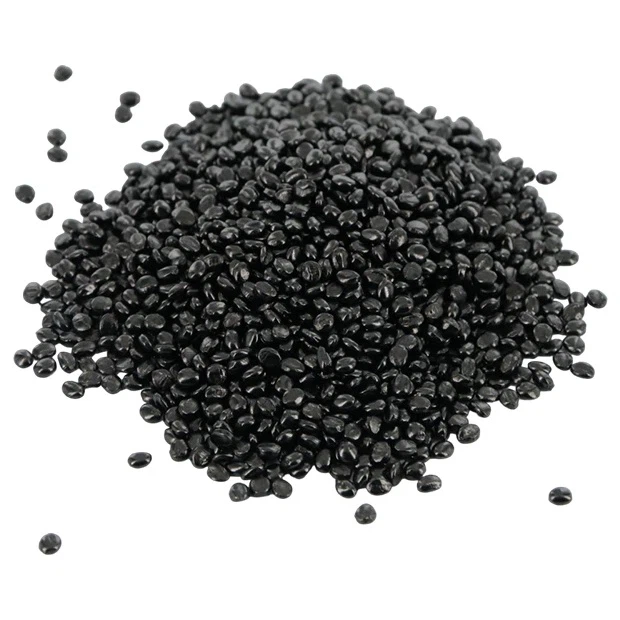
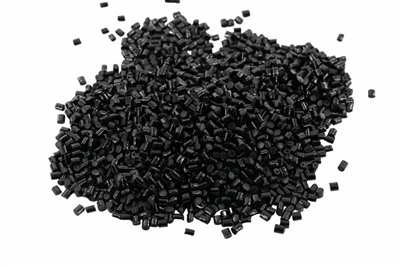

Hey there! As a supplier of PS black masterbatch, I often get asked this question: “How much PS black masterbatch should be added to PS plastics?” Well, let's dig into this topic and find out all the details.
First off, let's understand what PS black masterbatch is. It's a concentrated form of pigment and additives that are used to color PS (Polystyrene) plastics. PS is a widely used thermoplastic known for its clarity, rigidity, and ease of processing. By adding black masterbatch, we can give PS products that sleek, stylish black look that's so popular in various industries.
The amount of PS black masterbatch you need to add depends on several factors. One of the most important ones is the desired color intensity. If you want a deep, rich black color, you'll need to add more masterbatch. On the other hand, if you're going for a lighter shade or just a hint of black, you can use less.
Another factor is the type of PS plastic you're using. There are different grades of PS, such as general-purpose PS (GPPS) and high-impact PS (HIPS). GPPS is more transparent and brittle, while HIPS has better impact resistance. The characteristics of these different grades can affect how the masterbatch disperses and how much you need to achieve the desired color.

The processing method also plays a role. Whether you're using injection molding, extrusion, or blow molding, each method has its own requirements. For example, in injection molding, the masterbatch needs to be well-dispersed quickly to ensure a uniform color throughout the molded part. In extrusion, the flow properties of the masterbatch and the PS plastic need to be compatible to avoid any issues during the extrusion process.
Now, let's talk about some general guidelines. In most cases, for a standard black color in PS plastics, you can start with an addition rate of around 1% to 3%. This means that for every 100 kilograms of PS plastic, you'd add 1 to 3 kilograms of black masterbatch. However, if you want a really intense black, you might need to increase the addition rate to 5% or even more.
But it's not just about adding the right amount. You also need to make sure the masterbatch is well-dispersed in the PS plastic. This can be achieved through proper mixing techniques. For example, you can use a high-speed mixer to blend the masterbatch and the PS plastic pellets thoroughly before processing.
Let me give you an example. Suppose you're making black PS plastic cups using injection molding. You start with 2% addition of our PS black masterbatch. You mix it well with the PS pellets in a high-speed mixer for about 10 - 15 minutes. Then, you feed the mixture into the injection molding machine. If the color of the cups comes out a bit lighter than you expected, you can try increasing the addition rate to 2.5% or 3% in the next batch.
Now, we offer different types of black masterbatch that can be used for PS plastics. One of our popular products is the No Carrier Black Masterbatch. This type of masterbatch doesn't have a carrier resin, which can be beneficial in some applications. It can provide a more pure and intense black color, and it's also more cost - effective in certain cases.

Another option is our PA Black Masterbatch. Although it's mainly designed for polyamide (PA) plastics, in some cases, it can also be used in PS plastics, especially when you need specific properties like better heat resistance or improved mechanical properties.

We also have another version of No Carrier Black Masterbatch that offers excellent dispersion and color consistency. It's a great choice for achieving high - quality black PS products.
When you're adding the masterbatch, it's important to do some small - scale tests first. This way, you can fine - tune the addition rate based on your specific requirements. You can make a few test samples with different addition rates and evaluate the color, appearance, and performance of the final products.
In addition to color, the masterbatch can also affect other properties of the PS plastic. For example, it can influence the mechanical properties such as strength and impact resistance. In some cases, adding too much masterbatch can make the PS plastic more brittle. So, it's a balance between getting the right color and maintaining the desired physical properties.
If you're new to using PS black masterbatch, don't worry. We're here to help you every step of the way. Our technical team has years of experience in the industry and can provide you with personalized advice based on your specific application.
We understand that different industries have different needs. For example, the packaging industry might require a more uniform color and high - gloss finish, while the automotive industry might need better heat resistance and UV stability. That's why we've developed a range of PS black masterbatch products to meet these diverse requirements.
So, if you're looking for a reliable PS black masterbatch supplier, you've come to the right place. We offer high - quality products at competitive prices. Whether you're a small - scale manufacturer or a large - scale industrial company, we can provide you with the right amount of masterbatch and the support you need.
If you're interested in our products, don't hesitate to get in touch with us. We're more than happy to discuss your requirements, provide samples, and help you determine the optimal amount of PS black masterbatch for your PS plastics. Just reach out, and let's start this exciting journey together to create amazing black PS products!
References:
- "Plastics Additives Handbook" by Hans Zweifel
- "Polymer Processing: Principles and Design" by Christopher Rauwendaal