

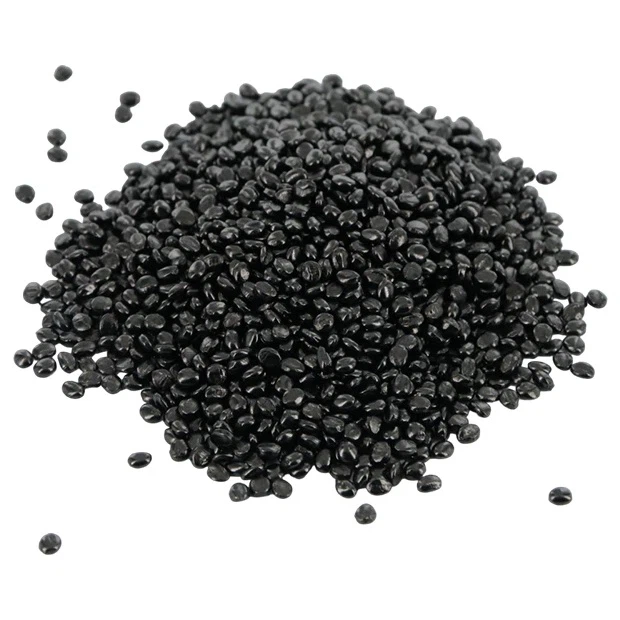
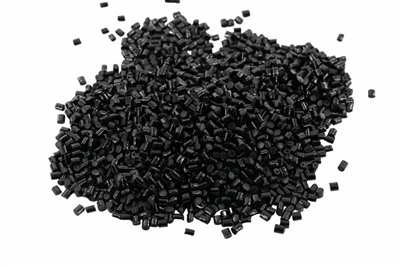

Hey there! As a supplier of black masterbatch for automotive, I've seen firsthand how crucial it is to have top - notch dispersion in polymers. A well - dispersed black masterbatch can make a huge difference in the final product's appearance, performance, and overall quality. So, in this blog, I'm gonna share some tips on how to improve the dispersion of black masterbatch for automotive in polymers.
Understanding the Basics
First off, let's talk about what black masterbatch is. It's a concentrated mixture of carbon black pigment and a carrier resin. In the automotive industry, it's used to color various polymer parts, like dashboards, bumpers, and interior trims. The key to getting a great finish is making sure the carbon black particles are evenly spread throughout the polymer matrix.
One of the main factors affecting dispersion is the quality of the masterbatch itself. When you're sourcing black masterbatch for automotive, look for a product that's made with high - quality carbon black and has been properly processed. For example, our Black Masterbatch for Automotive is formulated to provide excellent dispersion and color consistency.
The Role of Carbon Black
Carbon black is the heart of the black masterbatch. Its particle size, structure, and surface properties play a big role in how well it disperses. Smaller particle sizes generally lead to better dispersion because they can more easily mix with the polymer molecules. However, smaller particles can also be more difficult to handle and may require more energy to disperse.
We offer different types of carbon black in our masterbatches to meet various requirements. For instance, our No Carrier Black Masterbatch is designed for applications where you need high - concentration carbon black without the added carrier resin. This can be great for achieving a very intense black color and may also offer better dispersion in some cases.
Mixing and Processing Techniques
Now, let's get into the nitty - gritty of mixing and processing. The way you mix the black masterbatch with the polymer can have a huge impact on dispersion. One of the most common methods is using an extruder. An extruder can apply high shear forces to the mixture, which helps break up the carbon black agglomerates and distribute them evenly throughout the polymer.
When using an extruder, it's important to set the right temperature, screw speed, and feed rate. Higher temperatures can make the polymer more fluid, which aids in dispersion. But be careful not to overheat the polymer, as this can cause degradation. A good rule of thumb is to start with a lower temperature and gradually increase it while monitoring the dispersion quality.
Another important factor is the mixing time. You need to give the masterbatch and polymer enough time to blend properly. However, over - mixing can also be a problem, as it can lead to excessive heat generation and potentially damage the polymer.


Compatibilizers and Additives
Sometimes, adding compatibilizers or additives can significantly improve dispersion. Compatibilizers are substances that help the carbon black and polymer to interact better. They can reduce the surface tension between the two materials, making it easier for the carbon black to disperse.
For example, if you're using an ABS polymer, our ABS Black Masterbatch is formulated with additives that enhance compatibility and dispersion. These additives can also improve other properties of the final product, such as impact resistance and UV stability.
Testing and Quality Control
After you've mixed the black masterbatch with the polymer, it's essential to test the dispersion quality. There are several methods you can use, such as visual inspection, microscopy, and colorimetry. Visual inspection can give you a quick idea of whether the dispersion is uniform. Look for any streaks, spots, or uneven color distribution.
Microscopy is a more accurate way to evaluate dispersion. You can use a scanning electron microscope (SEM) or a transmission electron microscope (TEM) to examine the distribution of carbon black particles at a microscopic level. Colorimetry can also be useful for measuring the color consistency and intensity of the final product.
Troubleshooting Dispersion Issues
If you're having problems with dispersion, don't worry. There are usually some simple solutions. One common issue is the presence of agglomerates. Agglomerates are clusters of carbon black particles that haven't dispersed properly. This can be caused by poor mixing, low - quality masterbatch, or incorrect processing conditions.
To solve this problem, you can try increasing the shear forces during mixing. This can be done by adjusting the screw speed in the extruder or using a more powerful mixer. You can also try pre - dispersing the masterbatch in a small amount of polymer before adding it to the main batch.
Another issue could be the incompatibility between the masterbatch and the polymer. If this is the case, you may need to switch to a different type of masterbatch or add a compatibilizer.
Conclusion
Improving the dispersion of black masterbatch for automotive in polymers is a multi - faceted process. It involves choosing the right masterbatch, using proper mixing and processing techniques, and implementing effective quality control measures. By following these tips, you can ensure that your automotive polymer parts have a consistent, high - quality black color.
If you're interested in our black masterbatch products or have any questions about dispersion or other related topics, don't hesitate to reach out. We're always happy to help you find the best solution for your automotive polymer applications. Let's work together to take your products to the next level!
References
- "Carbon Black Handbook" by J. B. Donnet, R. C. Bansal, and M. J. Wang
- "Polymer Processing: Principles and Design" by Z. Tadmor and C. G. Gogos