

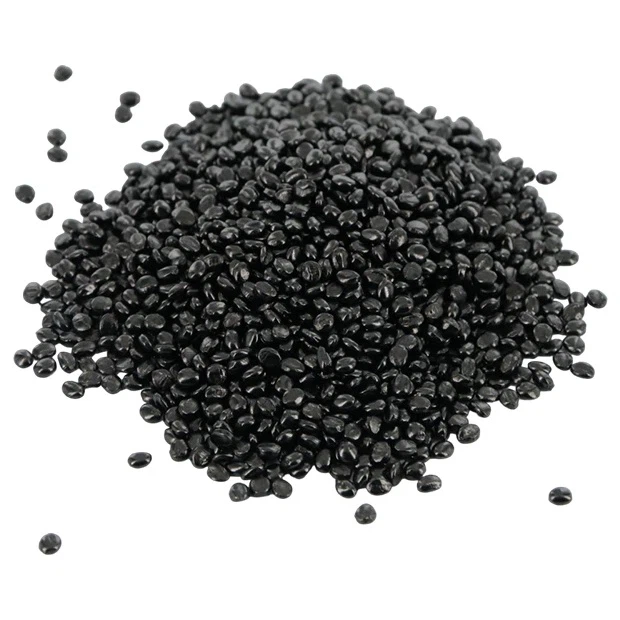
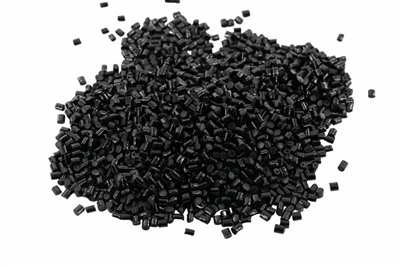

As a supplier of PP black masterbatch, I've encountered numerous inquiries from clients about enhancing the dispersion of our product in polypropylene (PP). Achieving optimal dispersion is crucial as it directly impacts the quality, appearance, and performance of the final PP products. In this blog, I'll share some effective strategies and insights based on our experience and industry knowledge to help you improve the dispersion of PP black masterbatch in PP.
Understanding the Basics of PP Black Masterbatch and Dispersion
Before delving into the methods of improving dispersion, it's essential to understand what PP black masterbatch is and why proper dispersion matters. PP black masterbatch is a concentrated mixture of carbon black pigment and a carrier resin, typically PP. It's used to color PP products, providing a deep black color and other functional properties such as UV resistance.
Dispersion refers to the uniform distribution of the carbon black particles within the PP matrix. When the masterbatch is well - dispersed, the final product will have a consistent color, smooth surface finish, and enhanced mechanical properties. Poor dispersion, on the other hand, can lead to color streaks, uneven appearance, and reduced product performance.
Factors Affecting the Dispersion of PP Black Masterbatch in PP
Several factors can influence the dispersion of PP black masterbatch in PP. Understanding these factors is the first step in improving dispersion.


1. Carbon Black Quality
The quality of carbon black used in the masterbatch plays a significant role in dispersion. High - quality carbon black with a small particle size and narrow particle size distribution tends to disperse more easily. Carbon black with a high surface area can also improve the interaction between the pigment and the PP matrix, leading to better dispersion. For example, furnace black, which is commonly used in PP black masterbatch, offers good dispersion properties due to its relatively small particle size and high structure.
2. Carrier Resin Compatibility
The carrier resin in the masterbatch must be compatible with the PP resin in the final application. If the carrier resin has poor compatibility with PP, it can lead to phase separation and poor dispersion. Our PP Black Masterbatch is formulated with a carrier resin that is specifically designed to be highly compatible with PP, ensuring better dispersion.
3. Processing Conditions
The processing conditions during the compounding or molding process can have a significant impact on dispersion. Factors such as temperature, shear rate, and mixing time all play a role. Higher temperatures can reduce the viscosity of the PP resin, making it easier for the masterbatch to disperse. However, excessive temperatures can also cause thermal degradation of the carbon black or the PP resin. A proper shear rate is also crucial. Adequate shear forces can break up the agglomerates of carbon black particles and distribute them evenly throughout the PP matrix.
Strategies to Improve the Dispersion of PP Black Masterbatch in PP
1. Pre - mixing
Pre - mixing the PP black masterbatch with the PP resin before the main compounding or molding process can significantly improve dispersion. This can be done using a simple tumble mixer or a high - speed mixer. Pre - mixing allows the masterbatch to be more evenly distributed in the PP resin, reducing the formation of agglomerates during the subsequent processing steps. For example, you can mix the masterbatch and the PP resin for 10 - 15 minutes in a tumble mixer at a moderate speed.
2. Optimize Processing Parameters
As mentioned earlier, processing parameters such as temperature, shear rate, and mixing time are critical for dispersion. When compounding or molding, it's important to find the optimal balance of these parameters. For instance, increasing the screw speed in an extruder can increase the shear rate, which helps to break up the carbon black agglomerates. However, this should be done within a reasonable range to avoid over - shearing and thermal degradation. The temperature profile in the extruder or injection molding machine should also be carefully controlled to ensure that the PP resin has the right viscosity for good dispersion.
3. Use of Dispersing Agents
Dispersing agents can be added to the PP black masterbatch or the PP resin to improve dispersion. These agents work by reducing the surface tension between the carbon black particles and the PP matrix, preventing the particles from re - agglomerating. There are various types of dispersing agents available, such as low - molecular - weight polymers and surfactants. Our No Carrier Black Masterbatch can be formulated with appropriate dispersing agents to enhance dispersion in PP.
4. Select the Right Masterbatch
Choosing the right PP black masterbatch is crucial for achieving good dispersion. Consider factors such as the carbon black content, carrier resin type, and the presence of additives. Our company offers a range of PP Black Masterbatch products with different formulations to meet various application requirements. We can provide technical support to help you select the most suitable masterbatch for your specific needs.
Case Studies: Successful Dispersion Improvement
Let's take a look at some real - world examples of how our clients have improved the dispersion of our PP black masterbatch in PP.
One of our clients, a manufacturer of PP pipes, was experiencing color streaks and uneven appearance in their products due to poor dispersion of the black masterbatch. After consulting with our technical team, they adjusted the processing parameters in their extrusion process. They increased the screw speed slightly to increase the shear rate and optimized the temperature profile. They also pre - mixed the masterbatch with the PP resin using a high - speed mixer. As a result, the dispersion of the masterbatch improved significantly, and the final pipes had a uniform black color and smooth surface finish.
Another client, a producer of PP injection - molded parts, was using a different brand of black masterbatch with poor dispersion. They switched to our PP Black Masterbatch and followed our recommended pre - mixing and processing procedures. The new masterbatch, combined with the proper processing techniques, led to a remarkable improvement in dispersion, reducing the number of defective parts and improving the overall quality of their products.
Conclusion
Improving the dispersion of PP black masterbatch in PP is a multi - faceted process that requires a good understanding of the factors affecting dispersion and the implementation of appropriate strategies. By considering the quality of carbon black, carrier resin compatibility, processing conditions, and using techniques such as pre - mixing, optimizing processing parameters, and using dispersing agents, you can achieve excellent dispersion and high - quality final products.
As a leading supplier of PP black masterbatch, we are committed to providing high - quality products and technical support to help you solve your dispersion problems. If you are interested in our PP Black Masterbatch or have any questions about dispersion improvement, please feel free to contact us for further discussion and procurement. We look forward to working with you to achieve the best results in your PP applications.
References
- "Plastics Additives Handbook" by Hans Zweifel
- "Polymer Processing: Principles and Design" by R. T. Fenner
- Industry research reports on masterbatch technology and polypropylene processing.