

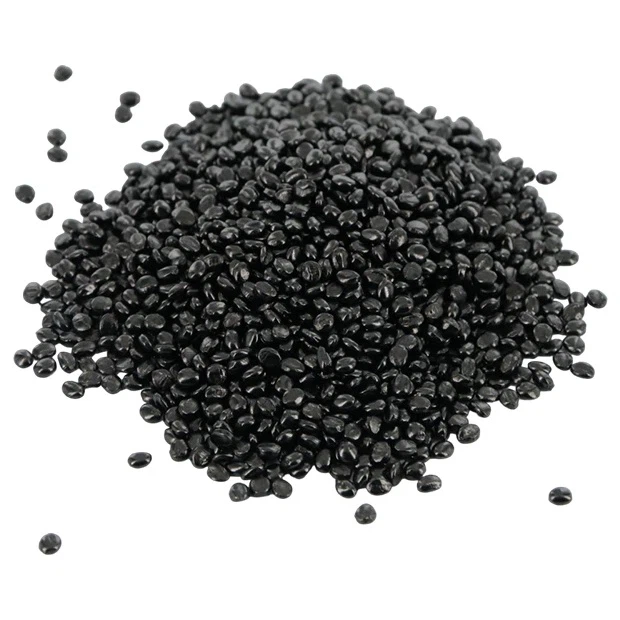

Yo! As a supplier of PP black masterbatch, I've seen firsthand how the price of this stuff can swing around. So, I thought I'd break down the factors that affect the price of PP black masterbatch.


Raw Material Costs
Let's start with the most obvious one: raw materials. The main ingredients in PP black masterbatch are polypropylene (PP) resin and carbon black. The price of these raw materials can fluctuate a lot, and that directly impacts the cost of making the masterbatch.
Carbon black is a key component as it gives the masterbatch its black color and also provides UV resistance. The price of carbon black is influenced by factors like the cost of feedstock (usually petroleum or coal tar), production capacity, and environmental regulations. For example, if there's a shortage of feedstock due to geopolitical issues or production disruptions, the price of carbon black can shoot up.
Polypropylene resin is another major cost factor. The price of PP resin is tied to the price of crude oil because it's a petrochemical product. When the price of oil goes up, the cost of producing PP resin increases, and that means a higher price for PP black masterbatch. Market demand and supply also play a huge role. If there's a high demand for PP resin in other industries, like packaging or automotive, the price can rise as suppliers prioritize those markets.
Production Process
The production process of PP black masterbatch isn't just a one - size - fits - all deal. There are different methods and technologies, and each has its own cost implications.
One factor is the equipment used. High - end production equipment can produce masterbatch with better quality and consistency, but it also comes with a hefty price tag. The initial investment in this equipment, along with maintenance and operation costs, gets factored into the final price of the masterbatch.
The production scale also matters. Larger production volumes usually mean lower per - unit costs. This is because of economies of scale. When you're producing in bulk, you can spread out the fixed costs (like equipment and labor) over more units. As a small - scale supplier, I sometimes struggle to compete on price with larger companies because they can produce at a lower cost per kilogram.
Quality Requirements
Customers have different quality requirements for PP black masterbatch, and these directly affect the price.
If a customer needs a masterbatch with high color strength, good dispersion, and excellent heat stability, it's going to cost more. Achieving these high - quality standards often requires using better - quality raw materials and more advanced production processes. For example, to ensure good dispersion of carbon black in the PP resin, a more sophisticated mixing process might be needed, which adds to the production cost.
On the other hand, if a customer has more basic requirements, like a lower color intensity or less strict heat resistance, the masterbatch can be produced at a lower cost. So, when I'm talking to customers, I always ask about their specific quality needs to give them an accurate price quote.
Market Competition
The market for PP black masterbatch is pretty competitive. There are a lot of suppliers out there, and each one is trying to win customers.
When there's intense competition, prices tend to be more competitive. Suppliers might lower their prices to attract more business. But this can also lead to a race to the bottom in terms of quality. Some suppliers might cut corners on raw materials or production processes to offer a lower price. As a responsible supplier, I focus on maintaining a good balance between price and quality.
On the other hand, if a supplier has a unique selling point, like a patented production technology or exclusive access to high - quality raw materials, they can charge a premium price. For example, if a company has developed a new way to produce masterbatch that results in better performance, they can justify a higher price in the market.
Transportation and Logistics
Getting the PP black masterbatch from the production facility to the customer's location isn't free. Transportation and logistics costs are an important part of the final price.
The distance between the production site and the customer matters. Longer distances usually mean higher shipping costs. If the customer is in a remote area or a country with high import duties and taxes, that also adds to the overall cost.
The mode of transportation also affects the price. Shipping by sea is generally cheaper for large - volume orders over long distances, but it's slower. Air freight is much faster but significantly more expensive. So, depending on the customer's urgency and order volume, the transportation cost can vary widely.
Environmental and Regulatory Factors
In today's world, environmental and regulatory factors can't be ignored.
Many countries have strict environmental regulations regarding the production and use of masterbatch. These regulations might require suppliers to use more environmentally friendly raw materials or adopt cleaner production processes. For example, some regulations limit the amount of heavy metals in carbon black. Meeting these requirements often means using higher - quality, more expensive raw materials, which drives up the price of the masterbatch.
There are also regulations related to packaging and labeling. Suppliers need to ensure that their products are properly labeled and packaged according to the regulations. This can add to the cost of production and, ultimately, the price of the masterbatch.
Customer Order Volume
The size of the customer's order can have a big impact on the price.
As I mentioned earlier, larger orders usually benefit from economies of scale. When a customer places a large order, I can negotiate better prices with my raw material suppliers and optimize my production process. This allows me to offer a lower price per kilogram to the customer.
On the contrary, small orders are more expensive per unit. The fixed costs associated with production, like setting up the equipment and quality control checks, are spread over a smaller number of units. So, if a customer only needs a small quantity of PP black masterbatch, they should expect to pay a higher price.
Conclusion
So, as you can see, there are a whole bunch of factors that affect the price of PP black masterbatch. From raw material costs and production processes to quality requirements and market competition, each element plays a role in determining the final price.
If you're in the market for PP Black Masterbatch, PS Black Masterbatch, or ABS Black Masterbatch, and you want a fair price without sacrificing quality, feel free to reach out. I'd be more than happy to have a chat and work out a deal that suits your needs.
References
- "Plastics Additives Handbook" by Hans Zweifel
- Industry reports on the polypropylene and masterbatch market