


Hey there! As a supplier of black masterbatch for water pipes, I'm super stoked to take you through the production processes of this essential product. Let's dive right in!
1. Raw Material Selection
The first step in making black masterbatch for water pipes is choosing the right raw materials. We need high - quality carbon black, which is the key pigment that gives the masterbatch its black color. Carbon black has excellent UV resistance and color strength, which are crucial for water pipes exposed to sunlight.
We also select the appropriate carrier resin. For water pipes, we usually go for polyolefin - based carrier resins like polyethylene (PE) or polypropylene (PP). These resins are compatible with the base polymers used in water pipe manufacturing and have good processing properties.
Another important consideration is the addition of additives. Antioxidants are added to prevent the degradation of the masterbatch during processing and in the long - term use of the water pipes. Dispersants are also used to ensure that the carbon black is evenly dispersed in the carrier resin.
2. Mixing
Once we have all the raw materials ready, it's time for mixing. We use a high - speed mixer to blend the carbon black, carrier resin, and additives together. The mixing process is crucial as it determines how well the carbon black is dispersed in the resin.
During mixing, the high - speed rotation of the mixer blades generates heat, which softens the carrier resin slightly. This allows the carbon black particles to penetrate and be surrounded by the resin. The dispersants also play a vital role here, reducing the surface tension between the carbon black and the resin, and preventing the carbon black particles from agglomerating.


The mixing time can vary depending on the quantity and the type of materials. Generally, it takes around 15 - 30 minutes to achieve a homogeneous mixture. We monitor the temperature and the consistency of the mixture closely to ensure the best results.
3. Extrusion
After the mixing process, the homogeneous mixture is fed into an extruder. The extruder is like a big, high - tech sausage - maker for our masterbatch.
The extruder has a screw that rotates inside a heated barrel. As the mixture moves through the barrel, it is further melted and homogenized by the heat and the mechanical action of the screw. The temperature in the extruder is carefully controlled to ensure that the resin is melted but not over - heated, which could cause degradation of the materials.
There are different types of extruders, such as single - screw extruders and twin - screw extruders. Twin - screw extruders are often preferred for making black masterbatch for water pipes because they offer better mixing and dispersion capabilities.
As the melted mixture exits the extruder through a die, it is shaped into strands. These strands are then cooled in a water bath to solidify them.
4. Pelletizing
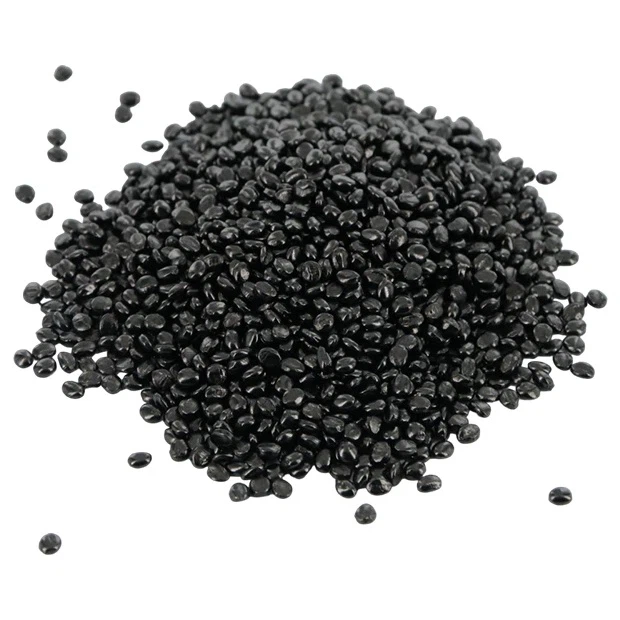
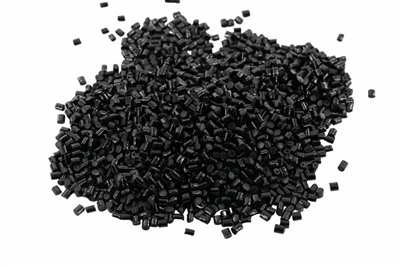
Once the strands are cooled and solidified, they are ready for pelletizing. A pelletizer cuts the strands into small, uniform pellets. These pellets are the final form of our black masterbatch.
The size and shape of the pellets are important. They need to be small enough to be easily fed into the processing equipment used by our customers who make water pipes, but large enough to avoid issues like dust generation.
We also perform quality control checks on the pellets. We check for things like pellet size, shape, color consistency, and the dispersion of carbon black. Only the pellets that meet our strict quality standards are packaged and sent to our customers.
5. Packaging
After passing the quality control checks, the black masterbatch pellets are packaged. We use high - quality packaging materials that can protect the masterbatch from moisture, dust, and other contaminants.
Common packaging options include plastic bags, drums, or big bags. The packaging is labeled with important information such as the product name, specifications, batch number, and storage instructions.
Proper packaging is essential to ensure the quality of the masterbatch during storage and transportation. We also offer customized packaging solutions according to our customers' requirements.
Why Our Black Masterbatch for Water Pipes?
Our black masterbatch for water pipes has several advantages. Firstly, it provides excellent UV protection for the water pipes. This means that the pipes can withstand long - term exposure to sunlight without significant color fading or degradation.
Secondly, the high - quality carbon black and additives we use ensure good mechanical properties of the water pipes. The masterbatch enhances the strength and durability of the pipes, making them more resistant to cracking and other forms of damage.
We also offer consistent quality. Our strict production processes and quality control measures guarantee that every batch of our black masterbatch meets the same high standards.
If you're in the market for black masterbatch for water pipes, we've also got other great products in our range. Check out our Black Masterbatch For Pipe, which is not only suitable for water pipes but also for other types of pipes. We also have Black Masterbatch for Agriculture Film and Black Masterbatch for Sheet that might interest you.
Contact Us for Procurement
If you're interested in our black masterbatch for water pipes or any of our other products, don't hesitate to reach out. We're always happy to have a chat about your specific needs and how our products can meet them. Whether you're a small - scale manufacturer or a large - scale industrial company, we've got the right solutions for you. Let's start a great business relationship and make high - quality products together!
References
- "Plastics Additives Handbook" by Hans Zweifel
- "Extrusion: The Definitive Processing Guide and Handbook" by Christopher Rauwendaal