

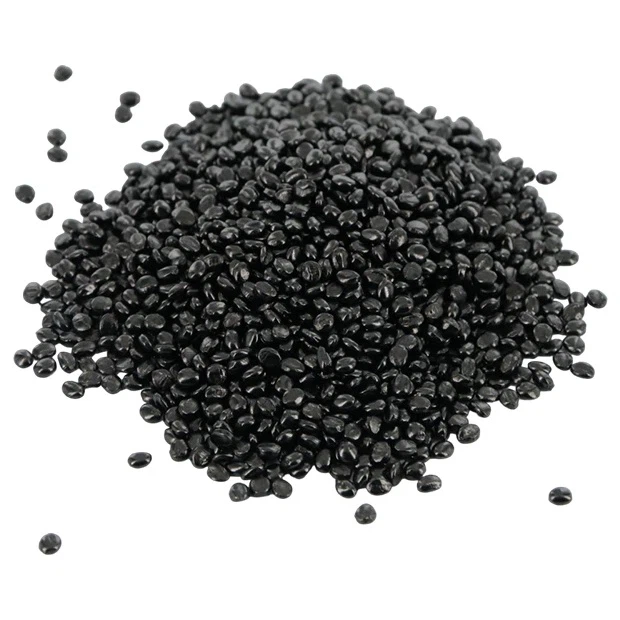
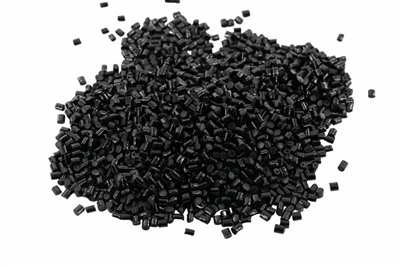

Hey there! As a supplier of black masterbatch for automotive applications, I've been getting a lot of questions lately about the radiation resistance properties of our products. So, I thought I'd take a few minutes to share some insights on this topic.
First off, let's talk about what radiation resistance means in the context of black masterbatch. In the automotive industry, parts are often exposed to various types of radiation, including ultraviolet (UV) radiation from sunlight and gamma radiation during sterilization processes for some interior components. Radiation can cause a range of issues in plastics, such as discoloration, embrittlement, and a decrease in mechanical properties over time. That's where our high - quality black masterbatch comes in.
Our black masterbatch is formulated to provide excellent radiation resistance. One of the key ingredients in our masterbatch is carbon black. Carbon black is a well - known UV absorber. It works by absorbing the UV radiation and converting it into heat, which is then dissipated. This process prevents the UV rays from reaching the polymer matrix and causing damage. The type and amount of carbon black we use in our formulations are carefully selected to optimize the radiation - absorbing properties while maintaining other important characteristics of the masterbatch, like dispersion and color strength.
For example, in our No Carrier Black Masterbatch, we use a special grade of carbon black that has a high surface area and a well - defined particle size distribution. This allows it to effectively scatter and absorb UV radiation across a wide range of wavelengths. As a result, automotive parts made with our no - carrier black masterbatch can withstand long - term exposure to sunlight without significant color fading or degradation of mechanical properties.


Another aspect of radiation resistance is resistance to gamma radiation. Some automotive interior components, especially those used in medical or hygiene - related applications, may be sterilized using gamma radiation. Our black masterbatch is designed to resist the effects of gamma radiation. The carbon black in our masterbatch acts as a shield, protecting the polymer from the high - energy gamma rays. This helps to maintain the integrity of the plastic part, ensuring that it retains its shape, strength, and other performance properties even after sterilization.
Let's take a look at our PP Black Masterbatch. Polypropylene (PP) is a commonly used polymer in the automotive industry, but it can be sensitive to radiation. Our PP black masterbatch enhances the radiation resistance of PP parts. When we add our masterbatch to the PP resin, the carbon black particles disperse evenly throughout the polymer matrix. This creates a protective layer that absorbs and deflects radiation, preventing it from causing damage to the PP chains. As a result, PP parts with our masterbatch can be used in a wider range of applications, including those exposed to sunlight or requiring gamma sterilization.
Similarly, our PC Black Masterbatch offers great radiation resistance for polycarbonate (PC) parts. PC is known for its high - impact strength and optical clarity, but it can also be affected by radiation. Our masterbatch is formulated to work well with PC, providing a high level of radiation protection without compromising the other desirable properties of the polymer. The carbon black in our PC black masterbatch helps to prevent yellowing and cracking that can occur due to radiation exposure, ensuring that PC parts maintain their appearance and performance over time.
In addition to carbon black, we also use other additives in our black masterbatch formulations to enhance radiation resistance. These additives can act synergistically with carbon black to provide even better protection. For example, some antioxidants are added to prevent oxidation reactions that can be triggered by radiation. UV stabilizers are also used to further enhance the UV - absorbing properties of the masterbatch.
We've conducted extensive testing on our black masterbatch to ensure its radiation resistance properties. Our in - house testing facilities allow us to simulate different radiation environments, including long - term UV exposure and gamma radiation sterilization. We measure various parameters such as color change, tensile strength, and elongation at break before and after radiation exposure. The results of these tests have consistently shown that our black masterbatch provides excellent protection against radiation.
When it comes to choosing the right black masterbatch for your automotive application, it's important to consider the specific radiation environment that the part will be exposed to. If it's an exterior part, you'll need a masterbatch with high UV resistance. For interior parts that may require sterilization, gamma - radiation resistance is crucial. Our team of experts can help you select the most suitable product based on your specific requirements.
We're committed to providing the highest - quality black masterbatch for the automotive industry. Our products not only offer excellent radiation resistance but also have good dispersion, color consistency, and compatibility with different polymers. Whether you're manufacturing automotive bumpers, dashboards, or interior trims, our black masterbatch can help you produce high - quality parts that can withstand the rigors of real - world use.
If you're interested in learning more about our black masterbatch products or have specific requirements for your automotive applications, don't hesitate to reach out. We'd love to have a chat and discuss how our products can meet your needs. Whether you're looking for a standard product or a custom - formulated masterbatch, we're here to help. Let's work together to create automotive parts that are not only functional but also durable and resistant to radiation.
References
- "Plastics Additives Handbook" by Hans Zweifel. This comprehensive handbook provides detailed information on the types of additives used in plastics, including those for radiation resistance.
- Research papers on the effects of radiation on polymers and the role of carbon black in enhancing radiation resistance from scientific journals such as "Polymer Degradation and Stability".