

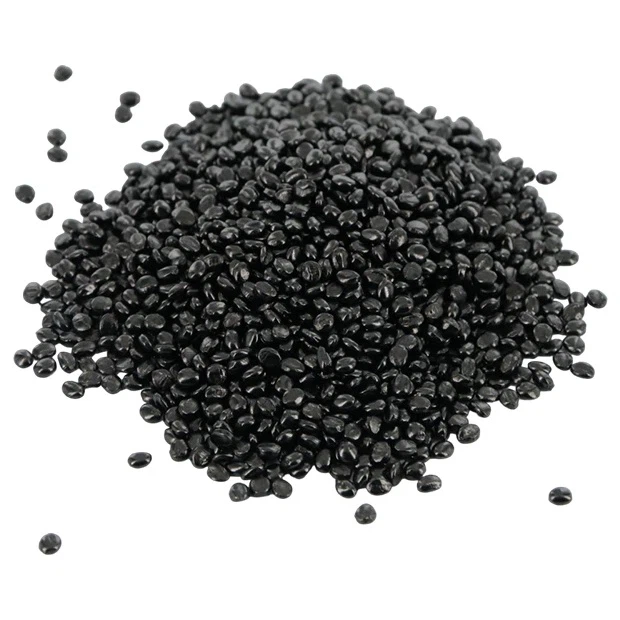
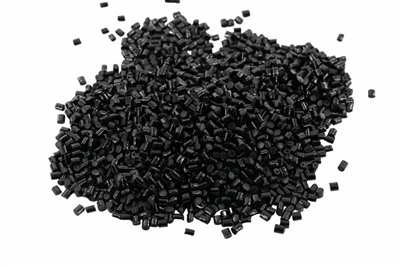

Hey there! As a supplier of black masterbatch for granulation, I often get asked about the differences between our product and other masterbatches. So, I thought I'd take a few minutes to break it down for you.
First off, let's talk about what masterbatch is. Masterbatch is a concentrated mixture of pigments and additives that are encapsulated in a carrier resin. It's used to color or add specific properties to plastic products during the manufacturing process. There are all sorts of masterbatches out there, like color masterbatches, additive masterbatches, and yes, black masterbatches.
Now, black masterbatch for granulation is a special type of black masterbatch. It's specifically formulated for use in granulation processes. Granulation is a process where plastic materials are turned into small pellets or granules. These granules are then used to make all kinds of plastic products, from plastic bags to automotive parts.
One of the key differences between black masterbatch for granulation and other masterbatches is its composition. Our black masterbatch for granulation is made with high - quality carbon black pigments. Carbon black is not only great for providing a deep, rich black color, but it also has excellent UV resistance. This means that plastic products made with our black masterbatch for granulation will be less likely to fade or degrade when exposed to sunlight.
In contrast, some other masterbatches might use different pigments. For example, color masterbatches for non - black colors use organic or inorganic pigments specific to the desired color. These pigments have different properties compared to carbon black. Organic pigments might offer a wider range of bright and vivid colors, but they may not have the same level of UV resistance as carbon black.
Another difference lies in the dispersion ability. In the granulation process, it's crucial that the masterbatch can disperse evenly throughout the plastic resin. Our black masterbatch for granulation is designed with a special dispersion technology. This ensures that the carbon black particles are well - distributed in the plastic matrix, resulting in a uniform black color across the entire granule.
Some other masterbatches may not have the same level of dispersion quality. For instance, if a masterbatch is not properly dispersed, you might end up with streaks or color variations in the final plastic product. This is a big no - no in industries where appearance and quality are of utmost importance.
Let's also talk about the heat stability. The granulation process involves high temperatures. Our black masterbatch for granulation can withstand these high temperatures without breaking down or losing its properties. The carrier resin we use has a high melting point and good heat - resistant characteristics. This means that even when the plastic is being melted and processed at high temperatures during granulation, the black masterbatch retains its color and performance.
On the other hand, some other masterbatches may not be as heat - stable. For example, certain additive masterbatches that contain heat - sensitive additives might start to decompose at high temperatures, which can affect the quality of the final plastic product.
Now, let's look at some specific applications. Our black masterbatch for granulation is widely used in various industries. It's great for making plastic pipes. The UV resistance provided by the carbon black is especially useful for outdoor pipes, as it helps to prevent the pipes from deteriorating due to sunlight exposure. You can learn more about Black Masterbatch for Pipe.
It's also used in the production of plastic films. Whether it's for packaging or agricultural purposes, our black masterbatch for granulation can give the film a uniform black color and good mechanical properties. Check out Black Masterbatch for Film Blown for more details.
In addition, it's suitable for foaming applications. When used in plastic foams, it can enhance the aesthetic appeal and also contribute to the overall durability of the foam. You can find more information about Black Masterbatch for Foaming.
Some other masterbatches are more specialized for specific applications. For example, there are masterbatches designed solely for anti - static properties in electronic packaging. These masterbatches contain additives that can dissipate static electricity, which is not the main focus of our black masterbatch for granulation.
When it comes to cost - effectiveness, our black masterbatch for granulation is a great choice. Since it has good dispersion and heat - stability, you can use less of it to achieve the desired results. This means that you can save on material costs in the long run.
Some other masterbatches might require a higher dosage to get the same level of performance. For example, if a masterbatch has poor dispersion, you might need to add more of it to the plastic resin to ensure a uniform color or property, which can increase the overall cost.
The processing requirements also differ. Our black masterbatch for granulation is compatible with a wide range of plastic resins, such as polyethylene (PE), polypropylene (PP), and polystyrene (PS). This makes it very versatile in the granulation process. You can easily mix it with different types of resins without having to worry too much about compatibility issues.


Other masterbatches may have more limited compatibility. For example, a masterbatch designed for a specific type of engineering plastic may not work well with commodity plastics like PE or PP.
In conclusion, black masterbatch for granulation has its own unique features and advantages compared to other masterbatches. Its composition, dispersion ability, heat stability, and application suitability set it apart. If you're in the business of plastic granulation and are looking for a high - quality, cost - effective black masterbatch, we've got you covered.
If you're interested in learning more about our black masterbatch for granulation or want to discuss a potential purchase, feel free to reach out. We're always happy to have a chat and see how we can meet your specific needs.
References:
- Plastics Additives Handbook, Hans Zweifel
- Industrial Plastics: Theory and Applications, David A. Potts