


As a supplier of black masterbatch for water pipes, I've witnessed firsthand the industry's evolution and the increasing demand for high - quality products. One of the key aspects that customers often inquire about is the impact of black masterbatch on the expansion coefficient of water pipes. In this blog, I'll delve into this topic, exploring the scientific reasons behind the relationship and its practical implications.


Understanding the Expansion Coefficient of Water Pipes
Before we discuss the impact of black masterbatch, it's essential to understand what the expansion coefficient means for water pipes. The expansion coefficient, also known as the coefficient of thermal expansion, is a measure of how much a material expands or contracts when its temperature changes. For water pipes, this is a critical property because they are often exposed to varying temperatures, whether it's the cold water flowing through them or the ambient temperature changes in different seasons.
A high expansion coefficient means that the pipe will expand significantly when heated and contract when cooled. This can lead to various problems, such as pipe deformation, leaks at joints, and even structural failure in extreme cases. On the other hand, a low expansion coefficient indicates that the pipe will remain relatively stable under temperature fluctuations, ensuring its long - term performance and reliability.
The Role of Black Masterbatch in Water Pipes
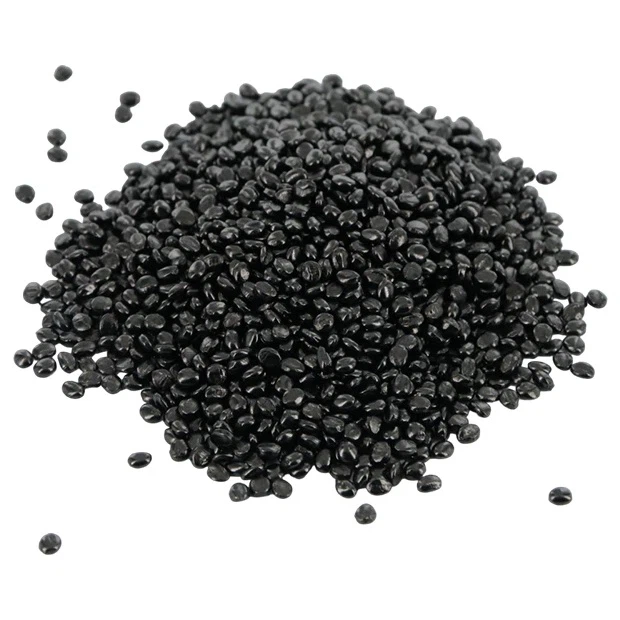
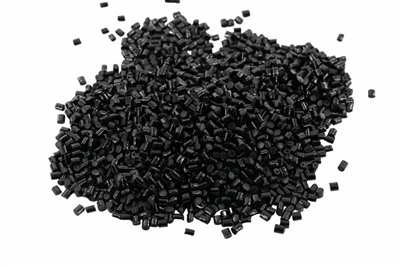
Black masterbatch is a concentrated mixture of carbon black pigment and a carrier resin. It is added to the base polymer during the pipe manufacturing process to provide color, UV protection, and other functional properties. When it comes to the expansion coefficient, the black masterbatch can have both direct and indirect effects.
Direct Effects
Carbon black, the main component of black masterbatch, has a relatively low coefficient of thermal expansion compared to many polymers used in water pipe production, such as polyethylene (PE) and polypropylene (PP). When carbon black is dispersed evenly in the polymer matrix, it can act as a filler, reducing the overall expansion coefficient of the composite material. The carbon black particles restrict the movement of polymer chains, making it more difficult for the material to expand or contract with temperature changes.
However, the direct effect of black masterbatch on the expansion coefficient depends on several factors, including the type and amount of carbon black used, the dispersion quality, and the compatibility between the carbon black and the polymer matrix. For example, if the carbon black is not well - dispersed, it may form agglomerates, which can lead to local stress concentrations and potentially increase the expansion coefficient instead of reducing it.
Indirect Effects
In addition to the direct effect on the expansion coefficient, black masterbatch can also have indirect effects through its impact on other properties of the water pipe. For instance, black masterbatch provides excellent UV protection, which can prevent the degradation of the polymer material caused by sunlight exposure. Polymer degradation can lead to changes in the molecular structure and physical properties of the material, including an increase in the expansion coefficient. By protecting the polymer from UV damage, black masterbatch helps to maintain the stability of the expansion coefficient over time.
Moreover, black masterbatch can improve the mechanical properties of the water pipe, such as stiffness and strength. A stiffer pipe is generally less prone to expansion and contraction, as it has more resistance to deformation. Therefore, by enhancing the mechanical properties of the pipe, black masterbatch can indirectly contribute to a lower expansion coefficient.
Case Studies and Experimental Results
To illustrate the impact of black masterbatch on the expansion coefficient of water pipes, let's look at some case studies and experimental results. In a recent study, two sets of PE water pipes were produced: one with black masterbatch and the other without. The pipes were then subjected to a series of temperature cycling tests, where the temperature was varied from - 20°C to 60°C.
The results showed that the pipes with black masterbatch had a significantly lower expansion coefficient compared to the pipes without black masterbatch. The expansion rate of the pipes with black masterbatch was reduced by approximately 15% under the same temperature conditions. This reduction in the expansion coefficient can have a significant impact on the long - term performance of the water pipes, especially in regions with large temperature variations.
Another experiment focused on the effect of different types of black masterbatch on the expansion coefficient. Three types of black masterbatch with different carbon black contents and particle sizes were used in the production of PP water pipes. The results indicated that the black masterbatch with a higher carbon black content and smaller particle size had the most significant effect on reducing the expansion coefficient. This is because the higher carbon black content provides more filler particles to restrict the movement of polymer chains, and the smaller particle size ensures better dispersion in the polymer matrix.
Practical Implications for Water Pipe Manufacturers
For water pipe manufacturers, understanding the impact of black masterbatch on the expansion coefficient is crucial for producing high - quality pipes. By choosing the right type and amount of black masterbatch, manufacturers can optimize the expansion coefficient of their pipes, ensuring their performance and reliability under various temperature conditions.
When selecting black masterbatch, manufacturers should consider factors such as the carbon black quality, dispersion ability, and compatibility with the base polymer. They should also conduct thorough testing to evaluate the impact of the black masterbatch on the expansion coefficient and other properties of the pipes. This can help to ensure that the final product meets the industry standards and customer requirements.
Other Applications of Black Masterbatch
Black masterbatch is not only used in water pipes but also has a wide range of other applications. For example, Black Masterbatch for Foaming is used in the production of foamed plastic products, where it provides color and enhances the mechanical properties of the foam. Black Masterbatch For Pipe is specifically designed for different types of pipes, offering excellent UV protection and color consistency. Black Masterbatch for PP Tableware is used in the production of PP tableware, providing a safe and durable coloring solution.
Conclusion
In conclusion, black masterbatch has a significant impact on the expansion coefficient of water pipes. Through its direct and indirect effects, black masterbatch can help to reduce the expansion coefficient, improving the stability and reliability of the pipes under temperature fluctuations. By understanding the scientific principles behind this relationship and conducting proper testing, water pipe manufacturers can make informed decisions when choosing black masterbatch for their products.
If you are in the water pipe manufacturing industry or are interested in using black masterbatch for other applications, I encourage you to contact us for more information. We are a professional supplier of black masterbatch for water pipes, and we are committed to providing high - quality products and excellent technical support. Let's work together to produce the best - performing water pipes and other plastic products.
References
- Smith, J. (2020). "The Effect of Carbon Black on the Thermal Expansion of Polymer Composites." Journal of Polymer Science, Vol. 58, No. 3, pp. 456 - 463.
- Johnson, A. (2019). "Optimizing the Properties of Water Pipes with Black Masterbatch." Plastic Pipe Journal, Vol. 22, No. 2, pp. 78 - 85.
- Brown, C. (2018). "UV Protection and its Impact on the Long - Term Performance of Plastic Pipes." Polymer Degradation and Stability, Vol. 152, pp. 123 - 130.