

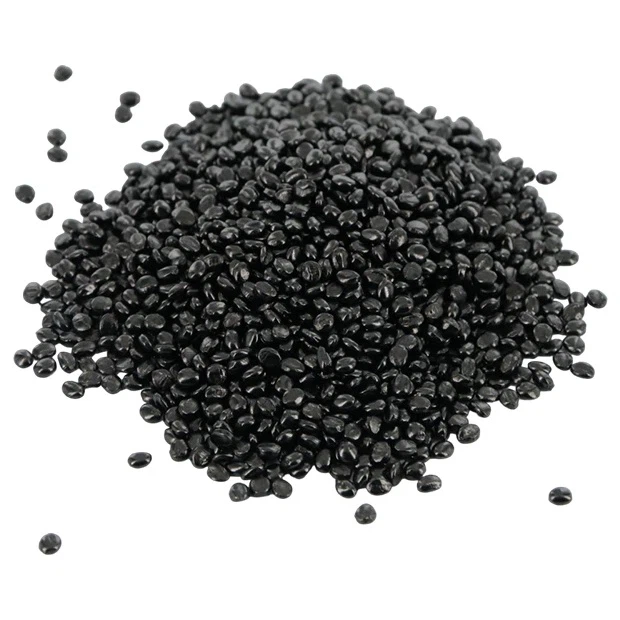
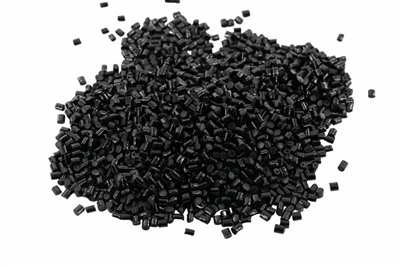

What is the opacity provided by black masterbatch for film blown?
As a supplier of black masterbatch for film blown, I am often asked about the opacity that our product can offer. Opacity is a crucial property in many film applications, as it determines the ability of the film to block light and hide what is behind it. In this blog post, I will delve into the concept of opacity in the context of black masterbatch for blown films, explore the factors that influence it, and discuss the benefits of using our high - quality black masterbatch.
Understanding Opacity in Blown Films
Opacity refers to the degree to which a material blocks the transmission of light. In the case of blown films, a higher opacity means that less light can pass through the film. This property is especially important in applications where light protection is necessary, such as in packaging films for light - sensitive products, agricultural films, and some industrial films.
Black masterbatch plays a vital role in enhancing the opacity of blown films. It contains carbon black, which is a highly effective light - absorbing pigment. When added to the base polymer during the film - blowing process, the carbon black particles disperse throughout the polymer matrix. These particles scatter and absorb light, preventing it from passing through the film and thus increasing its opacity.
Factors Affecting Opacity
Several factors influence the opacity provided by black masterbatch in blown films.
Carbon Black Concentration
The concentration of carbon black in the masterbatch is one of the most significant factors. Generally, a higher carbon black loading will result in greater opacity. However, there is a limit to how much carbon black can be added. Excessive carbon black can lead to processing difficulties, such as poor dispersion, increased viscosity, and reduced mechanical properties of the film. Our black masterbatch is formulated with an optimal carbon black concentration to achieve a balance between high opacity and good processability.
Particle Size of Carbon Black
The particle size of carbon black also affects opacity. Smaller carbon black particles tend to provide better opacity because they can scatter light more effectively. They have a larger surface area per unit mass, which allows for more light - absorbing and scattering sites. Our manufacturing process ensures that the carbon black used in our masterbatch has a fine and uniform particle size distribution, maximizing the opacity of the blown films.
Dispersion Quality
Proper dispersion of carbon black in the polymer matrix is essential for achieving high opacity. If the carbon black particles are not well - dispersed, they may form agglomerates. These agglomerates can reduce the effective surface area available for light absorption and scattering, resulting in lower opacity. We use advanced dispersion techniques in our production to ensure that the carbon black is evenly distributed throughout the masterbatch, so that when it is added to the polymer during film blowing, it can provide consistent and high - level opacity.
Benefits of High - Opacity Blown Films with Our Black Masterbatch
Light Protection
For products that are sensitive to light, such as food, pharmaceuticals, and some chemicals, high - opacity blown films can provide excellent protection. The opaque film blocks harmful UV and visible light, preventing the degradation of the product inside. This helps to extend the shelf - life of the products and maintain their quality.
Aesthetics
In some applications, such as shopping bags and packaging, high opacity can enhance the aesthetics of the film. It gives the film a clean, uniform, and professional appearance. The black color provided by our masterbatch can also add a touch of elegance and sophistication to the final product.
Privacy
In certain industrial and agricultural applications, privacy is a concern. High - opacity blown films can be used to create barriers that block the view from the outside. For example, in agricultural greenhouses, opaque films can be used to control the amount of light entering the greenhouse and provide privacy for the plants.
Applications of Our Black Masterbatch for High - Opacity Blown Films
Sunshade Net
Our black masterbatch is suitable for Black Masterbatch for Sunshade Net. Sunshade nets need to have high opacity to block a significant amount of sunlight. The carbon black in our masterbatch helps to achieve this high opacity, while also providing good weather resistance and mechanical properties to the net.
Shopping Bag
For Black Masterbatch for Shopping Bag, opacity is important not only for aesthetics but also for protecting the contents of the bag from light. Our masterbatch can be used to produce shopping bags with high opacity, which are durable and visually appealing.
Sheet
In the production of Black Masterbatch for Sheet, high opacity is often required. Sheets made with our black masterbatch can be used in various industries, such as construction and automotive, where light blocking and privacy are needed.
Conclusion
In conclusion, the opacity provided by our black masterbatch for film blown is a result of careful formulation and advanced manufacturing processes. The concentration of carbon black, its particle size, and the dispersion quality all play important roles in determining the opacity of the final blown film. Our high - quality black masterbatch offers many benefits, including light protection, enhanced aesthetics, and privacy. It is suitable for a wide range of applications, from sunshade nets to shopping bags and sheets.


If you are interested in our black masterbatch for film blown and want to discuss your specific requirements, please feel free to reach out to us. We are more than happy to provide you with detailed product information and support your procurement process.
References
- X. Zhang, Y. Wang, "Carbon Black - Filled Polymer Composites: Structure, Properties, and Applications", Journal of Polymer Science, 2018.
- M. Smith, "Light - Absorbing Pigments in Polymer Films", Polymer Engineering and Science, 2016.
- J. Brown, "Opacity and Its Importance in Blown Films", Plastics Technology, 2019.