

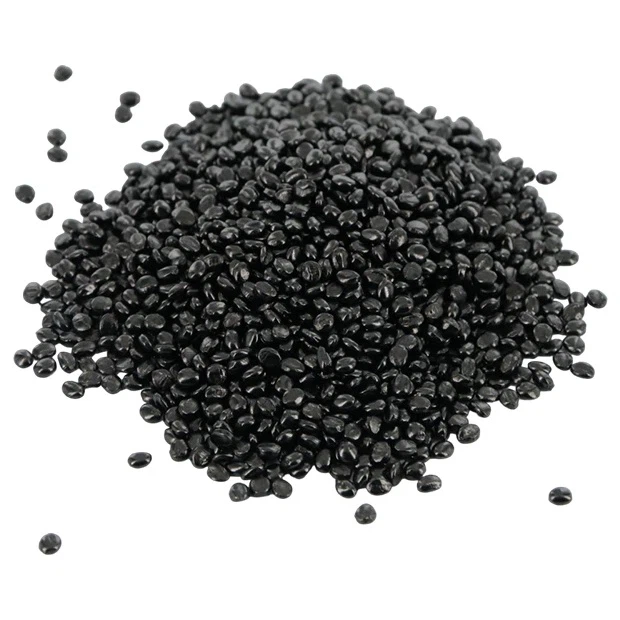
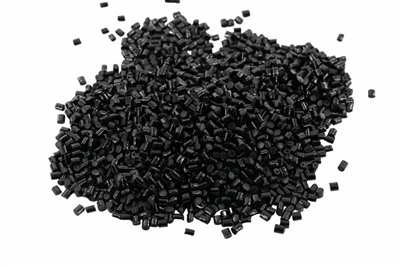

As a dedicated supplier of black masterbatch for garbage bags, I'm thrilled to share the intricate production process behind this essential product. Black masterbatch is a concentrated mixture of carbon black pigment and a carrier resin, which is used to impart color and other properties to the final plastic product. In the case of garbage bags, black masterbatch not only provides the characteristic black color but also enhances the bag's UV resistance, strength, and durability.
Raw Material Selection
The first step in the production of black masterbatch for garbage bags is the careful selection of raw materials. The two primary components are carbon black and the carrier resin.
Carbon Black
Carbon black is a fine powder produced by the incomplete combustion or thermal decomposition of hydrocarbons. It is the key pigment that gives the masterbatch its black color. When choosing carbon black for garbage bag masterbatch, several factors are considered:
- Particle Size: Smaller particle sizes generally result in better dispersion and a more intense black color. For garbage bags, carbon black with a particle size in the range of 20 - 50 nanometers is commonly used.
- Surface Area: A higher surface area provides better tinting strength. Carbon black with a surface area of 50 - 150 m²/g is suitable for garbage bag applications.
- Structure: The structure of carbon black refers to the degree of aggregation of its particles. Higher - structured carbon black can improve the mechanical properties of the final product.
Carrier Resin
The carrier resin serves as a matrix to hold the carbon black particles and ensures good dispersion in the final plastic. For garbage bags, polyethylene (PE) is the most commonly used carrier resin due to its compatibility with the PE used in garbage bag production. Low - density polyethylene (LDPE) and linear low - density polyethylene (LLDPE) are often preferred because of their flexibility and good processing properties.
Mixing
Once the raw materials are selected, the next step is mixing. This process is crucial for achieving a uniform distribution of carbon black in the carrier resin.
Dry Mixing
Initially, the carbon black and the carrier resin are dry - mixed in a high - speed mixer. The mixer rotates at a high speed, causing the particles to collide and disperse. During this process, additives such as dispersants, antioxidants, and lubricants may be added to improve the dispersion of carbon black and the processing performance of the masterbatch. Dispersants help to reduce the agglomeration of carbon black particles, while antioxidants prevent the oxidation of the resin during processing and use. Lubricants improve the flowability of the mixture.


Melt Mixing
After dry mixing, the mixture is fed into an extruder for melt mixing. The extruder consists of a heated barrel and a screw. As the screw rotates, it conveys the mixture through the barrel, where it is heated to a temperature above the melting point of the carrier resin. The high - shear forces generated by the screw break up the carbon black agglomerates and disperse them evenly in the molten resin.
The extruder has multiple heating zones, and the temperature is carefully controlled to ensure proper melting and mixing. The temperature profile depends on the type of carrier resin used. For example, for LDPE, the melting temperature is typically around 105 - 115°C, while for LLDPE, it is slightly higher, around 120 - 130°C.
Extrusion
Once the carbon black is uniformly dispersed in the molten resin, the mixture is extruded through a die. The die determines the shape and size of the extruded masterbatch. In the case of black masterbatch for garbage bags, the most common shape is a pellet.
The extruded strands are cooled in a water bath to solidify them quickly. After cooling, the strands are cut into small pellets using a pelletizer. The size of the pellets is typically in the range of 2 - 4 mm in diameter.
Quality Control
Quality control is an essential part of the production process. Samples of the black masterbatch pellets are taken at regular intervals and tested for various properties.
Color and Tinting Strength
The color of the masterbatch is measured using a colorimeter. The tinting strength, which indicates how much color the masterbatch can impart to the final plastic, is also determined. The color and tinting strength should meet the specified standards for garbage bag applications.
Dispersion
The dispersion of carbon black in the masterbatch is evaluated using microscopy techniques. A well - dispersed masterbatch should show a uniform distribution of carbon black particles without significant agglomeration. Poor dispersion can lead to color streaks and reduced mechanical properties in the final garbage bags.
Physical and Mechanical Properties
The physical and mechanical properties of the masterbatch, such as melt flow index (MFI), density, and tensile strength, are also tested. The MFI indicates the flowability of the masterbatch during processing, and it should be within a suitable range for garbage bag production.
Applications and Related Products
Our black masterbatch for garbage bags is not only used in the production of ordinary household garbage bags but also in industrial and commercial garbage bags. The high - quality carbon black and carefully selected carrier resin ensure that the garbage bags have excellent UV resistance, which prevents them from becoming brittle and breaking under sunlight exposure.
In addition to garbage bags, we also offer other types of black masterbatch products, such as Black Masterbatch for Home Appliances, Black Masterbatch for Wire and Cable, and Black Masterbatch for Extrusion. These products are designed to meet the specific requirements of different industries.
Conclusion
The production process of black masterbatch for garbage bags involves a series of carefully controlled steps, from raw material selection to quality control. By using high - quality raw materials, advanced mixing and extrusion techniques, and strict quality control measures, we are able to produce black masterbatch that meets the highest standards for garbage bag production.
If you are interested in our black masterbatch products for garbage bags or other applications, please feel free to contact us for more information and to discuss your specific requirements. We look forward to partnering with you to provide the best solutions for your plastic coloring needs.
References
- "Plastics Additives Handbook" by Hans Zweifel
- "Carbon Black: Science and Technology" by Donnet, Cadenhead, and Wang