

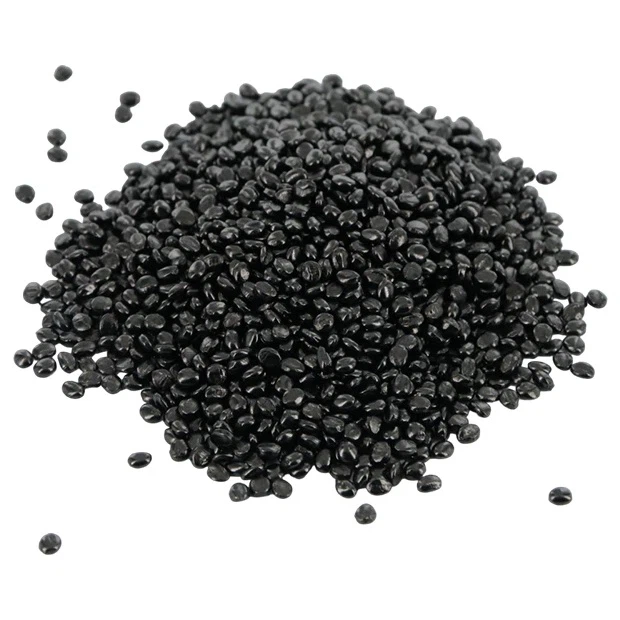
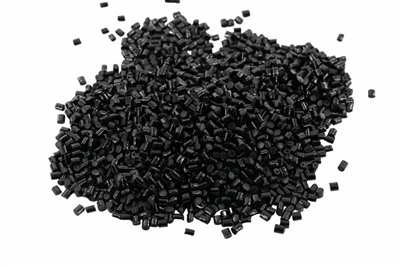

As a supplier of black masterbatch for foaming, I often get asked about the shelf - life of our product. Understanding the shelf - life of black masterbatch for foaming is crucial for both manufacturers and end - users. It directly impacts the quality and performance of the final foamed products. In this blog, I will delve into the factors that affect the shelf - life, how to determine it, and best practices for storage to maximize its usability.
Factors Affecting the Shelf - life of Black Masterbatch for Foaming
1. Pigment and Additive Stability
The primary components of black masterbatch for foaming are pigments (usually carbon black) and various additives. Carbon black is generally a stable pigment. However, the quality and type of carbon black can influence its long - term stability. High - quality carbon black with good dispersion properties is more likely to maintain its color and performance over time.
Additives, on the other hand, are more prone to degradation. For example, foaming agents in the masterbatch are designed to decompose at specific temperatures during the foaming process. If they start to degrade prematurely during storage, it can affect the foaming efficiency. Antioxidants and UV stabilizers, which are added to protect the masterbatch from oxidation and UV radiation, can also lose their effectiveness over time.
2. Storage Conditions
Storage conditions play a vital role in determining the shelf - life of black masterbatch for foaming. Temperature and humidity are two key factors. High temperatures can accelerate the chemical reactions within the masterbatch, leading to the degradation of additives and pigments. For instance, if the masterbatch is stored in an environment where the temperature regularly exceeds 40°C, the foaming agents may start to decompose slowly, reducing their effectiveness when used in the foaming process.


Humidity can also cause problems. Moisture can lead to the agglomeration of the masterbatch particles, making it difficult to disperse evenly in the polymer matrix. Additionally, some additives may react with water, altering their chemical properties and reducing their functionality. A storage environment with a relative humidity above 70% is generally considered unfavorable for long - term storage of black masterbatch for foaming.
3. Packaging
The packaging of the black masterbatch for foaming is another important factor. Proper packaging can provide a barrier against external factors such as moisture, oxygen, and dust. Sealed plastic bags or containers are commonly used to protect the masterbatch. However, if the packaging is damaged or not properly sealed, it can allow moisture and oxygen to enter, accelerating the degradation process.
Some high - quality masterbatch suppliers use multi - layer packaging with a moisture - barrier layer to ensure better protection. For example, a three - layer packaging with an outer layer for strength, a middle layer for oxygen barrier, and an inner layer for moisture barrier can significantly extend the shelf - life of the masterbatch.
Determining the Shelf - life
Determining the exact shelf - life of black masterbatch for foaming can be challenging as it depends on multiple factors. Most manufacturers provide a recommended shelf - life based on their testing under standard storage conditions. Typically, the shelf - life of black masterbatch for foaming ranges from 12 to 24 months under ideal storage conditions (temperature between 20 - 25°C and relative humidity between 40 - 60%).
However, to accurately assess the usability of the masterbatch after a certain period, it is advisable to conduct quality control tests. These tests can include visual inspection for any signs of agglomeration or discoloration, as well as performance tests such as measuring the foaming ratio and color intensity in a small - scale foaming process. If the test results meet the required specifications, the masterbatch can still be used even if it has exceeded the recommended shelf - life.
Best Practices for Storage to Maximize Shelf - life
1. Temperature and Humidity Control
As mentioned earlier, maintaining a stable temperature and humidity is crucial. The storage area should be well - ventilated and away from direct sunlight and heat sources. A temperature - controlled warehouse is ideal, where the temperature can be maintained within the recommended range. If a temperature - controlled environment is not available, it is important to avoid storing the masterbatch in areas prone to extreme temperature fluctuations, such as near windows or heating vents.
Humidity can be controlled using dehumidifiers or by storing the masterbatch in air - tight containers. If the storage area has high humidity, it is advisable to use desiccants inside the packaging to absorb any excess moisture.
2. Proper Packaging Handling
When handling the packaged masterbatch, care should be taken to avoid damaging the packaging. Any tears or punctures in the packaging should be immediately repaired or the masterbatch should be transferred to a new, intact package. It is also important to keep the packaging clean and free from dust and debris.
3. First - In, First - Out (FIFO) Principle
Implementing the FIFO principle in the storage and handling of black masterbatch for foaming is a good practice. This means using the oldest stock first to ensure that the masterbatch is used within the recommended shelf - life. By following this principle, the risk of using expired or degraded masterbatch is minimized.
Our Product Range and Applications
At our company, we offer a wide range of black masterbatch for foaming products, suitable for various applications. Our Black Masterbatch For Granulation is designed to provide excellent color dispersion and foaming performance in granulation processes. It is formulated with high - quality carbon black and additives to ensure long - term stability.
Our Black Masterbatch For Injection is specifically tailored for injection molding applications. It offers consistent color and foaming results, making it ideal for producing high - quality foamed injection - molded products.
In addition, our Engineering Compounding Black Masterbatch is suitable for more demanding engineering applications. It contains special additives to enhance the mechanical properties of the foamed products, such as strength and heat resistance.
Contact for Purchase and Discussion
If you are interested in our black masterbatch for foaming products or have any questions regarding the shelf - life or other aspects, we encourage you to contact us for a detailed discussion. Our team of experts is ready to assist you in choosing the right product for your specific needs and providing you with the best solutions. Whether you are a small - scale manufacturer or a large - scale industrial user, we can offer competitive prices and high - quality products.
References
- "Plastic Additives Handbook" by Hans Zweifel
- "Carbon Black: Production, Properties, and Applications" by James Economy
- Industry reports on masterbatch manufacturing and storage best practices.