

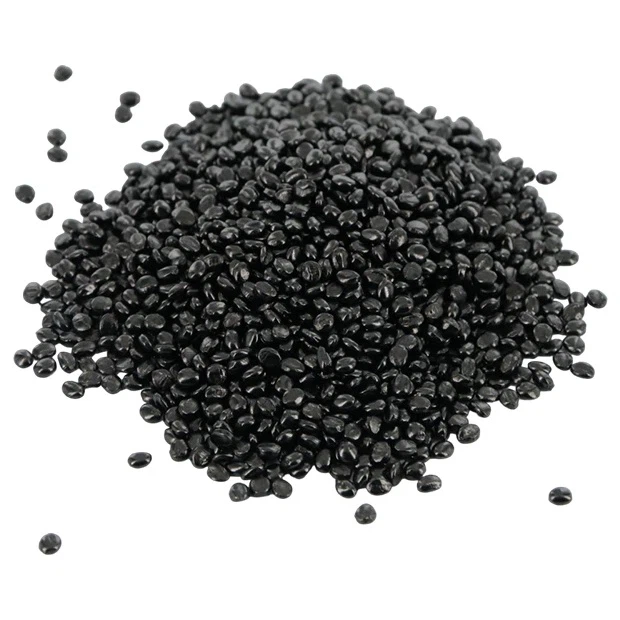
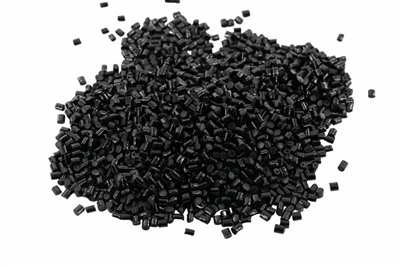

As a dedicated supplier of black masterbatch for automotive applications, I've witnessed firsthand the critical role that compatibility plays in the automotive industry. The automotive sector relies on a diverse range of polymers, each with its unique properties and requirements. Understanding the compatibility of black masterbatch with these polymers is essential for achieving optimal performance, aesthetics, and durability in automotive components.
The Significance of Compatibility in Automotive Applications
In the automotive industry, polymers are used extensively for various components, including interior trims, exterior body parts, under - the - hood applications, and electrical components. These polymers offer advantages such as lightweight, corrosion resistance, and design flexibility. However, when incorporating black masterbatch into these polymers, compatibility issues can arise, which may lead to problems such as poor dispersion, reduced mechanical properties, and color inconsistency.
Compatibility ensures that the black masterbatch can be evenly dispersed throughout the polymer matrix, resulting in a uniform color and consistent performance. It also affects the physical and chemical properties of the final product, such as its strength, impact resistance, and heat stability. In automotive applications, where safety and quality are of utmost importance, ensuring compatibility is not just a matter of aesthetics but also a necessity for meeting industry standards.
Compatibility with Different Polymers Used in Automotive
Polypropylene (PP)
Polypropylene is one of the most widely used polymers in the automotive industry due to its low cost, good chemical resistance, and excellent processability. When it comes to black masterbatch, PP Black Masterbatch is specifically formulated to be highly compatible with PP.
The key to achieving good compatibility with PP is to use a carrier resin in the black masterbatch that has similar melting points and chemical structures to PP. This allows for easy dispersion of the carbon black pigment in the PP matrix during the extrusion or injection - molding process. A well - compatible black masterbatch for PP will not only provide a deep, rich black color but also maintain the mechanical properties of the PP, such as its stiffness and impact strength.
Acrylonitrile Butadiene Styrene (ABS)
ABS is another popular polymer in the automotive industry, known for its high impact resistance, good dimensional stability, and excellent surface finish. ABS Black Masterbatch is designed to be fully compatible with ABS.
The compatibility of black masterbatch with ABS is crucial for achieving a smooth, defect - free surface finish. If the masterbatch is not compatible, it may cause issues such as streaking, pitting, or delamination on the surface of the molded part. To ensure compatibility, the masterbatch should be formulated with a carrier resin that can dissolve and disperse well in the ABS matrix, allowing for a homogeneous distribution of the carbon black pigment.
Polycarbonate (PC)
Polycarbonate is valued in the automotive industry for its high transparency, excellent impact resistance, and heat resistance. When using black masterbatch with PC, compatibility is a bit more challenging due to the high processing temperatures of PC.
A compatible black masterbatch for PC must be able to withstand the high temperatures without degrading or causing any adverse effects on the PC's properties. The carrier resin in the masterbatch should have a high melting point and good thermal stability. Additionally, it should be formulated to prevent any interaction between the carbon black and the PC that could lead to yellowing or loss of transparency over time.
Polyethylene (PE)
Polyethylene is used in various automotive applications, including fuel tanks, bumpers, and interior linings. There are different types of polyethylene, such as high - density polyethylene (HDPE) and low - density polyethylene (LDPE), each with its own compatibility requirements for black masterbatch.
For HDPE, a black masterbatch with a high - density carrier resin is preferred to ensure good compatibility. This helps in achieving a uniform color and maintaining the high stiffness and strength of HDPE. In the case of LDPE, a masterbatch with a more flexible carrier resin is needed to match the lower density and greater flexibility of LDPE.
Testing and Ensuring Compatibility
To ensure the compatibility of our Black Masterbatch For Automotive with different polymers, we conduct a series of rigorous tests. These tests include melt flow index analysis, thermal stability testing, and mechanical property testing.
Melt flow index analysis helps us understand how the masterbatch will flow and disperse in the polymer during the processing stage. Thermal stability testing is crucial, especially for polymers that require high - temperature processing, to ensure that the masterbatch does not degrade or cause any issues at elevated temperatures. Mechanical property testing, such as tensile strength and impact resistance testing, is performed on the final molded parts to ensure that the addition of the masterbatch does not compromise the performance of the polymer.
We also work closely with our customers to conduct trials in their specific processing conditions. This allows us to fine - tune the formulation of the masterbatch to achieve the best possible compatibility and performance in their automotive applications.
The Role of Customization in Compatibility
Every automotive application is unique, and sometimes standard black masterbatch formulations may not provide the ideal compatibility. That's where customization comes in. We offer customized black masterbatch solutions to meet the specific compatibility requirements of different polymers and automotive applications.
By working closely with our customers, we can understand their exact needs, such as the desired color intensity, processing conditions, and end - use requirements. Based on this information, we can formulate a black masterbatch that is perfectly tailored to their specific polymer and application, ensuring optimal compatibility and performance.
Conclusion
The compatibility of black masterbatch for automotive with different polymers is a complex but crucial aspect of the automotive industry. As a supplier, we are committed to providing high - quality, compatible black masterbatch solutions. Our understanding of the unique properties of each polymer, combined with our rigorous testing and customization capabilities, allows us to meet the diverse needs of the automotive sector.
If you are in the automotive industry and are looking for a reliable black masterbatch supplier, we invite you to reach out to us for a detailed discussion. We can help you find the perfect black masterbatch solution that ensures compatibility, performance, and aesthetics in your automotive applications.


References
- Modern Plastics Encyclopedia. McGraw - Hill.
- Automotive Materials Handbook. ASM International.
- Polymer Science and Technology. Prentice Hall.