


As a supplier of black masterbatch for foaming, I often encounter inquiries from customers in the foam rubber products industry. The question of whether black masterbatch for foaming can be used in foam rubber products is a common one, and it's a topic that deserves in - depth exploration.
Understanding Black Masterbatch for Foaming
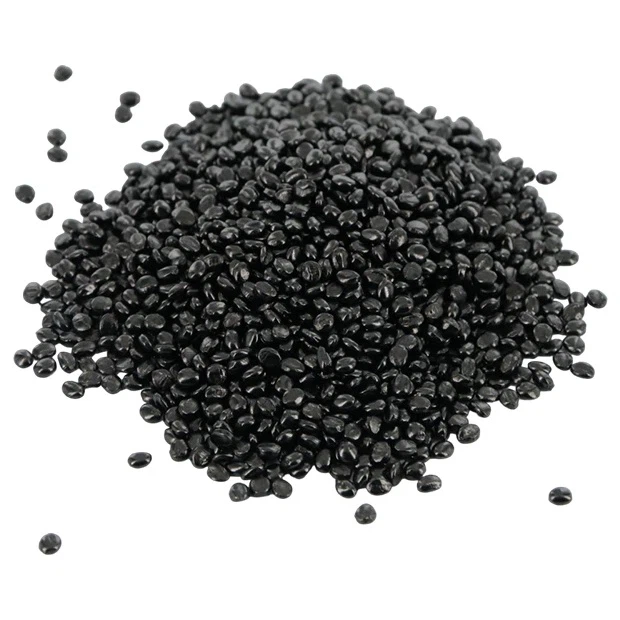
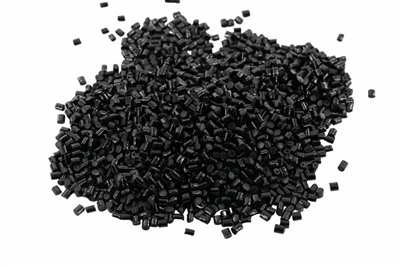
Black masterbatch for foaming is a specialized type of masterbatch designed to provide coloration and other functional properties in foaming processes. It consists of a high - concentration of carbon black pigment dispersed in a carrier resin, along with additives that are tailored to the foaming application. The carrier resin is carefully selected to ensure good compatibility with the base polymer used in the foaming process, and the additives are used to control the foaming behavior, such as cell size and density.
The production of black masterbatch for foaming involves a series of precise steps. First, the carbon black is milled to a fine particle size to ensure uniform dispersion. Then, it is mixed with the carrier resin and additives in a high - shear mixer. The mixture is then extruded through a die to form pellets. These pellets are easy to handle and can be directly added to the base polymer during the foaming process.
Compatibility with Foam Rubber Products
Foam rubber products are made from various types of rubber polymers, such as natural rubber, synthetic rubber (e.g., styrene - butadiene rubber, nitrile rubber), and thermoplastic elastomers. The key factor in determining whether black masterbatch for foaming can be used in foam rubber products is the compatibility between the masterbatch and the rubber polymer.
In most cases, if the carrier resin of the black masterbatch for foaming is selected correctly, it can have good compatibility with rubber polymers. For example, some carriers based on ethylene - vinyl acetate (EVA) or polyethylene (PE) can be compatible with certain types of rubber. When the masterbatch is added to the rubber during the foaming process, it can disperse evenly, providing a consistent black color to the foam rubber product.
However, there are also some challenges. Different rubber polymers have different chemical properties and processing requirements. For instance, natural rubber has a relatively high unsaturation degree, which makes it more reactive compared to some synthetic rubbers. This means that the additives in the black masterbatch need to be carefully formulated to avoid any adverse reactions with the rubber. If the masterbatch contains certain additives that are not compatible with the rubber, it may lead to problems such as poor dispersion, reduced mechanical properties of the foam rubber, or even affect the foaming process itself.
Advantages of Using Black Masterbatch for Foaming in Foam Rubber Products
- Coloration: The most obvious advantage is the ability to provide a uniform black color to the foam rubber products. This is important for both aesthetic and functional reasons. In some applications, such as automotive interior parts or consumer goods, a consistent black color is required to meet the design requirements.
- Cost - effectiveness: Using black masterbatch for foaming is often more cost - effective than using pure carbon black. Masterbatch manufacturers can optimize the formulation to achieve the desired color intensity with a lower amount of carbon black. This not only reduces the raw material cost but also simplifies the handling and processing of the colorant.
- Improved Processing: The additives in the black masterbatch for foaming can also improve the processing of foam rubber products. For example, some additives can act as lubricants, reducing the friction between the rubber and the processing equipment during the foaming process. This can lead to better flow properties, more uniform cell structure, and improved overall quality of the foam rubber.
Case Studies
Let's take a look at some real - world examples of using black masterbatch for foaming in foam rubber products.
In the automotive industry, foam rubber is widely used for sealing gaskets, noise - reducing components, and interior padding. By using black masterbatch for foaming, manufacturers can produce these parts with a consistent black color that matches the overall interior design of the vehicle. Moreover, the improved processing properties provided by the masterbatch can ensure that the parts have good mechanical properties and dimensional stability.
In the sports equipment industry, foam rubber is used to make items such as yoga mats and exercise balls. The black masterbatch can be used to give these products an attractive black color. At the same time, the additives in the masterbatch can help to control the foaming process, resulting in a more comfortable and durable product.


Considerations for Application
When using black masterbatch for foaming in foam rubber products, there are several considerations.
- Dosage: The appropriate dosage of the black masterbatch needs to be determined based on the desired color intensity and the characteristics of the foam rubber. Too much masterbatch may lead to increased cost and potential processing problems, while too little may not achieve the desired color.
- Mixing Process: A proper mixing process is crucial to ensure uniform dispersion of the masterbatch in the rubber. This may require the use of high - shear mixers or other specialized equipment to break down any agglomerates of the masterbatch and ensure that it is evenly distributed throughout the rubber matrix.
- Testing and Quality Control: Before large - scale production, it is necessary to conduct thorough testing on small - scale samples. This includes testing the color, mechanical properties, and foaming characteristics of the foam rubber products. Quality control measures should be established to ensure that the final products meet the required standards.
Related Products
If you are interested in other types of black masterbatch, we also offer Black Masterbatch For Film Blown, Black Masterbatch for Agriculture Film, and Black Masterbatch for Strech Film. These products are designed for specific applications in the film industry, providing excellent coloration and performance.
Conclusion
In conclusion, black masterbatch for foaming can be used in foam rubber products, but it requires careful consideration of compatibility, formulation, and processing. When used correctly, it offers significant advantages in terms of coloration, cost - effectiveness, and processing improvement.
If you are in the foam rubber products industry and are interested in using our black masterbatch for foaming, we welcome you to contact us for further discussions and potential procurement. Our team of experts can provide you with detailed technical support and help you find the most suitable solution for your specific needs.
References
- "Plastics Additives Handbook" by Hans Zweifel
- "Rubber Technology: Compounding, Mixing, and Processing of Elastomers" by Michael Morton