

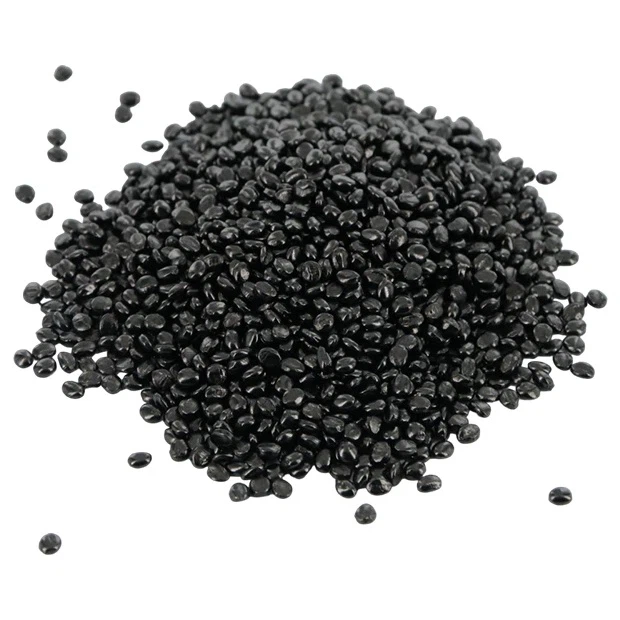
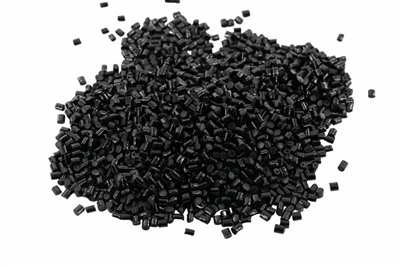

Mulch films are essential in modern agriculture, providing numerous benefits such as soil moisture retention, weed suppression, and temperature regulation. Among the various types of mulch films, black mulch films are particularly popular due to their ability to absorb sunlight and prevent weed growth effectively. Black masterbatch plays a crucial role in the production of these black mulch films. In this blog, we will explore how black masterbatch affects the tear resistance of mulch film, which is a vital property influencing the film's durability and performance in the field.
Understanding Black Masterbatch and Mulch Film
Black masterbatch is a concentrated mixture of carbon black pigment and a carrier resin. It is used to impart the black color to the mulch film. Carbon black is the key component in black masterbatch, known for its excellent light - absorbing properties. When added to the base resin of the mulch film during the manufacturing process, it not only gives the film its characteristic black color but also affects its physical and mechanical properties.
Mulch films are typically made from polymers such as polyethylene (PE). The quality of the mulch film depends on several factors, including the type of polymer, additives, and the manufacturing process. Tear resistance is an important property of mulch films. A film with high tear resistance can withstand external forces such as wind, handling during installation, and the movement of agricultural equipment without tearing easily.
Mechanisms of How Black Masterbatch Affects Tear Resistance
Reinforcement Effect
Carbon black particles in the black masterbatch can act as reinforcing agents within the polymer matrix of the mulch film. When the film is subjected to a tearing force, the carbon black particles can distribute the stress throughout the material. They prevent the propagation of cracks by acting as barriers. The strong interaction between the carbon black particles and the polymer chains restricts the movement of the chains, making it more difficult for cracks to form and grow.
For example, in a study on filled polymer composites, it was found that the addition of a certain amount of carbon black can significantly increase the tear strength of the polymer. The carbon black particles create a network - like structure within the polymer, which enhances the overall mechanical integrity of the mulch film.
Influence on Polymer Crystallinity
The presence of black masterbatch can also affect the crystallinity of the polymer in the mulch film. Carbon black can act as a nucleating agent during the crystallization process of the polymer. A proper amount of carbon black can promote the formation of smaller and more uniform crystallites in the polymer matrix.
Polymers with smaller crystallites generally have better tear resistance. Smaller crystallites provide a more homogeneous structure, which can better resist the propagation of cracks. In contrast, large crystallites can act as stress concentrators, making the film more prone to tearing.
Compatibility with the Polymer Matrix
The compatibility between the black masterbatch and the base polymer is crucial for the tear resistance of the mulch film. If the black masterbatch is well - dispersed in the polymer matrix, it can enhance the tear resistance. However, if there is poor compatibility or agglomeration of the carbon black particles, it can have a negative impact on the tear resistance.
Agglomerated carbon black particles can create weak points in the film, where cracks are more likely to initiate. Therefore, the formulation and processing conditions of the black masterbatch need to be carefully optimized to ensure good dispersion in the polymer matrix.
Factors Affecting the Impact of Black Masterbatch on Tear Resistance
Carbon Black Concentration
The concentration of carbon black in the black masterbatch is a critical factor. Generally, an appropriate increase in carbon black concentration can improve the tear resistance of the mulch film. However, if the carbon black concentration is too high, it can lead to agglomeration of the particles and a decrease in the film's tear resistance.
Excessive carbon black can also increase the viscosity of the polymer melt during the manufacturing process, which may cause processing difficulties and affect the quality of the film. Therefore, finding the optimal carbon black concentration is essential for achieving the best tear resistance.
Particle Size of Carbon Black
The particle size of carbon black in the black masterbatch also affects the tear resistance of the mulch film. Smaller particle - sized carbon black can provide a larger surface area for interaction with the polymer chains. This leads to better dispersion and a stronger reinforcing effect.
Larger particle - sized carbon black may not disperse as well in the polymer matrix and can act as stress concentrators, reducing the tear resistance of the film.
Type of Carrier Resin in the Masterbatch
The carrier resin in the black masterbatch should be compatible with the base polymer of the mulch film. A carrier resin with good compatibility can ensure uniform dispersion of the carbon black in the polymer matrix. Different carrier resins have different melting points, viscosities, and chemical properties, which can affect the processing and final properties of the mulch film.
For example, if the carrier resin has a high melting point, it may require a higher processing temperature, which can have an impact on the polymer's properties and the tear resistance of the film.


Our Offerings as a Black Masterbatch for Mulch Film Supplier
As a leading supplier of black masterbatch for mulch film, we understand the importance of tear resistance in mulch films. We have developed a range of high - quality black masterbatches that are specifically designed to enhance the tear resistance of mulch films.
Our black masterbatches are formulated with carefully selected carbon black with optimal particle size and concentration. We use advanced manufacturing processes to ensure good dispersion of the carbon black in the carrier resin. This results in a masterbatch that can be easily incorporated into the base polymer of the mulch film, providing excellent tear resistance.
In addition to our standard products, we also offer customized solutions. We can adjust the formulation of the black masterbatch according to the specific requirements of our customers, such as the type of polymer used in the mulch film, the desired level of tear resistance, and the processing conditions.
We also provide high - quality Black Masterbatch For Injection, Black Masterbatch For Pipe, and Black Masterbatch for Home Appliances. These products are also designed with a focus on quality and performance, ensuring that they meet the diverse needs of our customers.
Contact Us for Procurement and Negotiation
If you are interested in our black masterbatch products for mulch films or other applications, we welcome you to contact us for procurement and negotiation. Our team of experts is ready to provide you with detailed product information, technical support, and competitive pricing. We are committed to helping you achieve the best quality and performance in your mulch film products.
References
- "Polymer Composites: Principles and Applications" by Mohamed Naguib.
- Research papers on the mechanical properties of carbon - black filled polymer composites from various scientific journals.