

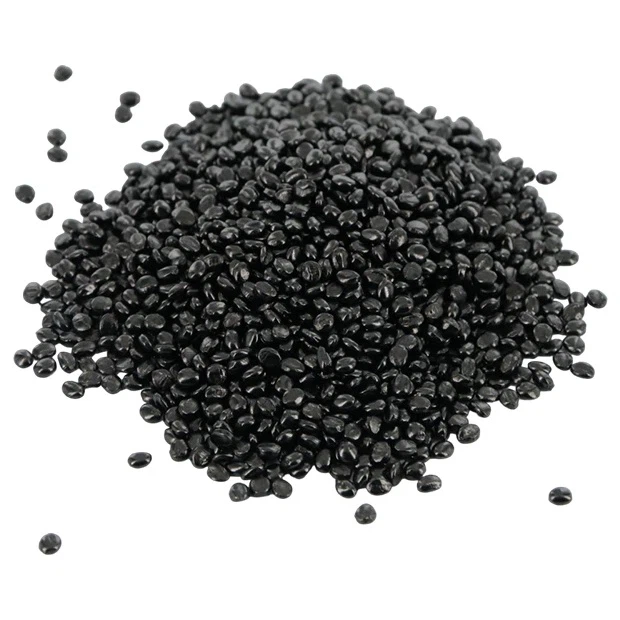
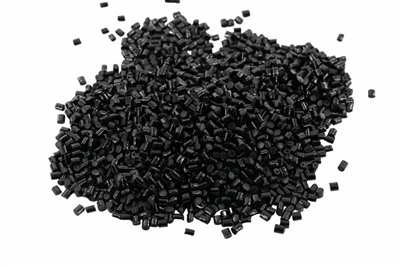

When it comes to achieving deep, rich black color in various plastic applications, two popular options often come into consideration: no carrier black masterbatch and carbon black. As a supplier of No Carrier Black Masterbatch, I've had the opportunity to closely examine the performance of both materials and understand their unique characteristics. In this blog post, I'll compare no carrier black masterbatch to carbon black in terms of performance across several key aspects.
Color Intensity and Dispersion
One of the primary factors in choosing a black pigment for plastics is the ability to achieve a consistent and intense black color. Carbon black is well - known for its high tinting strength, which means it can impart a very deep black color even at low loadings. It has a fine particle size, typically in the nanometer range, which allows it to scatter and absorb light effectively, resulting in a high - quality black appearance.
However, no carrier black masterbatch also offers excellent color intensity. The masterbatch is formulated with a high concentration of black pigment, often carbon black itself, but without a carrier resin. This allows for a more direct and efficient incorporation of the pigment into the base polymer. The absence of a carrier resin can lead to better dispersion in some cases, as there is no potential for the carrier to interfere with the pigment - polymer interaction. When properly dispersed, no carrier black masterbatch can achieve a color intensity that is comparable to or even better than using carbon black alone.
Processing Performance
Processing performance is a crucial consideration in plastic manufacturing. Carbon black, in its raw form, can be difficult to handle. It is a fine powder that can create dust during handling, which poses health risks to workers and can also contaminate the manufacturing environment. Moreover, carbon black has a tendency to agglomerate, which means it forms clumps that are difficult to break down during the mixing process. This can lead to uneven color distribution and poor mechanical properties in the final product.
On the other hand, no carrier black masterbatch is much easier to handle. Since it is a pre - formulated product, it eliminates the need for handling loose carbon black powder. It can be added directly to the base polymer during the extrusion or molding process, reducing the risk of dust generation and contamination. The masterbatch is also designed to have good flow properties, which allows for easy mixing with the base polymer. This results in a more homogeneous mixture and better overall processing performance.
In addition, the absence of a carrier resin in no carrier black masterbatch can be advantageous in certain processing conditions. For example, in high - temperature processing applications, a carrier resin may degrade, leading to issues such as gas generation and discoloration. No carrier black masterbatch avoids these problems as it does not contain a carrier resin that could potentially degrade under high - temperature conditions.
UV Resistance
UV resistance is an important property for plastics that are exposed to sunlight or other sources of ultraviolet radiation. Carbon black is known for its excellent UV - absorbing properties. It acts as a shield, protecting the polymer from the harmful effects of UV radiation, such as degradation, discoloration, and loss of mechanical properties.

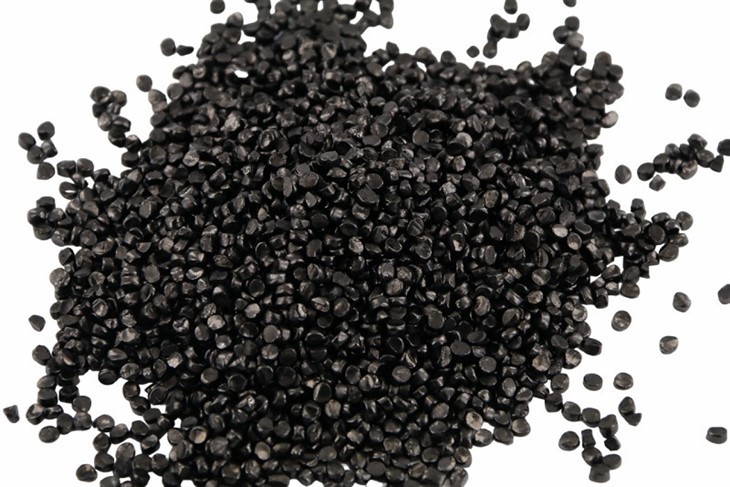
No carrier black masterbatch, which often contains carbon black as the pigment, also offers good UV resistance. The high concentration of carbon black in the masterbatch provides a sufficient amount of UV - absorbing material to protect the base polymer. In fact, the better dispersion of the carbon black in the no carrier black masterbatch can enhance its UV - shielding effect. The more evenly the carbon black is distributed in the polymer matrix, the more effectively it can absorb UV radiation and protect the polymer.
Mechanical Properties
The mechanical properties of the final plastic product are also affected by the choice of black pigment. Carbon black, when used in high concentrations, can have a negative impact on the mechanical properties of the polymer. This is because the agglomeration of carbon black particles can act as stress concentrators, leading to a decrease in the tensile strength, impact strength, and elongation at break of the polymer.
No carrier black masterbatch, with its better dispersion properties, can minimize the negative impact on mechanical properties. Since the pigment is more evenly distributed in the polymer matrix, there are fewer stress concentrators. As a result, the mechanical properties of the final product are less likely to be compromised. In some cases, the use of no carrier black masterbatch can even improve certain mechanical properties, such as stiffness, due to the reinforcing effect of the well - dispersed carbon black particles.
Compatibility with Different Polymers
Carbon black can be used with a wide range of polymers, but its compatibility can vary depending on the type of polymer and the surface treatment of the carbon black. Some polymers may have poor interaction with carbon black, leading to issues such as poor dispersion and phase separation.
No carrier black masterbatch offers greater flexibility in terms of polymer compatibility. It can be used with a variety of polymers, including polyolefins, polyamides, and polycarbonates. For example, PA Black Masterbatch and PC Black Masterbatch are specialized types of no carrier black masterbatches that are designed for use with polyamide (PA) and polycarbonate (PC) polymers respectively. These masterbatches are formulated to ensure optimal compatibility with the specific polymers, resulting in a high - quality final product.
Cost - Effectiveness
Cost is always a factor in any manufacturing decision. Carbon black is generally less expensive than no carrier black masterbatch on a per - unit - weight basis. However, when considering the overall cost, including processing costs and the quality of the final product, no carrier black masterbatch can be a more cost - effective option.
The better processing performance of no carrier black masterbatch can lead to lower processing costs. It reduces the need for additional mixing equipment and time to achieve a homogeneous mixture. The improved color dispersion and mechanical properties also mean fewer rejects during the manufacturing process, which can save on material and production costs. In addition, the long - term durability provided by the good UV resistance and mechanical properties can result in a longer lifespan of the final product, reducing the need for frequent replacements.
Conclusion
In conclusion, no carrier black masterbatch offers several advantages over using carbon black alone in terms of performance. It provides excellent color intensity, better processing performance, good UV resistance, improved mechanical properties, greater polymer compatibility, and can be more cost - effective in the long run. As a supplier of no carrier black masterbatch, I am confident in the quality and performance of our product.
If you are looking for a high - quality black pigment solution for your plastic applications, I encourage you to consider our no carrier black masterbatch. Our product is designed to meet the most demanding requirements in terms of color, processing, and performance. Whether you are in the automotive, packaging, or consumer goods industry, we can provide you with a customized solution that fits your specific needs. Contact us today to start a discussion about your requirements and explore how our no carrier black masterbatch can benefit your business.
References
- Billmeyer, F. W., & Saltzman, M. (1981). Principles of Color Technology. Wiley - Interscience.
- Morgan, A. B., & Gilman, J. W. (Eds.). (2005). Fire Retardancy of Polymeric Materials. CRC Press.
- Rosato, D. V., & Rosato, D. P. (2004). Injection Molding Handbook. Kluwer Academic Publishers.