

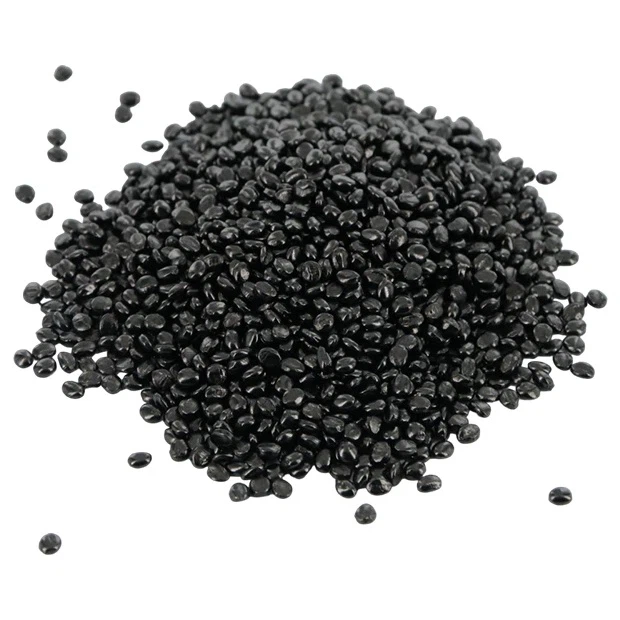
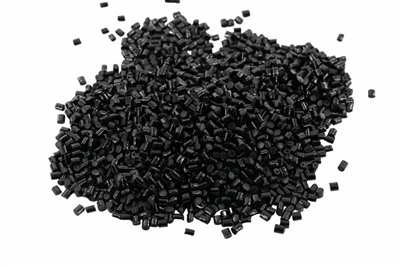

Hey there! I'm a supplier of black masterbatch for stretch film, and today I want to dig into how the screw design in extrusion impacts the dispersion of black masterbatch in stretch film.
First off, let's talk about what black masterbatch is and why it's so important in stretch film. Black masterbatch is a concentrated mixture of carbon black pigment and a carrier resin. It's used to give stretch film its characteristic black color, as well as to provide UV protection and improve the film's mechanical properties. As a supplier, I know that getting the right dispersion of the black masterbatch in the stretch film is crucial. If the dispersion is poor, you end up with uneven color, reduced UV protection, and potentially weaker film.


Now, let's get to the heart of the matter: the screw design in extrusion. The screw is a key component in the extrusion process. It's responsible for melting, mixing, and conveying the polymer and the black masterbatch through the extruder. There are different types of screw designs, and each can have a significant impact on how well the black masterbatch disperses in the stretch film.
One of the most common screw designs is the single - screw extruder. In a single - screw extruder, the screw rotates within a barrel, and the polymer and black masterbatch are fed into the hopper at one end. As the screw turns, it pushes the materials forward, and the heat generated by friction and the external heaters melts the polymer. The single - screw design has a relatively simple structure. However, its mixing ability can be limited. If the screw isn't designed properly, the black masterbatch may not be evenly dispersed. For example, a screw with a short compression ratio might not provide enough shear force to break up the agglomerates of the black masterbatch. Agglomerates are clumps of the pigment that haven't been fully dispersed, and they can cause visible spots or streaks in the stretch film.
On the other hand, twin - screw extruders offer better mixing capabilities. Twin - screw extruders have two screws that rotate either in the same direction (co - rotating) or in opposite directions (counter - rotating). The intermeshing of the two screws creates a complex flow pattern, which provides high shear forces. These shear forces are essential for breaking up the agglomerates of the black masterbatch and achieving a more uniform dispersion. When the black masterbatch is well - dispersed, the stretch film will have a consistent black color, better UV protection, and improved mechanical performance.
The flight design of the screw also plays a big role. The flights are the helical ridges on the screw. A screw with deep flights may have a lower shear rate, which means it might not break up the black masterbatch agglomerates as effectively. In contrast, a screw with shallow flights can generate higher shear forces, leading to better dispersion. Additionally, the pitch of the flights can affect the flow rate and mixing efficiency. A screw with a variable pitch can create different levels of shear at different points along the screw, which can help to improve the overall dispersion of the black masterbatch.
Another factor related to screw design is the length - to - diameter (L/D) ratio. A higher L/D ratio means the screw is longer relative to its diameter. A longer screw provides more time and surface area for the polymer and black masterbatch to mix. This extra mixing time can lead to better dispersion of the black masterbatch. However, a very long screw can also increase the residence time of the materials in the extruder, which might cause thermal degradation of the polymer if the temperature isn't carefully controlled.
Now, let's talk about the implications for us as a black masterbatch for stretch film supplier. We need to work closely with our customers to understand their extrusion processes and screw designs. By doing so, we can recommend the most suitable black masterbatch grade. For customers using single - screw extruders, we might suggest a masterbatch with a lower pigment loading or a more easily dispersible formulation. For those using twin - screw extruders, we can offer masterbatches with higher pigment concentrations, knowing that the extruder's better mixing capabilities can handle it.
As a supplier, I also want to mention some of our other products. If you're in the market for black masterbatch for other applications, we've got you covered. Check out our Black Masterbatch for Agriculture Film and Black Masterbatch For Injection. Of course, our Black Masterbatch for Strech Film is our specialty, and we're constantly working to improve its quality and dispersion properties.
In conclusion, the screw design in extrusion has a huge impact on the dispersion of black masterbatch in stretch film. Whether it's the type of extruder (single - screw or twin - screw), the flight design, or the L/D ratio, each aspect of the screw design needs to be carefully considered. As a black masterbatch supplier, we're committed to helping our customers achieve the best possible dispersion in their stretch film. If you're interested in learning more about our products or have questions about how our black masterbatch can work with your extrusion process, don't hesitate to reach out. We're here to have a chat and work together to find the perfect solution for your stretch film needs.
References
- Rauwendaal, C. (2001). Polymer Extrusion. Hanser Publishers.
- Tadmor, Z., & Gogos, C. G. (2006). Principles of Polymer Processing. Wiley - Interscience.