

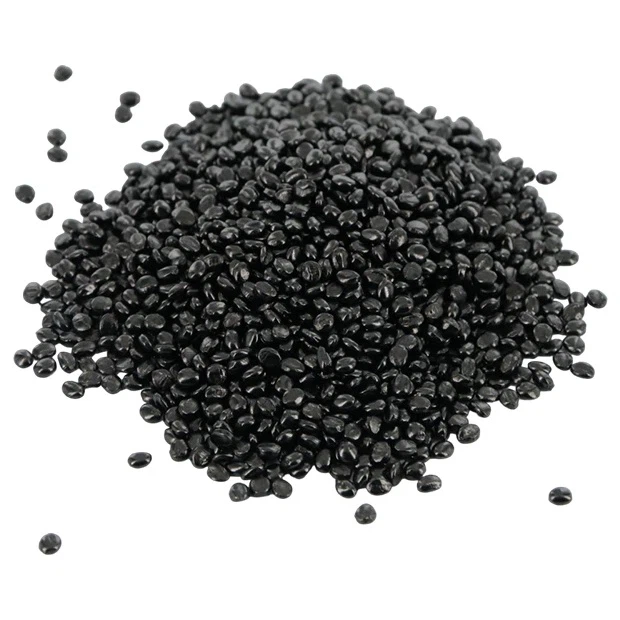
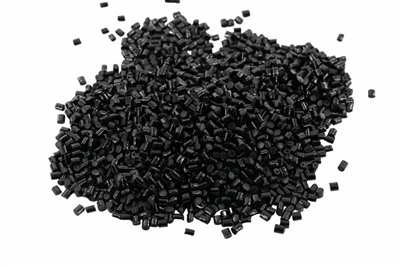

Hey there! As a supplier of black masterbatch for extrusion, I've been getting a lot of questions lately about how to improve the compatibility of our black masterbatch with polymers. It's a super important topic, so I thought I'd share some tips and insights that I've gathered over the years.
First off, let's talk about what compatibility actually means in this context. When we say that a black masterbatch is compatible with a polymer, we mean that it can be evenly dispersed throughout the polymer matrix without causing any issues like agglomeration, poor dispersion, or a negative impact on the polymer's properties. Good compatibility is crucial because it ensures that the final product has consistent color, mechanical properties, and other performance characteristics.
Understanding the Polymer
The first step in improving compatibility is to really understand the polymer you're working with. Different polymers have different chemical structures, melting points, and viscosities, and these properties can have a big impact on how well the black masterbatch mixes with them. For example, polymers like polyethylene (PE) and polypropylene (PP) are relatively non - polar, while polymers like polyamide (PA) and polycarbonate (PC) are more polar.
If you're using a non - polar polymer, you'll want to choose a black masterbatch that is formulated with a carrier resin that is also non - polar. This will help the masterbatch to disperse more easily in the polymer matrix. On the other hand, if you're working with a polar polymer, a masterbatch with a polar carrier resin will be a better choice. You can check out our Engineering Compounding Black Masterbatch which is designed to work well with a variety of engineering polymers.
The Role of the Carrier Resin
The carrier resin in the black masterbatch is like the glue that holds everything together and helps the pigment disperse in the polymer. It needs to have good compatibility with both the pigment and the polymer. When selecting a carrier resin, consider its melting point. It should be close to the processing temperature of the polymer. If the melting point of the carrier resin is too high, it may not melt properly during the extrusion process, leading to poor dispersion. If it's too low, it may degrade or cause other processing problems.
For example, if you're extruding a low - density polyethylene (LDPE) product, a LDPE - based carrier resin in the black masterbatch would be a great option. It will melt at a similar temperature to the LDPE polymer, allowing for easy mixing and dispersion.
Pigment Selection
The type of pigment used in the black masterbatch also plays a role in compatibility. Carbon black is the most commonly used pigment for black masterbatch, but there are different grades of carbon black available. Some carbon blacks are more easily dispersed than others. For high - end applications where excellent dispersion and color consistency are required, you might want to choose a premium grade of carbon black.


In addition, the surface treatment of the carbon black can affect its compatibility with the polymer. Some carbon blacks are treated to improve their dispersibility in specific polymers. For instance, a carbon black treated with a polar group will be more compatible with polar polymers.
Processing Conditions
The processing conditions during extrusion can have a huge impact on the compatibility of the black masterbatch with the polymer. The temperature, screw speed, and shear rate are all important factors.
- Temperature: Make sure the extrusion temperature is set correctly. If it's too low, the polymer and the masterbatch may not melt properly, resulting in poor dispersion. If it's too high, it can cause thermal degradation of the polymer or the masterbatch, which can lead to a loss of properties.
- Screw Speed: A higher screw speed generally means more shear, which can help to break up any agglomerates in the masterbatch and improve dispersion. However, if the screw speed is too high, it can also generate too much heat and cause degradation.
- Shear Rate: Adequate shear is necessary to ensure that the masterbatch is evenly distributed in the polymer. The design of the extrusion screw can also affect the shear rate. A screw with a high - shear design will be better at dispersing the masterbatch.
Testing and Quality Control
Before you start large - scale production, it's a good idea to do some small - scale testing. Make some test samples and evaluate the dispersion of the black masterbatch in the polymer. You can use techniques like microscopy to check for any agglomerates or uneven dispersion.
If you find that there are compatibility issues, you can adjust the masterbatch formulation, the processing conditions, or both. Keep detailed records of your tests and the results so that you can make informed decisions for future production runs.
Applications and Special Considerations
Different applications may have different requirements for the compatibility of black masterbatch and polymers. For example, if you're making Black Masterbatch for Injection, the injection molding process has its own set of challenges. The flow properties of the polymer - masterbatch mixture are crucial to ensure that the mold is filled properly.
If you're producing Black Masterbatch for Home Appliances, you need to consider factors like UV resistance, scratch resistance, and food - contact safety if applicable.
Conclusion
Improving the compatibility of black masterbatch for extrusion with polymers is a multi - faceted process. It involves understanding the polymer, choosing the right carrier resin and pigment, optimizing the processing conditions, and doing proper testing. By following these tips, you can ensure that you get a high - quality product with consistent color and properties.
If you're interested in learning more about our black masterbatch products or have any questions about compatibility, don't hesitate to reach out. We're here to help you find the best solution for your specific needs. Whether you're working on a small - scale project or a large - scale production, we can provide you with the right black masterbatch to meet your requirements. Contact us today to start a conversation about your procurement needs!
References
- "Plastics Additives Handbook" by Hans Zweifel
- "Extrusion: The Definitive Processing Guide and Handbook" by Christopher Rauwendaal