


Hey there! As a supplier of PS black masterbatch, I've been getting a lot of questions lately about how it affects the flexural strength of PS plastics. So, I thought I'd dive into this topic and share what I've learned.
First off, let's talk a bit about PS plastics. Polystyrene (PS) is a widely used thermoplastic polymer known for its transparency, rigidity, and ease of processing. It's used in a ton of applications, from packaging materials to consumer goods and even in the construction industry. But like any material, it has its limitations, and one of the things manufacturers often want to optimize is its flexural strength.
Flexural strength, in simple terms, is the ability of a material to resist deformation under bending. When you're using PS plastics in products that might experience some bending or stress, having good flexural strength is crucial. That's where our PS black masterbatch comes in.
The Role of PS Black Masterbatch
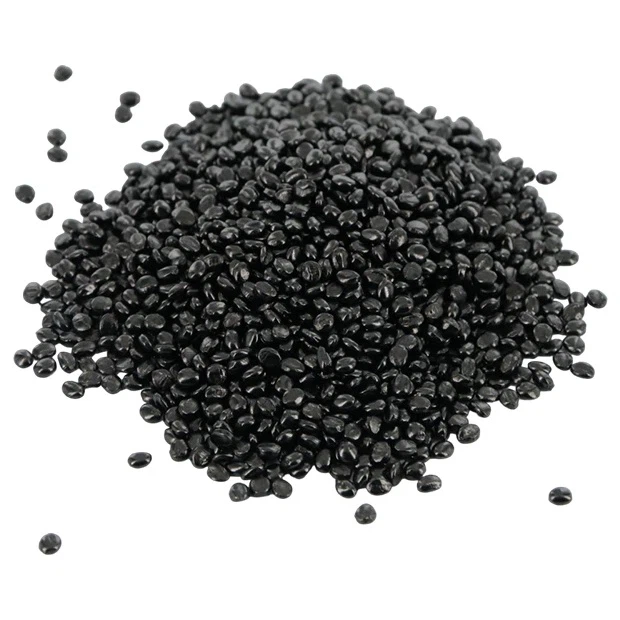
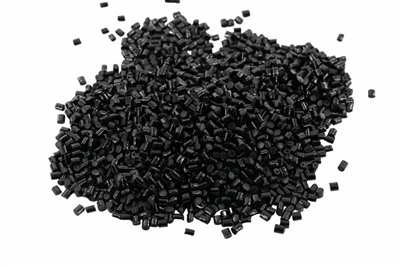
PS black masterbatch is a concentrated mixture of carbon black pigment and a carrier resin. The carbon black provides the black color, but it also has some interesting effects on the properties of the PS plastic. When we add our masterbatch to PS plastics, it disperses evenly throughout the polymer matrix.
One of the key factors that affect flexural strength is the interaction between the carbon black particles and the PS polymer chains. Carbon black has a high surface area, and it can form physical bonds with the polymer chains. This interaction can enhance the stiffness of the material, which in turn can improve its flexural strength.
However, it's not as simple as just adding more masterbatch to get better flexural strength. There's an optimal loading level, and if we add too much masterbatch, it can actually have a negative impact. The excess carbon black particles can start to agglomerate, creating weak points in the material and reducing its overall strength.
Experimental Findings
We've conducted a series of experiments to study the flexural strength changes of PS plastics with different loadings of our PS black masterbatch. In these experiments, we prepared samples of PS plastics with varying amounts of masterbatch, ranging from 1% to 5% by weight.
We then tested the flexural strength of these samples using a standard three - point bending test. The results were quite interesting.
At low loadings, around 1% - 2%, we observed a slight increase in flexural strength. The carbon black particles were well - dispersed, and they were able to reinforce the polymer matrix, making it more resistant to bending.
As we increased the loading to around 3%, we saw the maximum improvement in flexural strength. The interaction between the carbon black and the polymer chains was at its most effective, and the material was able to withstand more stress before deforming.
But when we went beyond 3%, say to 4% or 5%, the flexural strength started to decline. The excess carbon black particles were causing agglomeration, and this led to a decrease in the material's ability to resist bending.
Comparison with Other Masterbatches
It's also worth comparing our PS black masterbatch with other types of black masterbatches, like No Carrier Black Masterbatch, PP Black Masterbatch, and PA Black Masterbatch.
No Carrier Black Masterbatch is designed without a carrier resin, which can offer some unique advantages in certain applications. However, when it comes to PS plastics, our PS black masterbatch with a carefully selected carrier resin provides better dispersion and a more consistent improvement in flexural strength.
PP Black Masterbatch is formulated for polypropylene (PP) plastics. The chemical structure of PP is different from PS, so the interaction between the masterbatch and the polymer will also be different. Our PS black masterbatch is specifically tailored for PS plastics, ensuring optimal performance in terms of both color and mechanical properties.
PA Black Masterbatch is for polyamide (PA) plastics. PA has very different properties compared to PS, and using a PA black masterbatch in PS plastics would not give the desired results. Our PS black masterbatch is the right choice if you're looking to improve the flexural strength of PS plastics while achieving a deep black color.
Practical Applications
The knowledge of how our PS black masterbatch affects the flexural strength of PS plastics has some real - world applications. For example, in the packaging industry, products made from PS plastics need to be able to withstand some handling and stacking without deforming. By using our masterbatch at the optimal loading level, manufacturers can produce stronger and more durable packaging materials.
In the consumer goods sector, items like plastic toys or household appliances made from PS plastics can benefit from improved flexural strength. This means they're less likely to break or crack during normal use, which can enhance the overall quality and lifespan of the products.


Conclusion
In conclusion, our PS black masterbatch can have a significant impact on the flexural strength of PS plastics. By carefully controlling the loading level, we can achieve an optimal balance between color and mechanical performance. The right amount of masterbatch can enhance the stiffness of the material, leading to improved flexural strength.
If you're in the business of manufacturing PS plastic products and are looking to improve their flexural strength while getting a great black color, I'd highly recommend considering our PS black masterbatch. We're always happy to work with you to find the best solution for your specific needs. Whether you're a small - scale producer or a large - scale manufacturer, we can provide you with the right amount of masterbatch and offer technical support to ensure you get the best results.
So, if you're interested in learning more or want to start a procurement discussion, don't hesitate to reach out. We're here to help you take your PS plastic products to the next level.
References
- ASTM D790 - 17, “Standard Test Methods for Flexural Properties of Unreinforced and Reinforced Plastics and Electrical Insulating Materials.”
- “Carbon Black in Polymers: Science and Technology” by John M. Funt and Peter A. Weber.
- Research papers on the mechanical properties of polymer - carbon black composites from various scientific journals.