

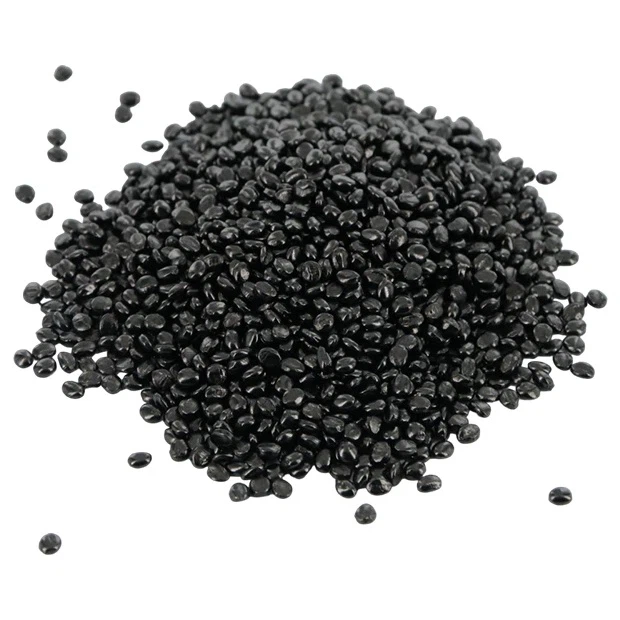
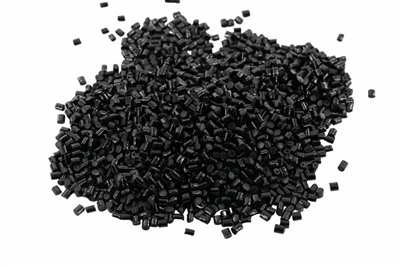

As a provider of PP black masterbatch, I've witnessed firsthand the critical role it plays in various industries. PP black masterbatch is a concentrated mixture of carbon black pigment and a carrier resin, typically polypropylene (PP). It's used to color PP products black, providing not only aesthetic appeal but also enhancing properties like UV resistance and electrical conductivity. However, one of the most important aspects that determines the quality of the final product is the dispersion mechanism of PP black masterbatch in PP.
Understanding the Basics of Dispersion
Dispersion, in the context of PP black masterbatch, refers to the process of evenly distributing the carbon black particles throughout the PP matrix. When the masterbatch is added to the base PP resin during processing, the carbon black aggregates need to be broken down into smaller particles and uniformly spread to achieve a consistent black color and optimal performance.
The dispersion process is influenced by several factors, including the nature of the carbon black, the carrier resin, and the processing conditions. Carbon black is available in different grades, each with unique particle size, structure, and surface properties. Smaller particle sizes generally offer better color strength and dispersion, but they can also be more difficult to disperse due to their high surface area and tendency to agglomerate.
The carrier resin in the masterbatch acts as a vehicle to transport the carbon black into the base PP resin. It should have good compatibility with the base resin to ensure a homogeneous blend. The viscosity and melting point of the carrier resin also play a crucial role in the dispersion process. A carrier resin with a lower viscosity can flow more easily and help to wet the carbon black particles, facilitating their dispersion.
Mechanisms of Dispersion
There are two main mechanisms involved in the dispersion of PP black masterbatch in PP: wetting and deagglomeration.
Wetting
Wetting is the initial step in the dispersion process. It occurs when the carrier resin comes into contact with the carbon black aggregates and spreads over their surface. This process is driven by the surface tension between the resin and the carbon black. A good wetting agent can reduce the surface tension and improve the wetting ability of the resin.
During wetting, the resin penetrates the voids between the carbon black particles, separating them from each other. This is important because carbon black particles have a strong tendency to form aggregates due to their high surface energy. By wetting the particles, the resin helps to break these aggregates and prevent them from reforming.
Deagglomeration
Deagglomeration is the process of breaking down the carbon black aggregates into smaller particles. This is achieved through mechanical forces applied during processing, such as shear and elongation. Shear forces are generated when the molten resin is forced through narrow gaps or channels, such as in an extruder or a mixer. These forces act to pull the carbon black aggregates apart and disperse them throughout the resin.
Elongation forces, on the other hand, occur when the resin is stretched or deformed. They can also contribute to the deagglomeration process by pulling the carbon black particles in different directions. The effectiveness of deagglomeration depends on the intensity and duration of the mechanical forces, as well as the properties of the carbon black and the resin.
Factors Affecting Dispersion
In addition to the nature of the carbon black and the carrier resin, several other factors can affect the dispersion of PP black masterbatch in PP.
Processing Conditions
The processing conditions, such as temperature, shear rate, and residence time, have a significant impact on the dispersion process. Higher temperatures can reduce the viscosity of the resin, making it easier to flow and wet the carbon black particles. However, excessive temperatures can also cause thermal degradation of the resin and the carbon black, leading to a loss of properties.


Shear rate is another important factor. Higher shear rates can generate more mechanical forces, which can improve the deagglomeration of the carbon black aggregates. However, too high a shear rate can also cause excessive heating and damage to the resin.
Residence time refers to the time the masterbatch spends in the processing equipment. Longer residence times allow more time for the wetting and deagglomeration processes to occur, but they can also increase the risk of thermal degradation.
Additives
Additives can be used to improve the dispersion of PP black masterbatch in PP. Dispersing agents, for example, are chemicals that can reduce the surface tension between the resin and the carbon black, improving wetting and dispersion. They can also help to prevent the carbon black particles from re - agglomerating.
Other additives, such as lubricants, can reduce the friction between the resin and the processing equipment, allowing for better flow and dispersion. However, the choice of additives should be carefully considered, as they can also affect the properties of the final product.
Importance of Good Dispersion
Good dispersion of PP black masterbatch in PP is essential for several reasons. Firstly, it ensures a consistent black color throughout the product. Inconsistent dispersion can result in color streaks or spots, which can be unacceptable in many applications, such as automotive parts or consumer products.
Secondly, proper dispersion can improve the mechanical properties of the product. Carbon black can act as a reinforcing filler, enhancing the strength and stiffness of the PP. However, if the carbon black is not well - dispersed, it can form weak points in the material, reducing its mechanical performance.
Finally, good dispersion can also improve the UV resistance and electrical conductivity of the product. Well - dispersed carbon black particles can better absorb and scatter UV radiation, protecting the PP from degradation. In applications where electrical conductivity is required, such as in electronic packaging, uniform dispersion of carbon black is crucial for achieving the desired conductivity.
Applications of PP Black Masterbatch
PP black masterbatch is widely used in various industries due to its excellent color and performance properties. In the automotive industry, it is used to color interior and exterior parts, such as dashboards, bumpers, and trim pieces. The Black Masterbatch For Automotive we offer is specifically formulated to meet the high - quality requirements of this industry, providing good dispersion, color stability, and UV resistance.
In the consumer goods industry, PP black masterbatch is used to color a wide range of products, from household appliances to toys. Its ability to provide a deep, rich black color makes it a popular choice for manufacturers looking to enhance the aesthetic appeal of their products.
PP black masterbatch is also used in the packaging industry, where it can be used to color PP films and containers. The PC Black Masterbatch and ABS Black Masterbatch we offer are suitable for different types of packaging applications, providing good dispersion and compatibility with various polymers.
Conclusion
The dispersion mechanism of PP black masterbatch in PP is a complex process that involves wetting and deagglomeration. Understanding the factors that affect dispersion, such as the nature of the carbon black, the carrier resin, and the processing conditions, is crucial for achieving good dispersion and high - quality products.
As a leading provider of PP black masterbatch, we are committed to developing high - performance masterbatches with excellent dispersion properties. Our products are carefully formulated and tested to ensure consistent quality and performance. If you are interested in our PP black masterbatch or have any questions about its dispersion and application, please feel free to contact us for further discussion and potential procurement. We look forward to working with you to meet your specific needs.
References
- “Polymer Blends and Composites.” Edited by A. J. Kinloch and R. S. Young.
- “Carbon Black: Science and Technology.” By Donnet, J. - B., Bansal, R. C., and Wang, M. - J.
- “Plastics Additives: An A - Z Reference.” By Geoff Pritchard.