

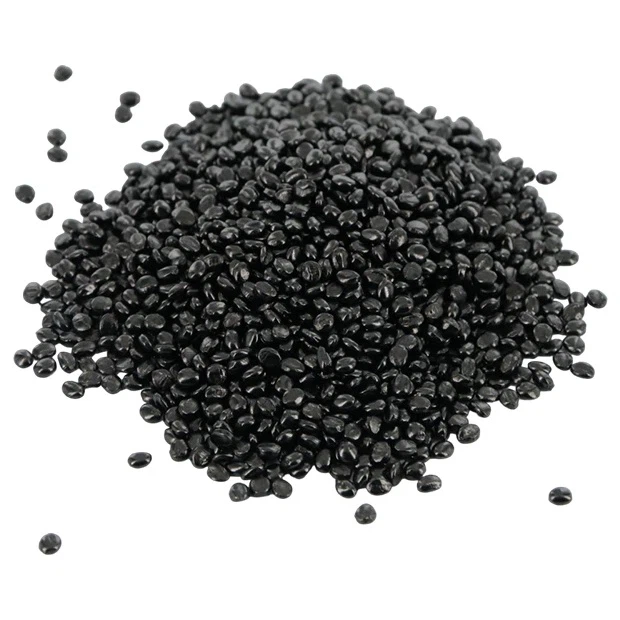
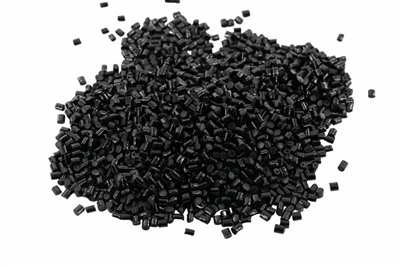

Dispersion performance is a critical factor when it comes to black masterbatch for automotive applications. As a supplier of high - quality black masterbatch for the automotive industry, I've witnessed firsthand the significance of this characteristic in achieving the desired aesthetic and functional properties of automotive components.
Understanding Dispersion in Black Masterbatch
Dispersion refers to the process of evenly distributing the black pigment throughout the polymer matrix. In the context of automotive black masterbatch, a well - dispersed masterbatch ensures uniform coloration, high gloss, and enhanced mechanical properties of the final automotive parts. When the black pigment is not properly dispersed, it can lead to issues such as color streaks, uneven gloss, and reduced physical strength of the components.
The dispersion performance of black masterbatch is influenced by several factors. The first is the quality of the carbon black used. High - quality carbon black with a narrow particle size distribution and good surface properties is more likely to disperse well in the polymer. For example, furnace - black, which is commonly used in automotive black masterbatch, offers excellent dispersibility due to its small particle size and high structure.


Another crucial factor is the manufacturing process of the masterbatch. Advanced compounding techniques, such as twin - screw extrusion, can provide better shear forces, which are essential for breaking down the carbon black agglomerates and achieving a homogeneous dispersion. At our company, we invest in state - of - the - art extrusion equipment and employ experienced technicians to ensure that our black masterbatch products have optimal dispersion performance.
Importance of Dispersion in Automotive Applications
In the automotive industry, the dispersion performance of black masterbatch has far - reaching implications. First, from an aesthetic perspective, automotive consumers expect a flawless, deep - black appearance on interior and exterior components. A well - dispersed black masterbatch can provide a consistent, high - gloss finish that enhances the overall visual appeal of the vehicle. For example, in automotive dashboards and door panels, uniform coloration is essential to create a luxurious and professional look.
Functionally, good dispersion also affects the mechanical properties of automotive parts. When the black pigment is evenly distributed, it can reinforce the polymer matrix, improving the part's resistance to abrasion, impact, and UV radiation. This is particularly important for exterior automotive components, such as bumpers and side mirrors, which are exposed to harsh environmental conditions.
Measuring Dispersion Performance
There are several methods to measure the dispersion performance of black masterbatch. One common approach is the visual inspection method. By preparing thin sections of the molded automotive part and examining them under a microscope, we can observe the distribution of the carbon black particles. A good dispersion is characterized by a uniform distribution of fine particles, while poor dispersion may show visible agglomerates.
Another quantitative method is the tint strength measurement. Tint strength is a measure of the color - imparting ability of the masterbatch. A higher tint strength indicates better dispersion, as more of the carbon black is effectively dispersed and contributing to the color of the polymer. We regularly conduct tint strength tests on our products to ensure that they meet the strict quality standards of the automotive industry.
Our Product Range and Dispersion Performance
We offer a wide range of black masterbatch products tailored to different automotive applications. Our No Carrier Black Masterbatch is designed for applications where the carrier resin needs to be carefully selected by the customer. This product has excellent dispersion performance, thanks to its high - quality carbon black and advanced compounding process. It can be used in various polymers, providing a versatile solution for automotive manufacturers.
Our PC Black Masterbatch is specifically formulated for polycarbonate (PC) applications in the automotive industry. PC is widely used in automotive lighting and glazing due to its high transparency and impact resistance. Our PC black masterbatch can be evenly dispersed in PC, maintaining the material's optical properties while providing a deep - black color.
Similarly, our PS Black Masterbatch is optimized for polystyrene (PS) applications. PS is commonly used in automotive interior components, such as air vents and speaker grilles. Our PS black masterbatch offers superior dispersion in PS, ensuring a consistent color and good surface finish.
Challenges in Achieving Optimal Dispersion
Despite our efforts to achieve the best dispersion performance, there are still some challenges in the production of automotive black masterbatch. One challenge is the compatibility between the carbon black and the polymer resin. Different polymers have different polarities and viscosities, which can affect the dispersion process. For example, some engineering polymers, such as polyamide and polyacetal, have high melting points and viscosities, making it more difficult to disperse the carbon black evenly.
Another challenge is the presence of impurities in the raw materials. Even small amounts of impurities can interfere with the dispersion process, leading to poor dispersion and quality issues. To overcome these challenges, we conduct strict quality control on all our raw materials and continuously research and develop new formulations and processing techniques.
Future Trends in Dispersion Technology for Automotive Black Masterbatch
The future of dispersion technology for automotive black masterbatch is promising. With the increasing demand for lightweight and high - performance automotive components, there will be a greater need for black masterbatch with even better dispersion performance.
Nanotechnology is expected to play an important role in the future. By using nano - sized carbon black particles, it may be possible to achieve even more uniform dispersion and better reinforcement of the polymer matrix. However, the handling and dispersion of nano - particles also present new challenges, such as safety concerns and the need for specialized processing equipment.
Another trend is the development of environmentally friendly black masterbatch. As the automotive industry moves towards more sustainable solutions, there will be a growing demand for black masterbatch products that are free from harmful substances and have a lower environmental impact. Our company is actively researching and developing such products, while still maintaining excellent dispersion performance.
Contact Us for Your Automotive Black Masterbatch Needs
If you are an automotive manufacturer or supplier looking for high - quality black masterbatch with excellent dispersion performance, we are here to help. Our team of experts can provide you with detailed technical information and customized solutions to meet your specific requirements. Whether you need a large - scale supply for mass production or a small - batch sample for product development, we can accommodate your needs. Contact us today to start a discussion about your automotive black masterbatch procurement.
References
- Bhunia, A., & Bandyopadhyay, S. (2018). Dispersion of carbon black in polymers: A review. Polymer Composites, 39(4), 1233 - 1249.
- Throne, J. L. (2019). Polymer extrusion: Principles and practice. CRC Press.
- Mittal, V. (2016). Carbon black - polymer nanocomposites. Wiley - VCH.