

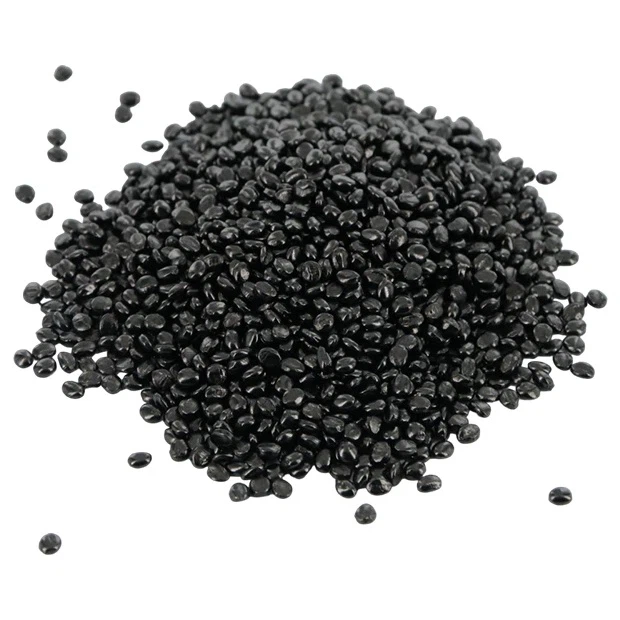
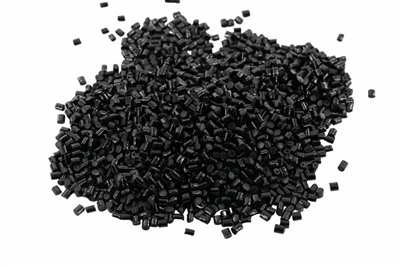

Hey there! As a supplier of PA black masterbatch, I've had my fair share of experiences and insights into how it impacts the color uniformity of PA products. In this blog, I'm gonna break down all the nitty - gritty details for you.
First off, let's understand what PA black masterbatch is. It's a concentrated mixture of carbon black pigment and additives that are specifically formulated for polyamide (PA) polymers. This masterbatch is used to impart a deep, rich black color to PA products, whether they're automotive parts, electrical components, or consumer goods.
Now, why is color uniformity such a big deal? Well, in the manufacturing world, consistency is key. Customers expect the same high - quality, evenly colored products every time they make a purchase. If the color of a PA product is inconsistent, it can lead to a whole host of problems. For example, in the automotive industry, a car part with uneven color can look unappealing and may even affect the overall aesthetic of the vehicle. In consumer goods, it can make the product seem cheap or of low quality.
So, how does PA black masterbatch affect color uniformity?
Dispersion
One of the most crucial factors is the dispersion of the carbon black in the PA matrix. When the masterbatch is well - dispersed, the carbon black particles are evenly distributed throughout the polymer. This ensures that the color is consistent across the entire product. Our PA black masterbatch is designed with advanced dispersion technology. We use high - shear mixing processes during production to break down the carbon black agglomerates into smaller particles. These smaller particles can then be more easily and evenly dispersed in the PA during the molding or extrusion process.
Let's say you're making PA plastic pipes. If the masterbatch isn't properly dispersed, you might end up with streaks or patches of different shades of black on the pipes. But with our high - quality PA black masterbatch, the carbon black is uniformly spread, resulting in pipes with a smooth, consistent black color from one end to the other.
Compatibility
Another important aspect is the compatibility between the masterbatch and the PA polymer. Not all masterbatches are created equal, and if the masterbatch isn't compatible with the PA, it can cause issues with color uniformity. Our PA black masterbatch is formulated to have excellent compatibility with a wide range of PA grades. This means that when you mix it with your PA resin, there's no phase separation or chemical reactions that could disrupt the color distribution.
For instance, in the production of PA fibers for textiles, if the masterbatch isn't compatible, the fibers might have uneven coloration. Some parts of the fiber could be darker, while others are lighter. But with our compatible masterbatch, the color is evenly integrated into the fibers, giving them a uniform black appearance.
Loading Level
The amount of masterbatch you use, also known as the loading level, can have a significant impact on color uniformity. Using too little masterbatch may result in a pale or inconsistent color. On the other hand, using too much can lead to issues such as poor flow properties and increased costs. We can provide you with guidelines on the optimal loading levels for different applications. Our research and development team has conducted numerous tests to determine the ideal amounts of masterbatch to achieve the best color uniformity for various PA products.


Let's take the example of PA injection - molded parts. If you use a very low loading level of our masterbatch, the parts might not be as black as you'd like, and the color could look patchy. But if you follow our recommended loading level, you'll get parts with a deep, consistent black color.
Quality of Raw Materials
The quality of the raw materials used in the masterbatch also plays a role in color uniformity. We source the highest - quality carbon black and additives for our PA black masterbatch. The carbon black we use has a high tinting strength, which means that it can provide a strong, vivid black color even at low concentrations. The additives we incorporate help to improve the dispersion and stability of the masterbatch.
When compared to some lower - quality masterbatches on the market that use inferior raw materials, our masterbatch stands out. The inferior ones may have inconsistent particle sizes of carbon black, which can lead to uneven color in the final PA products. But with our top - notch raw materials, you can be confident in achieving excellent color uniformity.
Different Types of PA Black Masterbatch
We offer a variety of PA black masterbatches to meet different customer needs. For example, our No Carrier Black Masterbatch is a great option for applications where you want to avoid adding an additional carrier resin. It has a high concentration of carbon black and can be directly mixed with the PA resin. This type of masterbatch can provide excellent color uniformity, especially in applications where you need a very pure and consistent black color. You can also check out our No Carrier Black Masterbatch factory to learn more about its production process.
Another option is our PP Black Masterbatch, which can also be used in some PA applications where a certain level of compatibility is achieved. It offers good color uniformity and is cost - effective for some specific uses.
In conclusion, PA black masterbatch has a profound impact on the color uniformity of PA products. By ensuring proper dispersion, compatibility, using the right loading levels, and high - quality raw materials, we can help you achieve the best possible color consistency in your PA products.
If you're in the market for high - quality PA black masterbatch to improve the color uniformity of your PA products, don't hesitate to reach out. We're here to provide you with the best solutions and support for your manufacturing needs. Whether you're a small - scale producer or a large - scale industrial manufacturer, we can work with you to meet your specific requirements. Let's start a conversation and see how our PA black masterbatch can take your products to the next level.
References
- “Plastics Additives Handbook” by Hans Zweifel
- Research papers on masterbatch technology from leading polymer science journals.