


What is the elasticity of mulch film with black masterbatch?
As a leading supplier of black masterbatch for mulch film, I've often been asked about the elasticity of mulch film incorporated with our black masterbatch. In this blog, I'll delve into this topic, shedding light on the concept, influencing factors, and the role our black masterbatch plays in enhancing the elasticity of mulch film.
Understanding Elasticity in Mulch Film
Elasticity, in the context of mulch film, refers to the ability of the film to stretch under stress and return to its original shape when the stress is removed. This property is crucial for mulch film as it affects its installation, durability, and overall performance in agricultural applications.
A mulch film with good elasticity can conform well to the irregular surfaces of the soil, ensuring a tight fit that helps in weed suppression, moisture retention, and temperature regulation. During installation, an elastic film can be stretched without tearing, allowing for easy and efficient covering of large areas. Moreover, it can withstand environmental stresses such as wind, rain, and the movement of farm equipment without losing its integrity.
Factors Affecting the Elasticity of Mulch Film
The elasticity of mulch film is influenced by several factors, including the polymer resin used, the manufacturing process, and the additives incorporated.
- Polymer Resin: The type of polymer resin is a fundamental determinant of the film's elasticity. Common polymers used in mulch film production include polyethylene (PE), which can be further classified into low - density polyethylene (LDPE), linear low - density polyethylene (LLDPE), and high - density polyethylene (HDPE). LDPE generally has higher elasticity due to its branched molecular structure, which allows the polymer chains to slide past each other more easily under stress. LLDPE offers a good balance between strength and elasticity, while HDPE is more rigid and has lower elasticity.
- Manufacturing Process: The way the mulch film is manufactured also impacts its elasticity. Extrusion, the most common process for making mulch film, involves melting the polymer resin and forcing it through a die to form a thin film. The temperature, pressure, and speed during extrusion can affect the orientation and arrangement of the polymer chains, thereby influencing the film's elasticity. For example, a slower extrusion speed may result in better chain orientation, leading to improved elasticity.
- Additives: Additives play a significant role in modifying the properties of mulch film, including its elasticity. Plasticizers are additives that can increase the flexibility and elasticity of the film by reducing the intermolecular forces between the polymer chains. Anti - oxidants and UV stabilizers can also help maintain the film's elasticity over time by preventing degradation caused by oxygen and sunlight.
The Role of Black Masterbatch in Mulch Film Elasticity
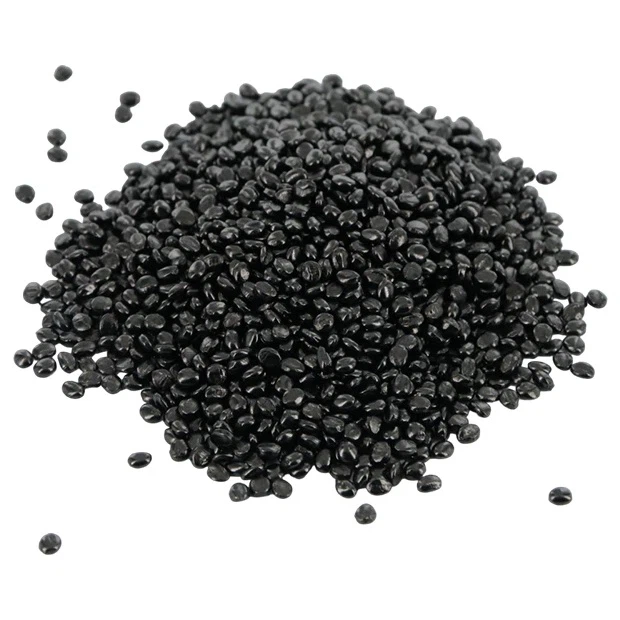
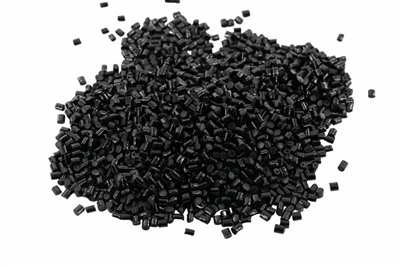
Our black masterbatch for mulch film is not just about providing color. It also has a positive impact on the film's elasticity.
- Dispersion and Compatibility: Our black masterbatch is formulated to disperse evenly in the polymer matrix. This uniform dispersion ensures that the carbon black particles, which are the main component of the black masterbatch, are well - distributed throughout the film. Good dispersion prevents the formation of agglomerates, which can act as stress concentrators and reduce the film's elasticity. Moreover, our masterbatch has excellent compatibility with different types of polymer resins, allowing it to integrate seamlessly and enhance the overall properties of the film.
- Reinforcement Effect: The carbon black particles in our black masterbatch can act as reinforcing agents. They can interact with the polymer chains, increasing the intermolecular forces and improving the film's mechanical properties, including elasticity. The carbon black particles can also absorb and dissipate energy when the film is under stress, preventing the propagation of cracks and enhancing the film's ability to stretch and recover.
Comparing with Other Applications of Black Masterbatch
It's interesting to note the differences in the requirements of black masterbatch for mulch film compared to other applications. For instance, Black Masterbatch for Home Appliances needs to meet different standards. In home appliances, the masterbatch is mainly used for aesthetic purposes and to provide some level of protection against UV light. The elasticity requirements are not as critical as in mulch film, as the components in home appliances are usually rigid and do not need to stretch.
Similarly, Black Masterbatch for Granulation is used in the process of creating plastic granules. The focus here is on the flow properties and the ability to disperse evenly during the granulation process. While some level of elasticity may be beneficial in the final plastic products made from these granules, it is not the primary consideration.
On the other hand, Black Masterbatch for Strech Film shares some similarities with mulch film in terms of elasticity requirements. Stretch films are designed to be stretched around products for packaging purposes, so elasticity is a key property. However, the environmental conditions and performance requirements of stretch films are different from those of mulch film. Stretch films need to have high initial stretchability and good cling properties, while mulch film needs to maintain its elasticity over a long period in outdoor agricultural environments.
Ensuring Optimal Elasticity in Mulch Film
To ensure that our customers get mulch film with optimal elasticity, we conduct rigorous quality control tests on our black masterbatch. We test the dispersion of carbon black particles, the compatibility with different polymer resins, and the impact on the film's mechanical properties.
We also work closely with our customers to understand their specific requirements. Different agricultural applications may have different elasticity needs. For example, mulch film used in hilly areas may need to be more elastic to conform to the uneven terrain, while film used in large - scale flat fields may require a balance between elasticity and strength. By collaborating with our customers, we can customize the formulation of our black masterbatch to meet their unique needs.
Conclusion
The elasticity of mulch film with black masterbatch is a complex but important property. It is influenced by various factors, including the polymer resin, manufacturing process, and additives. Our black masterbatch for mulch film plays a crucial role in enhancing the film's elasticity through its dispersion, compatibility, and reinforcement effects.
If you are in the agricultural industry and are looking for high - quality black masterbatch for your mulch film production, we would be delighted to discuss your requirements. We have the expertise and experience to provide you with the best - suited black masterbatch that can help you produce mulch film with excellent elasticity and performance. Contact us today to start a fruitful procurement discussion.


References
- "Plastics Additives Handbook" by Hans Zweifel
- "Polymer Science and Technology" by Donald R. Paul and Christopher B. Bucknall