


Hey there! As a supplier of black masterbatch for stretch film, I often get asked about the elongation at break of stretch film with black masterbatch. It's like a hot - topic in the industry, so I thought I'd break it down in this blog post.
First off, let's quickly chat about what stretch film is and why black masterbatch plays a role in it. Stretch film is that super - stretchy plastic film you see used to wrap pallets in warehouses, secure products during shipping, or even keep your leftovers fresh in the kitchen (though industrial stretch film is on a different scale!). Black masterbatch, on the other hand, is a concentrated form of black pigment and additives that are mixed with the base resin of the stretch film.
The elongation at break is basically a measure of how much a material can stretch before it tears apart. For stretch film, this is a crucial property. A higher elongation at break means the film can be stretched further without breaking, and that's super important in applications like wrapping pallets. You want the film to be able to cover the whole pallet, snugly, without snapping in the middle of the wrapping process.
Now, when it comes to stretch film with black masterbatch, there are a few factors that can affect its elongation at break.
1. The Quality of the Black Masterbatch
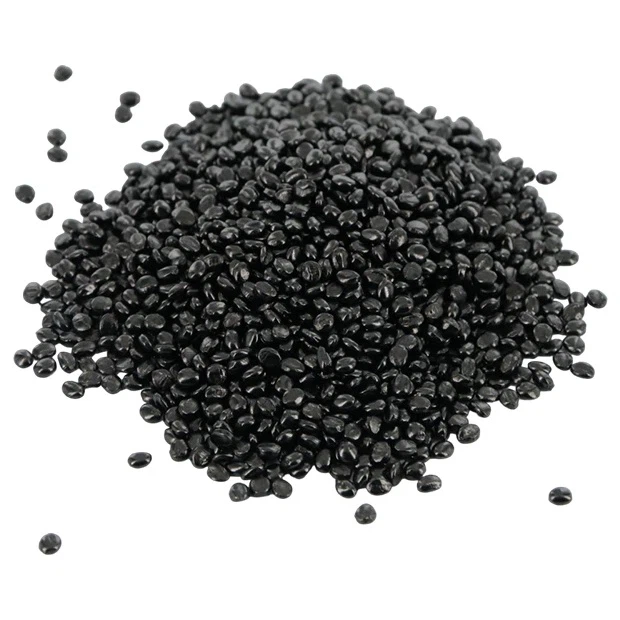
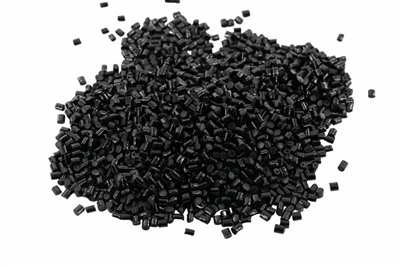
The quality of the black masterbatch you use can make a huge difference. A high - quality black masterbatch, like the Black Masterbatch for Strech Film that we supply, is formulated with the right balance of pigments and additives. The pigments should be well - dispersed in the carrier resin so that they don't act as weak spots in the film. If the dispersion is poor, the pigment particles can act as stress concentrators, which can reduce the elongation at break.
We've done a lot of R & D to ensure that our black masterbatch has excellent dispersion. This not only gives a uniform black color to the stretch film but also helps maintain the film's mechanical properties, including its elongation at break.
2. The Type of Base Resin
The base resin used in the stretch film also plays a vital role. Different types of plastics, like linear low - density polyethylene (LLDPE) or high - density polyethylene (HDPE), have different inherent elongation properties. LLDPE is known for its high stretchability and good elongation at break, making it a popular choice for stretch films.
When you mix the black masterbatch with the base resin, you need to make sure they are compatible. An incompatible combination can lead to a decrease in the mechanical properties of the film. Our black masterbatch is designed to be compatible with a wide range of base resins, including LLDPE. This compatibility helps to maintain or even enhance the elongation at break of the stretch film.
3. The Loading Ratio
The amount of black masterbatch you add to the base resin, known as the loading ratio, is another crucial factor. If you add too much black masterbatch, it can increase the stiffness of the film and reduce its elongation at break. On the other hand, if you add too little, you won't get the desired black color.


We've found that there's an optimal loading ratio for getting the best combination of color and elongation at break. Our technical team can provide guidance on the right loading ratio based on your specific requirements.
4. Processing Conditions
The way the stretch film is produced, including factors like temperature, shear rate, and cooling rate during the extrusion process, can significantly affect its elongation at break. If the processing temperature is too high, it can cause degradation of the polymer and the additives in the black masterbatch, leading to a decrease in mechanical properties.
We've worked closely with many of our customers to help them optimize their processing conditions. By adjusting the settings based on our recommendations, they've been able to produce stretch films with excellent elongation at break even when using our black masterbatch.
So, how do you actually measure the elongation at break of stretch film with black masterbatch? Well, it's typically done using a tensile testing machine. A sample of the stretch film is clamped at both ends of the machine, and then it's slowly pulled until it breaks. The machine records the amount of stretch and the force applied. From this data, the elongation at break as a percentage can be calculated.
In general, a good - quality stretch film with black masterbatch should have an elongation at break of at least 200% - 300%. However, in some high - performance applications, you might aim for even higher values.
As a supplier of black masterbatch for stretch film, I'm always excited to see how our product can make a difference in the final performance of the stretch film. We also offer other types of black masterbatch, like Black Masterbatch For Injection and Black Masterbatch For Pipe, which are designed to meet the specific needs of those industries as well.
If you're in the market for black masterbatch for your stretch film production and you're looking to optimize the elongation at break of your product, I'd love to hear from you. Whether you're a small - scale producer or a large - scale manufacturer, we can work together to find the best solution for your needs. Just reach out, and we can start a conversation about how our black masterbatch can help you take your stretch film to the next level.
References
- Plastics Technology Handbook, Third Edition. by James F. Carley.
- Handbook of Plastic Films by T. H. Baker