

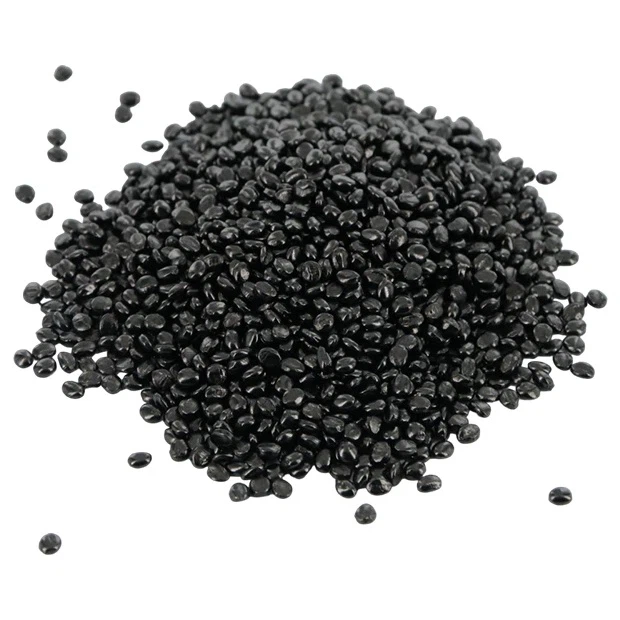
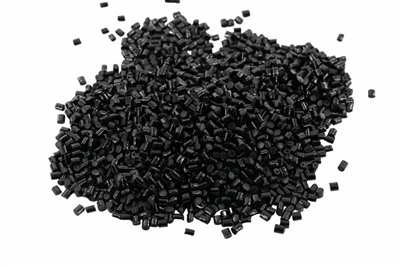

As a supplier of black masterbatch for granulation, I've witnessed firsthand the importance of understanding how this product impacts the shrinkage rate of the final product. In the plastics industry, the shrinkage rate is a critical factor that can significantly affect the quality, dimensions, and performance of the end - use items. Let's delve into the impact of black masterbatch for granulation on the shrinkage rate of the final product.
Understanding Shrinkage in Plastic Products
Before discussing the role of black masterbatch, it's essential to understand what shrinkage is in plastic products. Shrinkage occurs when a plastic material cools and solidifies after being molded or extruded. During the cooling process, the polymer chains in the plastic contract, leading to a reduction in volume and, consequently, a decrease in the dimensions of the product. This shrinkage can be classified into two main types: thermal shrinkage and crystallization shrinkage. Thermal shrinkage is caused by the change in temperature from the processing temperature to room temperature, while crystallization shrinkage occurs in semi - crystalline polymers as the polymer chains arrange themselves into a more ordered structure during cooling.
How Black Masterbatch for Granulation Affects Shrinkage
1. Filler Content
Black masterbatch typically contains carbon black as the main coloring agent, along with various additives and carriers. Carbon black can act as a filler in the plastic matrix. When added to the base polymer during granulation, the filler content in the black masterbatch can influence the shrinkage rate. Generally, an increase in filler content can reduce the shrinkage rate. This is because the filler particles restrict the movement of the polymer chains during cooling. The carbon black particles act as barriers, preventing the polymer chains from contracting as freely as they would in the absence of the filler. As a result, the overall shrinkage of the final product is reduced. For example, in a study on polypropylene (PP) composites filled with carbon black, it was found that as the carbon black content increased from 0% to 20%, the shrinkage rate decreased by a significant margin.
2. Compatibility with the Base Polymer
The compatibility between the black masterbatch and the base polymer is another crucial factor. If the masterbatch is well - compatible with the base polymer, it will disperse evenly throughout the polymer matrix. This uniform dispersion ensures that the effects of the masterbatch on shrinkage are consistent across the entire product. On the other hand, poor compatibility can lead to agglomeration of the masterbatch particles. Agglomerated particles can create areas of stress concentration in the plastic, which may cause uneven shrinkage. This uneven shrinkage can result in warping, distortion, and dimensional inaccuracies in the final product. Our black masterbatch is formulated to have excellent compatibility with a wide range of polymers, including polyethylene (PE), polypropylene (PP), and polystyrene (PS), ensuring uniform shrinkage and high - quality end products.


3. Rheological Properties
The rheological properties of the black masterbatch can also impact the shrinkage rate. The viscosity and flow behavior of the masterbatch during processing affect how the polymer flows and fills the mold. A masterbatch with appropriate rheological properties can help the polymer to flow more smoothly into the mold cavity, resulting in a more uniform distribution of the material. This uniform distribution is essential for consistent shrinkage. If the masterbatch has a high viscosity, it may impede the flow of the polymer, leading to uneven filling of the mold and non - uniform shrinkage. Our research and development team focuses on optimizing the rheological properties of our black masterbatch to ensure optimal flow and shrinkage performance.
Case Studies
Case 1: Injection Molding
In injection molding applications, the shrinkage rate can have a significant impact on the final product quality. Consider a manufacturer producing plastic automotive parts using injection molding. By using our Black Masterbatch for Injection, they were able to reduce the shrinkage rate of the parts. The well - dispersed carbon black in the masterbatch restricted the polymer chain movement during cooling, resulting in parts with more accurate dimensions. This reduction in shrinkage also led to fewer rejects due to dimensional inaccuracies, improving the overall production efficiency and cost - effectiveness.
Case 2: Food Packaging
For food packaging applications, dimensional stability is crucial to ensure proper sealing and protection of the food products. Our Food Contact Black Masterbatch is designed to meet the strict requirements of the food industry. In a case study involving the production of food containers, the use of our masterbatch helped to control the shrinkage rate. The excellent compatibility of the masterbatch with the base polymer used in food packaging materials ensured uniform shrinkage, resulting in containers with consistent dimensions and reliable sealing performance.
Case 3: Stretch Film Production
In stretch film production, the shrinkage rate can affect the film's mechanical properties and performance. Our Black Masterbatch for Strech Film is formulated to optimize the shrinkage characteristics of stretch films. The appropriate filler content and rheological properties of the masterbatch help to reduce the shrinkage rate while maintaining the film's stretchability and strength. This allows manufacturers to produce high - quality stretch films with consistent dimensions and performance.
Controlling Shrinkage for Optimal Product Quality
To achieve the desired shrinkage rate in the final product, it is essential to carefully select the black masterbatch and optimize the processing conditions. Here are some tips:
- Masterbatch Selection: Choose a black masterbatch with the appropriate filler content and compatibility with the base polymer based on the specific requirements of the final product.
- Processing Temperature: Adjust the processing temperature to ensure proper melting and mixing of the masterbatch and the base polymer. A higher processing temperature may improve the dispersion of the masterbatch but can also affect the shrinkage rate.
- Cooling Rate: Control the cooling rate during the molding or extrusion process. A slower cooling rate can allow the polymer chains to arrange themselves more orderly, which may increase the crystallization shrinkage in semi - crystalline polymers. However, a very fast cooling rate can lead to internal stresses and uneven shrinkage.
Conclusion
In conclusion, black masterbatch for granulation can have a significant impact on the shrinkage rate of the final product. The filler content, compatibility with the base polymer, and rheological properties of the masterbatch all play important roles in determining the shrinkage behavior. By understanding these factors and carefully selecting and using the appropriate black masterbatch, manufacturers can control the shrinkage rate, improve the dimensional accuracy, and enhance the overall quality of their plastic products.
If you are interested in learning more about our black masterbatch for granulation and how it can help you control the shrinkage rate of your final products, please feel free to contact us for procurement and further discussions. We are committed to providing high - quality masterbatch solutions tailored to your specific needs.
References
- “Effect of Carbon Black on the Shrinkage and Mechanical Properties of Polypropylene Composites,” Journal of Polymer Science, Part B: Polymer Physics, Volume 48, Issue 12, June 2010.
- “Compatibility and Rheological Behavior of Polymer - Masterbatch Systems,” Polymer Engineering and Science, Volume 55, Issue 8, August 2015.
- “Shrinkage Control in Plastic Injection Molding,” Plastics Technology, May 2018.