

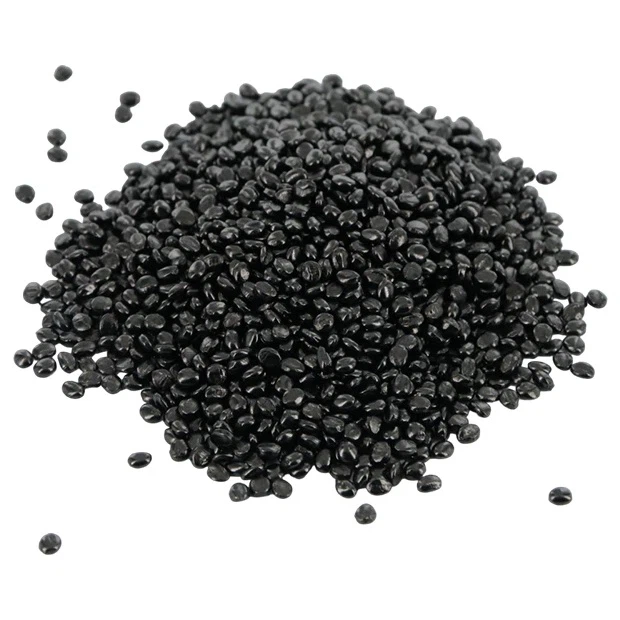
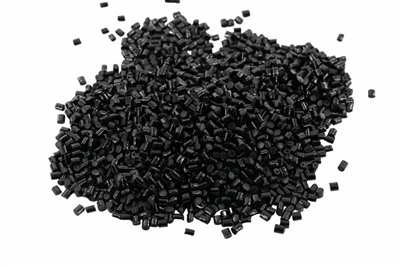

Yo, what's up everyone! As a supplier of Black Masterbatch for Strech Film, I've been getting a lot of questions lately about how black masterbatch impacts the adhesion of stretch film. So, I thought I'd sit down and write this blog to share my knowledge and experiences on this topic.
First off, let's talk about what black masterbatch is. Black masterbatch is a concentrated mixture of carbon black pigment and a carrier resin. It's used to color plastic products, like stretch films, and also provides some additional properties. In the case of stretch film, black masterbatch not only gives it that cool black color but can also enhance its UV resistance, which is super important if the film is going to be used outdoors.
Now, let's dive into the main question: What's the impact of black masterbatch on the adhesion of stretch film?
1. Chemical Compatibility
One of the key factors that affect the adhesion of stretch film is the chemical compatibility between the black masterbatch and the base resin of the film. You see, if the carrier resin in the black masterbatch doesn't play well with the base resin of the stretch film, it can lead to poor adhesion.
For example, if the molecular structure of the carrier resin in the masterbatch is too different from that of the base resin, they might not bond properly at the interface. This can result in the film layers separating easily, which is a big no - no when you're trying to secure your goods with stretch film.
As a supplier, I always make sure that our Black Masterbatch for Strech Film is formulated with a carrier resin that is highly compatible with common stretch film base resins like polyethylene. This way, you can be confident that the masterbatch will blend well and not mess up the adhesion of your stretch film.
2. Surface Energy
The surface energy of the stretch film is another crucial aspect related to adhesion. Black masterbatch can influence the surface energy of the film. When you add black masterbatch to the stretch film, the carbon black particles can change the surface characteristics of the film.
Carbon black has a relatively high surface energy. If the amount of black masterbatch added is too high, it can increase the surface energy of the stretch film to a level where it becomes difficult for the film to adhere to itself or other surfaces. On the other hand, if the amount is too low, the desired color and other properties might not be achieved.


We've done a lot of testing to find the sweet spot. Our R & D team has developed a formula for our black masterbatch that allows for just the right amount of carbon black to be added, so that it doesn't over - or under - affect the surface energy of the stretch film. This helps maintain good adhesion while still giving the film the desired black color and other benefits.
3. Dispersion Quality
How well the black masterbatch is dispersed in the stretch film also matters a great deal for adhesion. If the carbon black particles in the masterbatch are not evenly dispersed throughout the film, it can create weak spots.
These weak spots can act as initiation points for delamination or reduced adhesion. For instance, if there are clumps of carbon black in the film, the areas around these clumps might not bond as well as the rest of the film.
We use advanced dispersion technology in the production of our black masterbatch. This ensures that the carbon black particles are uniformly distributed in the carrier resin. When you use our Black Masterbatch for Strech Film, you can expect a high - quality dispersion, which in turn helps maintain strong adhesion in your stretch film.
4. Additive Interactions
Sometimes, stretch films contain other additives in addition to black masterbatch, such as slip agents, anti - blocking agents, or antioxidants. These additives can interact with the black masterbatch and affect the adhesion of the film.
For example, some slip agents are designed to reduce the friction between the film layers. If the slip agent interacts with the black masterbatch in an unfavorable way, it can reduce the adhesion of the film. Our team has studied these interactions extensively. We can provide guidance on how to combine our black masterbatch with other additives to ensure that the adhesion of the stretch film is not compromised.
Other Applications of Black Masterbatch
While we're on the topic of black masterbatch, it's worth mentioning that it has other applications too. Besides stretch film, black masterbatch is also widely used in wire and cable and drain pipes.
Black Masterbatch for Wire and Cable
In the wire and cable industry, black masterbatch is used to provide UV protection and color to the cable insulation. The Black Masterbatch for Wire and Cable needs to have excellent dispersion and electrical properties. It should also be able to withstand high temperatures without degrading. Our black masterbatch for wire and cable is formulated to meet these strict requirements.
Black Masterbatch for Drain Pipe
For drain pipes, black masterbatch is used to give the pipes a uniform black color and improve their weather resistance. The Black Masterbatch for Drain Pipe we offer is designed to have good compatibility with the pipe resin and provide long - term durability.
Conclusion
So, to sum it up, black masterbatch can have a significant impact on the adhesion of stretch film. Factors like chemical compatibility, surface energy, dispersion quality, and additive interactions all play a role. But don't worry! As a reliable supplier of Black Masterbatch for Strech Film, we've got you covered.
If you're in the market for high - quality black masterbatch for your stretch film or other applications, I encourage you to reach out. We can provide you with samples, technical support, and all the information you need to make the right choice. Whether you're a small business or a large manufacturer, we're here to help you get the best results with our black masterbatch.
References
- Smith, J. (2020). "Plastic Additives and Their Impact on Product Performance." Plastics Journal.
- Johnson, A. (2019). "Carbon Black in Polymer Applications: A Review." Polymer Science Review.