

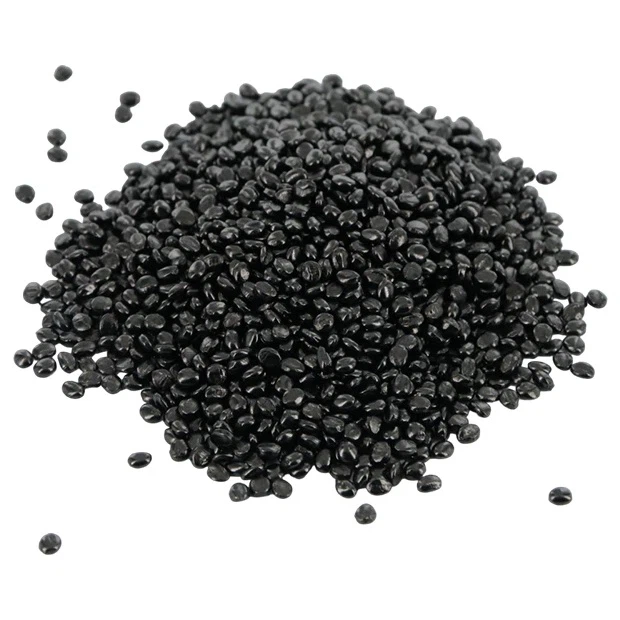
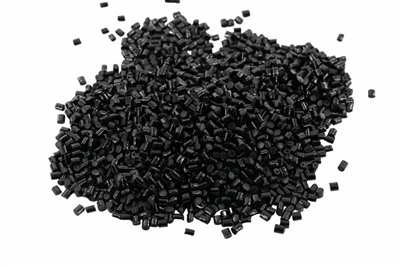

Weatherability refers to the ability of a material to resist the effects of weather, including sunlight, humidity, temperature changes, and precipitation, over an extended period. When it comes to black masterbatch for toys, weatherability is a crucial factor that determines the long - term performance and appearance of the toys. As a supplier of black masterbatch for toys, understanding the weatherability of our products is essential for providing high - quality solutions to our customers.
1. The Composition of Black Masterbatch and Its Impact on Weatherability
Black masterbatch is typically composed of a high - concentration of carbon black pigment dispersed in a carrier resin. The choice of carbon black and carrier resin significantly affects the weatherability of the masterbatch.
Carbon black is a key component in black masterbatch, and its properties play a vital role in weather resistance. Different types of carbon black have varying degrees of UV protection. For example, furnace black, which is commonly used in black masterbatch, can provide good UV shielding due to its small particle size and high surface area. These characteristics enable it to absorb and scatter UV radiation effectively, preventing it from reaching the polymer matrix of the toy. On the other hand, thermal black may have a larger particle size and lower surface area, resulting in relatively weaker UV protection.
The carrier resin in black masterbatch also influences weatherability. Polyolefin - based carrier resins, such as polyethylene (PE) and polypropylene (PP), are widely used in toy applications. These resins have inherent stability and good resistance to environmental factors. However, they can still be affected by long - term exposure to sunlight and high humidity. For instance, oxidation of the carrier resin can occur under UV radiation, leading to chain scission and a decrease in mechanical properties. To enhance the weatherability of the masterbatch, additives such as antioxidants and UV stabilizers are often incorporated into the formulation.
2. Weathering Mechanisms Affecting Black Masterbatch for Toys
2.1 UV Degradation
Ultraviolet (UV) radiation from sunlight is one of the most significant factors causing weathering of black masterbatch for toys. When the masterbatch is exposed to UV light, the energy of the photons can break chemical bonds in the carbon black and carrier resin. This can lead to a series of chemical reactions, such as oxidation, cross - linking, and chain scission.
Oxidation of the carrier resin can result in the formation of carbonyl groups, which can cause yellowing and embrittlement of the toy. Cross - linking can increase the hardness and reduce the flexibility of the material, while chain scission can lead to a decrease in molecular weight and mechanical strength. In addition, UV radiation can also cause the carbon black particles to aggregate, reducing their ability to disperse evenly in the polymer matrix and affecting the color and appearance of the toy.
2.2 Moisture and Humidity
Moisture and humidity can also have a negative impact on the weatherability of black masterbatch for toys. Water can penetrate the polymer matrix of the masterbatch, causing swelling and plasticization. This can lead to a decrease in mechanical properties, such as tensile strength and impact resistance.
In addition, moisture can accelerate the oxidation process of the carrier resin, especially in the presence of oxygen. Hydrolysis can also occur in some polymers, breaking the chemical bonds in the polymer chains. For example, in polyesters, hydrolysis can lead to a significant reduction in molecular weight and mechanical performance.
2.3 Temperature Changes
Temperature changes can cause thermal expansion and contraction of the black masterbatch and the toy material. Repeated cycles of heating and cooling can create internal stresses in the material, leading to cracking and delamination. High temperatures can also accelerate the chemical reactions associated with weathering, such as oxidation and cross - linking. On the other hand, low temperatures can make the material more brittle and prone to fracture.
3. Testing the Weatherability of Black Masterbatch for Toys
To ensure the weatherability of our black masterbatch for toys, we conduct a series of tests.
3.1 Accelerated Weathering Tests
Accelerated weathering tests are commonly used to simulate long - term outdoor exposure in a relatively short period. In these tests, samples of the black masterbatch are exposed to a combination of UV radiation, heat, and humidity in a controlled environment. For example, the Xenon arc test uses a xenon lamp to simulate sunlight, and the samples are exposed to a specific intensity of UV radiation, temperature, and humidity for a set number of hours.
After the accelerated weathering test, the samples are evaluated for changes in color, gloss, mechanical properties, and chemical composition. Color change can be measured using a colorimeter, and gloss can be measured using a gloss meter. Mechanical properties, such as tensile strength and elongation at break, can be tested using a universal testing machine. Chemical composition changes can be analyzed using techniques such as Fourier - transform infrared spectroscopy (FTIR).


3.2 Outdoor Exposure Tests
Outdoor exposure tests are also important for evaluating the real - world weatherability of black masterbatch for toys. Samples are placed in outdoor environments with different climates, such as tropical, temperate, and arid regions. The samples are then monitored over a long period, typically several months to years, to observe the changes in appearance and performance.
Outdoor exposure tests can provide valuable information about the long - term durability of the masterbatch under actual environmental conditions. However, they are time - consuming and can be affected by various factors, such as local weather variations and pollution levels.
4. Improving the Weatherability of Black Masterbatch for Toys
As a supplier, we take several measures to improve the weatherability of our black masterbatch for toys.
4.1 Selection of High - Quality Raw Materials
We carefully select high - quality carbon black and carrier resin with good weather resistance. For carbon black, we choose products with small particle size, high surface area, and excellent UV absorption properties. For carrier resin, we select polyolefins with high purity and stability.
4.2 Incorporation of Additives
We incorporate additives such as antioxidants, UV stabilizers, and light absorbers into the black masterbatch formulation. Antioxidants can prevent the oxidation of the carrier resin by reacting with free radicals generated during weathering. UV stabilizers can absorb or dissipate UV radiation, reducing its impact on the material. Light absorbers can also help to protect the masterbatch from UV damage.
4.3 Optimized Manufacturing Processes
Our manufacturing processes are optimized to ensure the uniform dispersion of carbon black and additives in the carrier resin. Good dispersion can improve the overall performance of the black masterbatch, including its weatherability. We use advanced mixing and extrusion techniques to achieve a high - quality dispersion, which can enhance the UV protection and mechanical properties of the masterbatch.
5. Applications and Weatherability Requirements
Black masterbatch for toys has a wide range of applications, and different applications may have different weatherability requirements.
5.1 Outdoor Toys
Outdoor toys, such as swings, slides, and sandboxes, are exposed to harsh environmental conditions, including direct sunlight, rain, and high humidity. For these applications, the black masterbatch needs to have excellent weatherability to maintain its color, mechanical properties, and appearance over a long period. Our Engineering Compounding Black Masterbatch is specifically designed for such outdoor applications, with enhanced UV protection and resistance to moisture and temperature changes.
5.2 Indoor Toys
Indoor toys are generally less exposed to outdoor weather conditions. However, they can still be affected by indoor lighting, which may contain some UV radiation, and changes in temperature and humidity. For indoor toys, the black masterbatch should have at least a certain level of weatherability to ensure long - term stability. Our Black Masterbatch for Sheet can be used for various indoor toy applications, providing good color stability and mechanical performance.
5.3 Food - Contact Toys
Food - contact toys have additional requirements in terms of safety and hygiene. In addition to weatherability, the black masterbatch used in these toys must comply with food - contact regulations. Our Food Contact Black Masterbatch is formulated with food - grade raw materials and additives, ensuring both weatherability and food - contact safety.
6. Conclusion and Call to Action
In conclusion, the weatherability of black masterbatch for toys is a complex issue that is affected by various factors, including the composition of the masterbatch, weathering mechanisms, and application requirements. As a supplier, we are committed to providing high - quality black masterbatch with excellent weatherability to meet the diverse needs of our customers.
If you are in the market for black masterbatch for toys and are concerned about weatherability, we invite you to contact us for more information. Our team of experts can provide you with detailed product specifications, technical support, and samples for testing. We are ready to work with you to find the best solution for your toy manufacturing needs.
References
- ASTM International. (20XX). Standard test methods for outdoor weathering of plastics.
- Zweifel, H., Maier, W., & Schiller, M. (2001). Plastics Additives Handbook. Hanser Publishers.
- Wypych, G. (2012). Handbook of Material Weathering. ChemTec Publishing.