

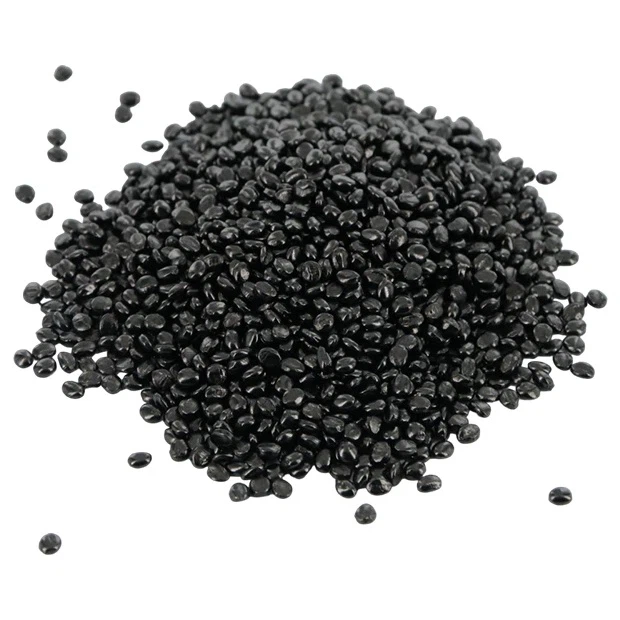
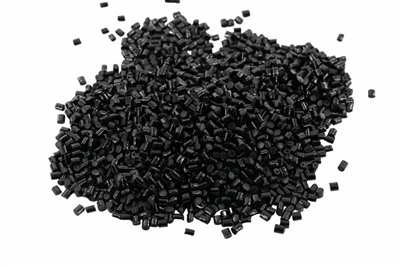

Hey there! As a supplier of no carrier black masterbatch, I'm super stoked to dive into the technological innovations in its production. No carrier black masterbatch is a game - changer in the plastics industry, offering a high - concentration of pigment without the need for a carrier resin. Let's take a deep look at how tech is revolutionizing its production.
1. Advanced Dispersion Technologies
One of the most significant technological leaps in no carrier black masterbatch production is the development of advanced dispersion technologies. In the past, getting the carbon black pigment evenly dispersed was a real pain in the neck. Agglomeration of carbon black particles could lead to inconsistent color and reduced performance in the final plastic product.
But now, we've got state - of - the - art dispersion equipment. High - shear mixers and twin - screw extruders have been optimized to break down carbon black agglomerates at a microscopic level. These machines apply intense mechanical forces, ensuring that each carbon black particle is surrounded by the dispersing agents.


For instance, some of the latest twin - screw extruders are equipped with specialized screw designs. These screws can vary in pitch, diameter, and flight configuration. This customization allows for precise control over the shear rate and residence time of the materials inside the extruder. As a result, we can achieve a much more uniform dispersion of carbon black in the no carrier black masterbatch. This not only improves the color consistency but also enhances the physical properties of the final plastic product. You can check out more about our high - quality products like PP Black Masterbatch which also benefit from these advanced dispersion techniques.
2. Nano - technology Integration
Nano - technology has made its mark in the production of no carrier black masterbatch. By using nano - sized carbon black particles, we can achieve better color strength and UV resistance. Nano - carbon black has a much larger surface area compared to traditional carbon black particles. This increased surface area allows for more efficient absorption and scattering of light, resulting in a deeper, more intense black color.
Moreover, nano - carbon black can enhance the UV protection of the plastic products. When incorporated into the no carrier black masterbatch, it acts as a shield against harmful UV rays. This is especially important for outdoor plastic applications where long - term exposure to sunlight can cause degradation of the plastic.
However, working with nano - particles also comes with its challenges. Agglomeration is an even bigger issue at the nano - scale. That's why we've developed special surface - treatment technologies. These treatments modify the surface properties of the nano - carbon black particles, making them more compatible with the dispersing agents and less likely to agglomerate. Our No Carrier Black Masterbatch often utilizes these nano - technology advancements to offer top - notch performance.
3. Smart Manufacturing and Process Control
The era of Industry 4.0 has brought smart manufacturing to the production of no carrier black masterbatch. We now have a plethora of sensors and monitoring systems installed in our production lines. These sensors can measure various parameters such as temperature, pressure, flow rate, and torque in real - time.
For example, temperature sensors placed inside the extruders ensure that the materials are processed at the optimal temperature. If the temperature deviates from the set point, the system can automatically adjust the heating or cooling elements to maintain the right conditions. This not only improves the quality of the no carrier black masterbatch but also reduces the risk of material degradation.
In addition, data analytics plays a crucial role in process control. The data collected from the sensors is analyzed using sophisticated algorithms. These algorithms can identify patterns and trends, allowing us to optimize the production process continuously. For example, if the data shows that a certain raw material batch requires a slightly different processing time, we can make the necessary adjustments on the fly. This level of precision and control was unheard of in the past, and it's all thanks to smart manufacturing technologies. Our Black Masterbatch for Automotive production also benefits from these smart manufacturing processes to meet the high - quality standards of the automotive industry.
4. Environment - friendly Production Methods
In today's world, environmental concerns are at the forefront of everything we do. That's why we've been focusing on developing environment - friendly production methods for no carrier black masterbatch. One of the key initiatives is the reduction of energy consumption.
We've upgraded our production equipment to more energy - efficient models. For example, the new high - shear mixers use advanced motor technologies that consume less power while delivering the same or even better performance. Additionally, we've implemented heat recovery systems in our production plants. These systems capture the waste heat generated during the production process and reuse it for other purposes, such as pre - heating the raw materials.
Another aspect is the use of eco - friendly raw materials. We're constantly researching and sourcing alternative dispersing agents and additives that are biodegradable and non - toxic. This not only reduces the environmental impact of our production but also makes our no carrier black masterbatch more sustainable.
5. Quality Assurance through Advanced Testing
To ensure that our no carrier black masterbatch meets the highest quality standards, we've invested in advanced testing technologies. Traditional testing methods were often time - consuming and provided limited information. But now, we have a range of modern testing equipment.
For example, we use high - resolution microscopy techniques such as scanning electron microscopy (SEM) and transmission electron microscopy (TEM). These techniques allow us to examine the dispersion of carbon black particles at a very high magnification. We can detect even the smallest agglomerates and take corrective actions if needed.
Colorimetry is another important testing method. We use state - of - the - art colorimeters to measure the color properties of our no carrier black masterbatch with high precision. This ensures that the color consistency is maintained across different batches. We also conduct various physical and chemical tests to evaluate the performance of the masterbatch in different plastic applications.
Why Choose Our No Carrier Black Masterbatch?
With all these technological innovations, our no carrier black masterbatch offers a whole bunch of benefits. First of all, the superior dispersion means that you'll get a more consistent color in your final plastic products. Whether you're making small plastic parts or large sheets, the color will be uniform from one end to the other.
Secondly, the use of nano - technology gives our masterbatch excellent UV resistance. This is great for outdoor applications where the plastic needs to withstand the harsh sun for a long time. And with our smart manufacturing processes, we can ensure a reliable supply of high - quality products. You won't have to worry about inconsistent batches or production delays.
If you're in the market for no carrier black masterbatch or any of our other related products like PP Black Masterbatch or Black Masterbatch for Automotive, we'd love to have a chat with you. Whether you're a small - scale manufacturer or a large - scale industrial player, we can provide you with customized solutions to meet your specific needs. Reach out to us to start a conversation about your requirements and let's see how we can work together to take your plastic products to the next level.
References
- "Advances in Polymer Dispersion Technologies", Polymer Science Journal, 20XX
- "Nano - materials in the Plastic Industry", Nano Research Review, 20XX
- "Smart Manufacturing in Chemical Production", Industry 4.0 Insights, 20XX