

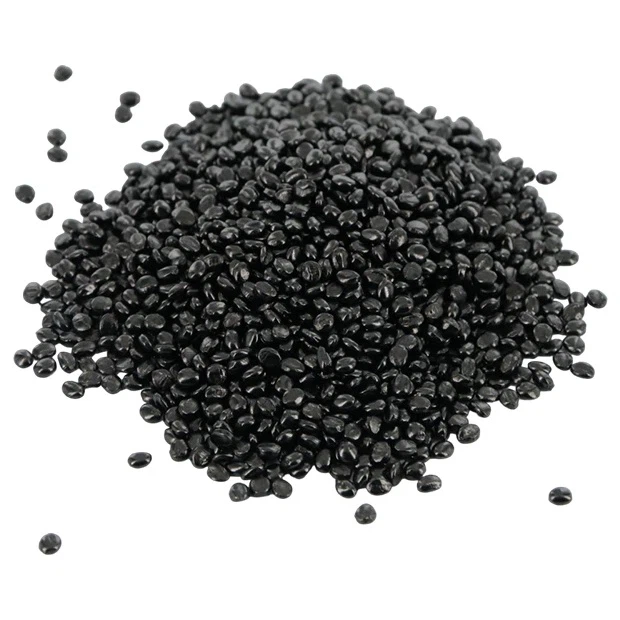
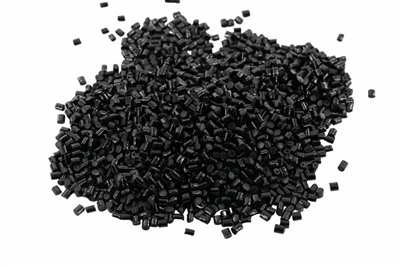

Hey there! I'm a supplier of black masterbatch for automotive, and today I wanna chat about how our black masterbatch impacts the printability of automotive parts.
Let's start by understanding what black masterbatch is. It's a highly concentrated mixture of pigments and additives, usually in a carrier resin. In the automotive industry, black masterbatch is used to color various parts, from interior trims to exterior components. It offers excellent color consistency, high hiding power, and good dispersion, which are crucial for achieving the desired aesthetic and functional properties of automotive parts.
Now, let's dive into how black masterbatch affects printability. Printability refers to the ability of a surface to accept and hold printed images or text. In the automotive context, this is important for things like branding, part identification, and decorative elements.
One of the key factors that influence printability is the surface smoothness of the automotive part. Black masterbatch can have a significant impact on this. When the masterbatch is well - dispersed in the base resin, it can help create a more uniform and smooth surface. This is because the pigments and additives in the masterbatch fill in the microscopic irregularities on the surface of the part. A smooth surface is essential for good printability as it allows the ink to spread evenly and adhere properly. For example, if we're talking about a plastic dashboard part that needs to have the brand logo printed on it, a smooth surface achieved with the right black masterbatch will ensure that the logo looks sharp and clear.
Another aspect is the compatibility between the black masterbatch and the printing ink. Different types of black masterbatch are formulated with different carrier resins and additives. Some carrier resins may be more compatible with certain types of inks than others. For instance, PS Black Masterbatch is designed for use with polystyrene - based automotive parts. If the printing ink is also formulated to work well with polystyrene, then the combination can result in excellent print quality. The same goes for PC Black Masterbatch used in polycarbonate parts and PP Black Masterbatch for polypropylene parts. Compatibility ensures that the ink doesn't react negatively with the masterbatch, such as causing bleeding or poor adhesion.
The color and opacity of the black masterbatch can also play a role in printability. A highly opaque black masterbatch can provide a better background for printing. It masks the underlying color of the base resin and any impurities, allowing the printed image or text to stand out more clearly. Imagine trying to print a white logo on a part that has a slightly grayish or uneven - colored base. With a high - opacity black masterbatch, the white logo will look much more vibrant and distinct.
However, there can be some challenges. Sometimes, the additives in the black masterbatch can migrate to the surface of the part over time. This is known as blooming. When blooming occurs, it can create a thin layer on the surface that affects the adhesion of the printing ink. To prevent this, we need to carefully select the additives in the masterbatch formulation. We also need to ensure proper processing conditions during the production of the automotive parts. For example, controlling the temperature and pressure during injection molding can help minimize the risk of blooming.
The dispersion quality of the black masterbatch is another critical factor. Poor dispersion can lead to pigment agglomeration on the surface of the part. These agglomerates can cause uneven ink absorption during printing, resulting in a patchy or blurry appearance. To ensure good dispersion, we use advanced mixing and compounding techniques in our production process. This ensures that the pigments are evenly distributed throughout the carrier resin, providing a consistent surface for printing.
In terms of the printing process itself, different methods have different requirements when it comes to the properties of the automotive part colored with black masterbatch. For example, screen printing requires a relatively flat and smooth surface. Our black masterbatch can be formulated to optimize the surface properties for screen printing. On the other hand, digital printing may be more forgiving in terms of surface smoothness but still requires good ink - masterbatch compatibility.
Now, you might be wondering how to choose the right black masterbatch for your automotive parts to ensure good printability. First, consider the type of base resin of your part. As mentioned earlier, different masterbatches are designed for different resins. Second, think about the printing method you'll be using. If you're using a high - resolution printing method, you'll need a masterbatch that can provide an extremely smooth and uniform surface. Third, consider the environmental conditions the part will be exposed to. If the part will be in a high - humidity or high - temperature environment, you'll need a masterbatch that can maintain its properties and not affect the print quality over time.
As a supplier, we have a wide range of black masterbatch products to meet different needs. We can work closely with you to understand your specific requirements for automotive parts and printability. Whether you need a masterbatch for interior parts that require fine - detailed printing or exterior parts that need to withstand harsh weather conditions, we've got you covered.

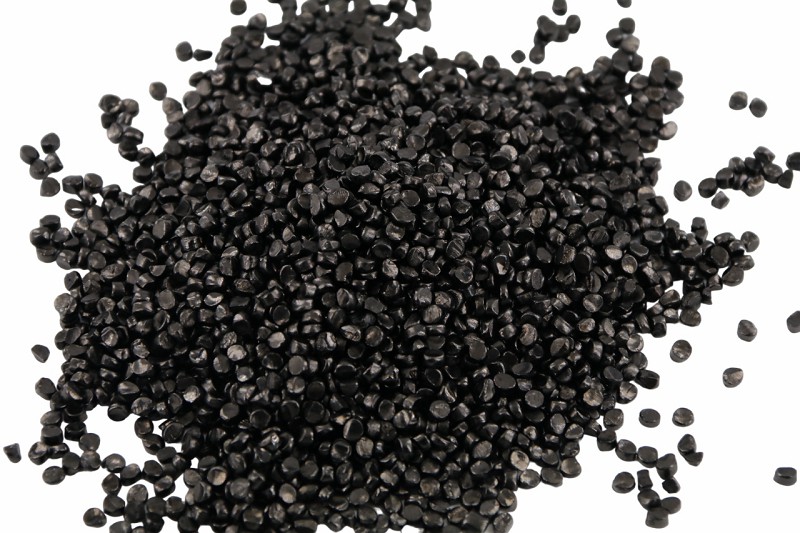
If you're in the automotive industry and looking for high - quality black masterbatch that can enhance the printability of your parts, we'd love to have a chat. We can provide samples for you to test and see the difference our masterbatch can make. Just reach out to us, and let's start a discussion about how we can work together to achieve the best results for your automotive parts.
References:
- Automotive Plastics Handbook: A Guide to Materials, Processes, and Applications
- Journal of Applied Polymer Science - Studies on Colorants and Additives in Polymer Composites for Automotive Use