

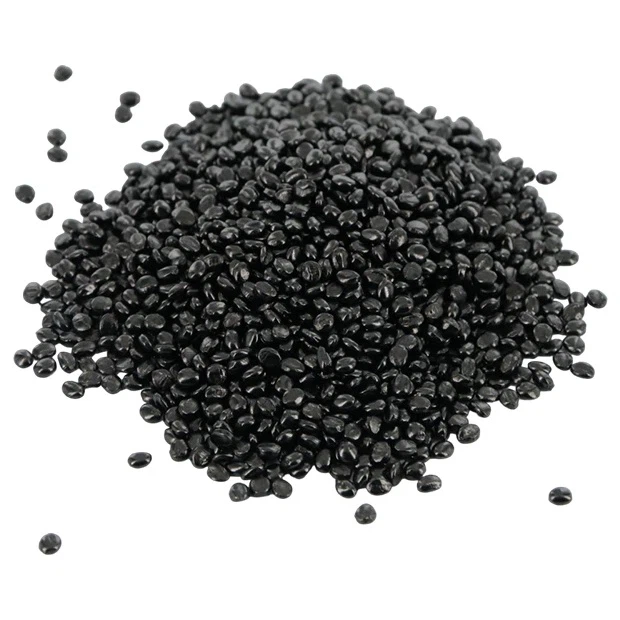
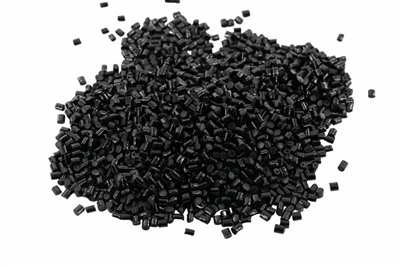

Specialty black masterbatch is a crucial additive in the plastics industry, offering not only aesthetic appeal but also significantly influencing the mechanical properties of plastics. As a specialty black masterbatch supplier, I've witnessed firsthand how these additives can transform the performance of various plastic products. In this blog, we'll explore the intricate relationship between specialty black masterbatch and the mechanical properties of plastics.
Understanding Specialty Black Masterbatch
Specialty black masterbatch is a concentrated mixture of carbon black pigment and a carrier resin, along with various additives. Carbon black is the primary colorant, known for its excellent light - absorbing properties, which give plastics a deep, rich black color. The carrier resin is carefully selected to be compatible with the base plastic, ensuring good dispersion during the processing. Additives may include dispersants, antioxidants, and UV stabilizers, which enhance the overall performance of the masterbatch and the final plastic product.
Impact on Tensile Strength
Tensile strength is one of the most important mechanical properties of plastics, representing the maximum stress a material can withstand while being stretched or pulled before breaking. The addition of specialty black masterbatch can have a dual effect on the tensile strength of plastics.
On one hand, when the carbon black particles in the masterbatch are well - dispersed in the plastic matrix, they can act as reinforcing agents. Carbon black has a high surface area and can interact with the polymer chains, creating a network structure that helps to distribute the stress more evenly throughout the material. This can lead to an increase in tensile strength. For example, in engineering plastics like ABS Black Masterbatch, a properly formulated black masterbatch can improve the material's ability to resist pulling forces, making it more suitable for applications where high strength is required, such as in automotive parts and electronic enclosures.
On the other hand, if the dispersion of carbon black is poor, it can act as stress concentrators. Agglomerated carbon black particles can create weak points in the plastic matrix, where stress can accumulate and cause premature failure. This can result in a decrease in tensile strength. Therefore, the quality of dispersion is a critical factor in determining the impact of specialty black masterbatch on tensile strength.
Influence on Flexural Strength
Flexural strength measures a material's ability to resist deformation under bending. Similar to tensile strength, specialty black masterbatch can either enhance or reduce the flexural strength of plastics depending on the dispersion of carbon black.
Well - dispersed carbon black can improve the stiffness of the plastic, which in turn increases its flexural strength. When a plastic part is bent, the carbon black particles help to transfer the load across the material, preventing excessive deformation. In applications such as Black Masterbatch for Automotive, where components need to withstand bending forces during use, a high - quality black masterbatch can be used to improve the flexural performance of the plastic.


However, if the carbon black is not properly dispersed, the plastic may become more brittle under bending. Agglomerates can cause cracks to initiate and propagate more easily, leading to a decrease in flexural strength. This is why our company pays great attention to the dispersion technology in the production of specialty black masterbatch to ensure consistent and reliable performance.
Effect on Impact Resistance
Impact resistance is the ability of a plastic to absorb energy when subjected to a sudden impact without breaking. Specialty black masterbatch can have a complex influence on this property.
In some cases, carbon black can improve impact resistance. The presence of carbon black particles can absorb and dissipate the impact energy, preventing the formation and propagation of cracks. For example, in polycarbonate plastics with PC Black Masterbatch, the carbon black can enhance the material's toughness, making it more resistant to impacts. This is particularly important in applications such as safety equipment and consumer electronics, where the plastic parts need to withstand accidental drops or impacts.
However, in other situations, especially when the carbon black loading is too high or the dispersion is poor, the impact resistance can be reduced. High - loading carbon black can make the plastic more brittle, and agglomerated particles can act as crack initiation sites, increasing the likelihood of failure under impact.
Thermal Properties and Their Relation to Mechanical Performance
The thermal properties of plastics are also closely related to their mechanical performance, and specialty black masterbatch can play a role in this regard.
Carbon black has good thermal conductivity. When added to plastics, it can help to dissipate heat more effectively. This is beneficial for the mechanical properties of plastics because excessive heat can cause the polymer chains to soften and lose their strength. By improving heat dissipation, the black masterbatch can help the plastic maintain its mechanical integrity at higher temperatures.
For example, in automotive under - the - hood applications, where plastics are exposed to high temperatures, a specialty black masterbatch can enhance the thermal stability of the plastic, which in turn improves its long - term mechanical performance. However, it's important to note that the thermal conductivity of carbon black can also cause the plastic to cool more quickly during processing, which may affect the crystallization and orientation of the polymer chains, potentially influencing the mechanical properties.
Processing Considerations
The way specialty black masterbatch is incorporated into plastics during processing also affects the final mechanical properties.
Proper mixing and compounding are essential for achieving good dispersion of the masterbatch in the base plastic. Different processing methods, such as injection molding, extrusion, and blow molding, have different requirements for the masterbatch. For example, in injection molding, the melt flow properties of the masterbatch - plastic mixture need to be carefully controlled to ensure that the material can fill the mold cavity evenly without causing defects.
The processing temperature also plays a crucial role. High temperatures can cause the carbon black to oxidize or the additives in the masterbatch to degrade, which can negatively impact the mechanical properties of the plastic. Therefore, it's important to optimize the processing parameters based on the specific characteristics of the specialty black masterbatch and the base plastic.
Conclusion
In conclusion, specialty black masterbatch can have a profound impact on the mechanical properties of plastics. When properly formulated and processed, it can enhance tensile strength, flexural strength, impact resistance, and thermal stability of plastics. However, poor dispersion, incorrect loading, and improper processing can lead to a decrease in these properties.
As a specialty black masterbatch supplier, we are committed to providing high - quality products that are tailored to the specific needs of our customers. Our research and development team continuously works on improving the dispersion technology and optimizing the formulation of our masterbatch to ensure the best performance of the final plastic products.
If you are interested in learning more about how our specialty black masterbatch can improve the mechanical properties of your plastic products or are looking to discuss potential procurement opportunities, please feel free to reach out to us. We look forward to partnering with you to create innovative and high - performance plastic solutions.
References
- ASTM International. Standard Test Methods for Tensile Properties of Plastics. ASTM D638 - 14.
- ASTM International. Standard Test Method for Flexural Properties of Unreinforced and Reinforced Plastics and Electrical Insulating Materials. ASTM D790 - 17.
- ASTM International. Standard Test Method for Impact Resistance of Plastics and Electrical Insulating Materials by Means of a Charpy Pendulum. ASTM D6110 - 18.
- Throne, J. L. (1996). Plastics Process Engineering. Hanser Publishers.