

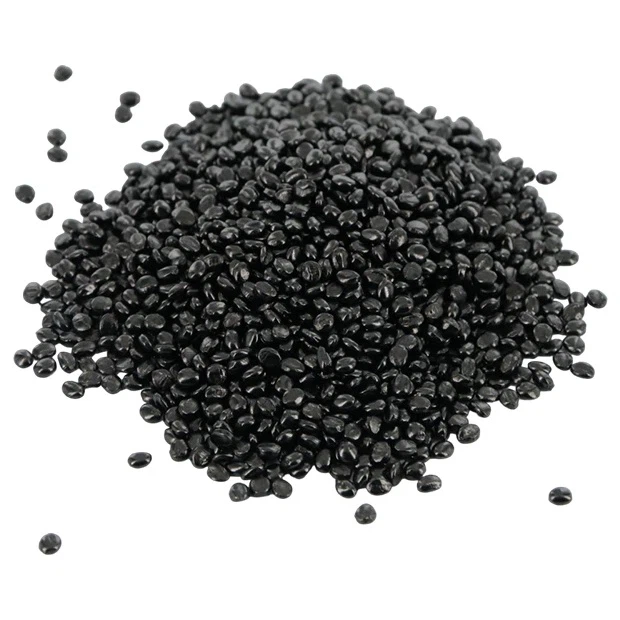
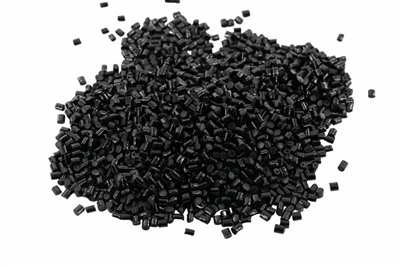

In the production of black masterbatch for granulation, controlling the particle shape is a crucial aspect that significantly impacts the quality and performance of the final product. As a supplier of black masterbatch for granulation, I have gained extensive experience in this field and would like to share some key strategies on how to effectively control the particle shape during production.
Understanding the Importance of Particle Shape
The particle shape of black masterbatch plays a vital role in various applications. For instance, in the Black Masterbatch for Film Blown process, well - shaped particles ensure uniform dispersion in the polymer matrix, which is essential for achieving high - quality films with consistent color and mechanical properties. Similarly, in the production of Black Masterbatch for Blown Bottle, proper particle shape helps in the smooth flow of the masterbatch during the molding process, resulting in bottles with good surface finish and strength. In the case of Black Masterbatch for Filament, the particle shape can affect the spinning process and the quality of the final filaments.
Factors Affecting Particle Shape
Extrusion Process
The extrusion process is one of the primary factors influencing the particle shape of black masterbatch. The screw design in the extruder is crucial. A well - designed screw can ensure proper mixing and melting of the raw materials, which is essential for obtaining uniform particle shapes. For example, a screw with a high mixing efficiency can break down agglomerates of carbon black (the main pigment in black masterbatch) and distribute it evenly in the polymer carrier. The extrusion temperature also plays a significant role. If the temperature is too low, the polymer may not melt completely, leading to irregularly shaped particles. On the other hand, if the temperature is too high, the polymer may degrade, which can also affect the particle shape and quality.
Die Design
The die is another important component in determining the particle shape. The shape and size of the die holes can directly control the initial shape of the extruded strands. For spherical or cylindrical particles, circular die holes are commonly used. The diameter of the die holes should be carefully selected according to the desired particle size. A smaller die hole diameter will result in thinner strands, which can be cut into smaller particles. Additionally, the land length of the die (the length of the straight section of the die hole) can affect the surface smoothness of the extruded strands. A longer land length can help to improve the surface quality of the strands, which in turn can lead to more regular - shaped particles.
Cutting Process
The cutting process is the final step in shaping the particles. The type of cutter used and its operating parameters are critical. There are two main types of cutters: hot - face cutters and underwater cutters. Hot - face cutters cut the extruded strands while they are still hot and soft. This method is suitable for producing particles with a relatively smooth surface. Underwater cutters, on the other hand, cut the strands in a water bath. This method can produce more spherical particles due to the rapid cooling effect of the water, which helps to solidify the particles quickly. The cutting speed and the pressure applied by the cutter also need to be optimized. A too - high cutting speed may cause the particles to be deformed, while an improper pressure can lead to uneven cutting and irregular particle shapes.
Strategies for Controlling Particle Shape
Optimize Extrusion Parameters
To control the particle shape during extrusion, it is necessary to optimize the screw speed, extrusion temperature, and feed rate. The screw speed should be adjusted to ensure proper mixing and melting of the raw materials. A higher screw speed can increase the shear force, which helps in better dispersion of the carbon black. However, too high a speed may also cause excessive heat generation and polymer degradation. The extrusion temperature should be set according to the melting point of the polymer carrier. For example, if the polymer is polyethylene, the extrusion temperature may range from 160 - 220°C. The feed rate should be consistent to maintain a stable extrusion process. A fluctuating feed rate can lead to uneven strand thickness and irregular particle shapes.
Select the Right Die
As mentioned earlier, the die design is crucial for particle shape control. When selecting a die, consider the desired particle size and shape. For applications where spherical particles are preferred, a die with circular holes and a proper land length should be chosen. It is also important to ensure that the die is made of high - quality materials to prevent wear and tear, which can affect the shape of the extruded strands over time. Regular maintenance and cleaning of the die are also necessary to keep it in good working condition.
Fine - Tune the Cutting Process
For the cutting process, the type of cutter should be selected based on the desired particle shape. If spherical particles are required, an underwater cutter may be a better choice. The cutting speed and pressure should be adjusted according to the properties of the extruded strands. For example, if the strands are softer, a lower cutting speed and a lighter pressure may be needed to avoid deformation. It is also important to ensure that the cutter blades are sharp to achieve clean cuts.
Quality Control and Monitoring
During the production process, it is essential to implement a comprehensive quality control system to monitor the particle shape. Sampling should be done regularly to check the particle size distribution and shape. There are various analytical techniques available for this purpose, such as microscopy and particle size analyzers. Microscopy can provide visual information about the particle shape, allowing for the detection of any irregularities. Particle size analyzers can measure the size and shape of a large number of particles, providing statistical data on the particle size distribution.
Based on the results of the quality control tests, adjustments can be made to the production parameters. If the particles are found to be too irregular, the extrusion, die, or cutting parameters may need to be optimized. Continuous improvement in the production process can help to ensure consistent particle shape and high - quality black masterbatch for granulation.
Conclusion
Controlling the particle shape of black masterbatch for granulation during production is a complex but achievable task. By understanding the factors that affect particle shape, such as the extrusion process, die design, and cutting process, and implementing appropriate strategies for optimization, we can produce high - quality black masterbatch with regular particle shapes. As a supplier of black masterbatch for granulation, we are committed to providing our customers with products that meet their specific requirements. If you are interested in our black masterbatch products or have any questions about particle shape control, please feel free to contact us for further discussion and procurement negotiations.


References
- Smith, J. (2018). "Advances in Masterbatch Production Technology." Polymer Science Journal, 35(2), 123 - 135.
- Johnson, A. (2019). "Particle Shape Analysis in Polymer Processing." Journal of Materials Engineering, 42(3), 201 - 212.
- Brown, C. (2020). "Optimizing Extrusion Processes for Masterbatch Production." Industrial and Engineering Chemistry Research, 49(10), 4567 - 4575.